
Emigrating to Costa Rica A Reality Check on Visas, Safety, Costs, and Climate in Costa Rica
Emigrating to Costa Rica: The most important answers first
✓ Visa required: Visa-free stay of up to 180 days is possible; after that, a residence permit (Residencia) is required.
✓ Cost of living is not necessarily low: San José is rather expensive; costs vary greatly by region.
✓ Security situation: largely stable, but organized crime is on the rise.
✓ Health risks: various mosquito-borne diseases, rural regions more severely affected.
✓ Climate varies by region: both dry and rainy seasons.
✓ Language skills: Spanish required for daily life and work.
✓ Special feature: high biodiversity, 25 % of the country’s territory is protected.
✓ Moving with pets: feasible, but involves complex paperwork.
Easily emigrate with DACHSER & KOLB. Use the moving cost calculator. Get a quote and consultation. Book a viewing. Move.
Facts about Costa Rica

Capital City
San José

Population
5.13 million

Surface Area
51.100 km²

Continent
Central America

Official Language
Spanish

Currency
Costa-Rica-Colón (CRC)
What are the customs, visa, and entry requirements for Costa Rica?
When emigrating to Costa Rica, tourist entry and permanent residence must be strictly distinguished. A stay of up to 180 days is visa-free; however, a return or onward ticket and proof of financial means may be required. This status is not sufficient for a genuine fresh start in the country. The same applies to household goods: Customs procedures for household goods do not apply to tourists, but only once the appropriate residency status has been obtained.
Documents required for entry:
- Passport (regular): Yes
- Temporary passport: Yes
- ID card: No
- Temporary ID card: No
- Child passport: Yes
Tip for expats: For actual emigration, a residence permit is required, known as a Residencia.

Is Costa Rica economically appealing, and what is the cost of living like?
Moving to Costa Rica can be economically attractive because the country is more stable than the Central American average. At the same time, Costa Rica is not a “low-cost” destination: the cost of living varies significantly by region; San José is notably higher in comparison.
Key facts at a glance:
- Stable market with an average GDP growth rate of 4.3 % per year.
- Income distribution: Gini coefficient = 45.8 (100 = perfect equality; 0 = maximum inequality)
- San José is the economic heart of the country – the most important hub for work and business.
- Cost of living varies greatly by location – rural areas are the most affordable.
- Fact in initial costs for rent, security deposit, transportation, insurance, and furnishings.
Tip for expats: Do not rely on national averages; instead, base your calculations on your destination and lifestyle. The “Living in Costa Rica” business case stands or falls on location, housing standards, and your budget reserves.
Safety in Costa Rica: What do expats need to know?
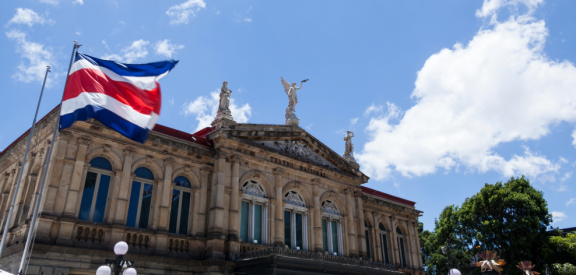
Compared to other countries in the region, Costa Rica is considered stable; however, the security situation is no longer as relaxed as many might expect. The U.S. Department of State notes that petty crime is common, particularly in cities and heavily visited national parks. Violent crime has increased nationwide, especially in connection with organized crime and drug trafficking.
What expats should know:
- Don’t choose a place to live based solely on price
- Keep valuables inconspicuous in daily life
- Check routes to work, school, and daily errands in advance
- Avoid driving at night and unnecessary high-risk routes
- Monitor the security situation in each region on an ongoing basis
- Make location decisions strategically, not spontaneously
Tip for expats: Safety is a location decision. Those who strategically plan their residential area, infrastructure, and mobility immediately and measurably reduce everyday risks.
What is the healthcare system like in Costa Rica?
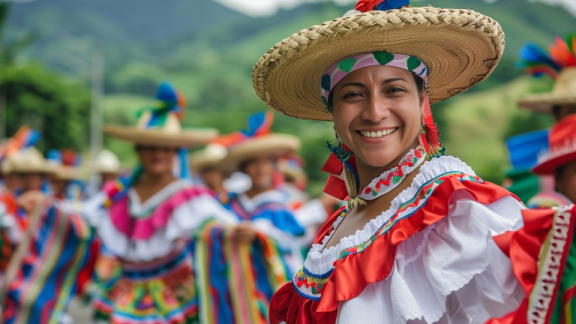
Costa Rica’s healthcare system is one of the country’s real advantages. The WHO (World Health Organization) reports solid health statistics for Costa Rica; however, healthcare in rural areas does not always meet European standards. In addition, mosquito-borne diseases such as dengue are a nationwide concern; malaria is limited to certain regions but cannot be completely ruled out.
Before moving:
- Update standard vaccinations before departure
- Have travel vaccinations individually reviewed by a doctor
- Consistent mosquito protection during the day and at night
- Coordinate personal medications well in advance
- Check international health insurance
- For serious cases, plan for care in the San José area
Tip for expats: Health is no afterthought. Those who thoroughly clarify insurance, vaccination status, medications, and emergency procedures before departure significantly reduce operational risk.

Are you planning to move to Costa Rica?
With structured preparation, you can avoid financial surprises. Our moving cost calculator provides clarity—it's simple, convenient, and takes just a few steps.
Climate in Costa Rica: How does the weather affect daily life and moving?
Costa Rica’s climate is not uniform. For expats, this affects not only living comfort but also the timing of a move, house hunting, the risk of mold, and mobility.
All regions at a glance:
- Pacific Coast: more distinct dry and rainy seasons
- Caribbean: more humid and with more dynamic weather
- Central Highlands: generally milder and more pleasant
- Coastal regions: hotter and more humid
- Consider rainy seasons when moving and choosing a home
Tip for expats: Climate is a major location factor. Choosing the right region, elevation, and rainy season significantly improves quality of life, logistics, and the adjustment process.
Diversity in Costa Rica? - Language, Culture, and Daily Life
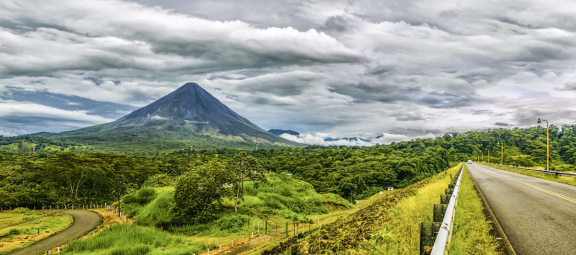
Anyone moving to Costa Rica should view Spanish not as a bonus, but as a factor in productivity. Costa Rica is often describe as a country characterized by both multiculturalism and multilingualism, where “pura vida” is more than just a slogan - it’s part of the everyday way of life.
What really matters in daily life:
- Spanish is the practical language of daily life
- “Pura vida” (English: “pure life”) shapes the tone and attitude of social interaction
- A multicultural environment with regional differences
- Integration happens faster through language and local contacts
- Flexibility makes daily life significantly easier
Tip for expats: Those who start learning Spanish early save time, money, and avoid dependencies later on. In Costa Rica, language speeds up practically everything – from dealing with government agencies to neighborhood interactions.
What makes Costa Rica so special?
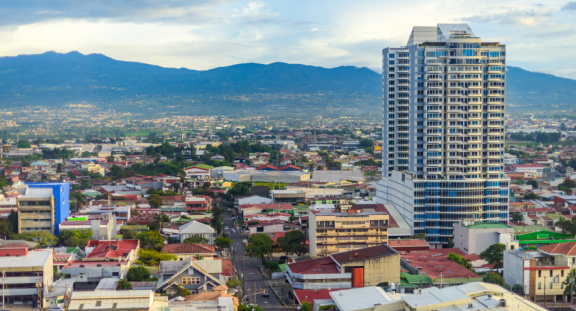
Costa Rica positions itself globally through stability, nature, and sustainability. Added to this is a strong unique selling point in the region: the 1949 Constitution abolished the military. It is precisely this combination of nature conservation, democratic stability, and a focus on quality of life that makes Costa Rica so attractive to many expats.
In detail:
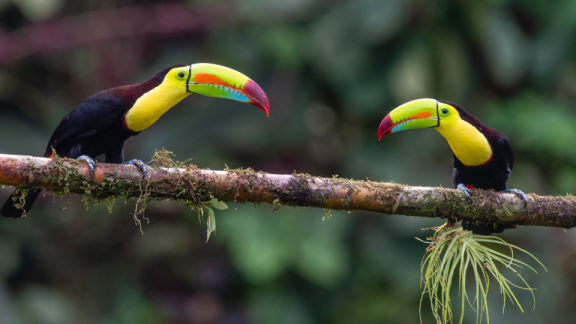
- Over 25 % of the territory is protected
- Approximately 6 % of the world’s biodiversity
- Nature conservation is part of the country’s brand
- Strong appeal for a nature-oriented lifestyle
Tip for expats: Costa Rica doesn’t just market nature; the country is also organized around it in many areas. Those who emigrate specifically for this reason often make the better choice of location.
What should you bear in mind when moving to Costa Rica with pets?
Moving with pets to Costa Rica is entirely feasible, but involves a lot of paperwork. To import pets, you’ll need a veterinary health certificate in English or Spanish, as well as a pet passport with proof of vaccinations, particularly against rabies.
What you should keep in mind:
- Obtain a veterinary health certificate
- Provide complete proof of vaccination status
- Get your pet used to the carrier before the flight
- Check airline and transit regulations separately
- Minimize stress for your pet on moving day
- Actively help your pet adjust to the new home
Tip for expats: When moving with pets, it’s not about improvisation, but timing. Starting early reduces stress, avoids paperwork errors, and ensures a much smoother process.

Who is Costa Rica best suited for as a emigration destination?
Costa Rica is particularly well-suited for people who place a high value on quality of life, nature, and a somewhat quieter daily routine. The country is an excellent fit for remote workers, self-employed individuals, retirees, nature-loving families, and internationally mobile people with a solid financial foundation.
Checklist before moving to Costa Rica:
✓ Clarify visa, passport, and entry requirements
✓ Set up healthcare and insurance coverage
✓ Plan your location, housing, and transition phase
✓ Calculate a realistic budget, including a buffer
✓ Prepare your household goods and customs documents
✓ Focus on improving your Spanish skills
Conclusion: Costa Rica isn’t easy, but it’s a great fit for the right target group. Those who plan realistically and don’t just look at the postcard picture can settle in here very comfortably.


FAQs - What do I need to know about emigrating to Costa Rica?
Do I need a visa to emigrate to Costa Rica?
For tourist stays of up to 180 days, German citizens generally do not need a visa; however, a permit is required for longer stays.
How expensive is it to live in Costa Rica?
Costa Rica is one of the more expensive countries in Central America. San José is relatively expensive compared to other areas – though costs vary greatly from region to region.
Is Costa Rica a safe country for expats?
Costa Rica is considered relatively stable in the region, but not a worry-free destination for expatriates: violent crime has increased nationwide, particularly in connection with organized crime and drug trafficking.
What vaccinations do I need for Costa Rica?
If you are entering the country directly from Germany, no vaccinations are required. Depending on the length of your stay, the following vaccinations are recommended: hepatitis A, hepatitis B, typhoid, or rabies.
Is Costa Rica a good place for remote work and digital nomads?
Yes, Costa Rica is generally an attractive destination for remote work and has even established an official digital nomad subcategory for this purpose.
Do I need to speak Spanish to move to Costa Rica?
Yes, for everyday life, Spanish is clearly an advantage and practically indispensable in many situations. Official Costa Rican sources list Spanish as the official language; at the same time, they point out that while English often works in tourist areas, Spanish is the key to getting things done in real-life everyday situations and when dealing with government agencies.
Can I bring my dog or cat to Costa Rica?
Yes, it is generally possible to move to Costa Rica with pets, but only if you have the proper documentation.
What is the climate in Costa Rica really like?
Costa Rica does not have a uniform climate, but rather many microclimates. There is a clear distinction between the dry season and the rainy season.
Are you interested in moving to Costa Rica or another destination country?
Then do not hesitate and contact us today.
Sabrina Klier
Customer Service & Sales - AIR & SEA