Emigrating to Finland Visa, safety, costs and climate in Finland: a reality check
Emigrating to Finland: The most important answers first
✓ Visa-free entry: A valid national ID card or passport is sufficient; registration is required for stays longer than 90 days.
✓ Solid economy: More moderate growth, but still economically strong and affluent.
✓ Good safety situation: Low crime rate, but winter conditions should be taken seriously.
✓ Public healthcare system: Well developed, with access depending on residence status.
✓ Mixed climate: The south is somewhat milder, while the north is very cold, with dark winters and very bright summers.
✓ Language skills: Finnish is an advantage, while English is widely spoken.
✓ Special feature: Excellent quality of life combined with a strong connection to nature.
✓ Moving with pets: Very manageable with the right preparation.
Relocating made easy with DACHSER & KOLB. Use our moving cost calculator. Receive a quote and consultation. Book a tour. Move.
Facts about Finland

Capital City
Helsinki

Population
5.66 million

Surface Area
338,432 km²

Continent
Europe

Official Language
Finnish, Swedish

Currency
Swedish Krona (SEK)
What are the customs, visa, and entry requirements for Finland?
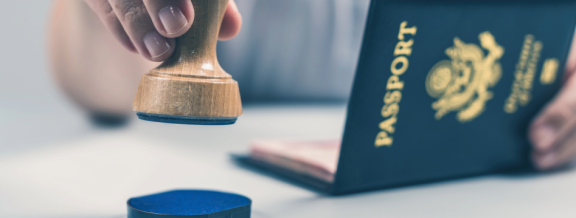
For German nationals, moving to Finland is comparatively straightforward. Finland is a member of both the EU and the Schengen Area, so a valid national ID card or passport is sufficient for entry. However, anyone planning to move to Finland permanently should prepare not only for entry itself, but also for residence registration and the rules relating to household goods at an early stage and with proper care.
Documents required for entry:
- Passport: Yes
- Temporary passport: Yes
- Identity card: No
- Temporary identity card: Yes
- Children's passport: Yes
Tip for expats: First clarify your residence status and registration, then organise housing and household goods. Entry into Finland is simple, but following the right sequence saves time, avoids unnecessary friction with the authorities, and makes the transition much easier to manage.
Is Finland economically attractive and how high is the cost of living?
Finland remains economically attractive, above all as a stable and reliable location rather than a dynamic growth market. The country is considered affluent, open, and well organised, with a strong public sector, high technical expertise, and favourable conditions for industry, innovation, and sustainable infrastructure. For expats, one key point is that the overall price level is high, especially when it comes to housing, services, and larger cities.
Key facts at a glance:
-
Economy with moderate GDP growth of around 0.9%
-
Income distribution: Gini coefficient = 27.4 (0 = perfect equality; 100 = maximum inequality)
-
Open market economy with a large public sector
-
Services are the largest economic sector, while industry remains important
-
Strong future sectors: energy, forestry, industry, construction, and transport
-
High cost of living, especially for housing and services
Tip for expats: Finland is not a low-cost destination from an economic perspective. Anyone planning to move to Finland should not only calculate salary and rent, but also factor in deposits, heating, insurance, mobility, and the very different housing costs depending on the region.
How safe is Finland for expats?
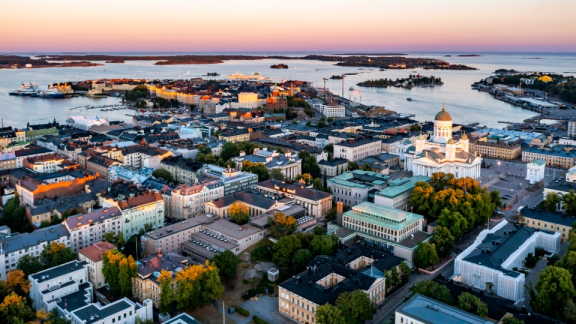
Finland is generally considered a very safe destination for expats. Crime rates are low, and everyday life is well structured and predictable in many parts of the country. As a result, the practical risk profile is less about conventional crime and more about winter conditions, snowfall, long distances in the north, and occasional pickpocketing in busy areas or on public transport.
What expats should know:
- Overall crime rate is low
- Pickpocketing can occur in busy places and on public transport
- In winter, extreme cold and heavy snowfall are possible
- In summer, the risk of forest fires increases during dry periods
- In the sparsely populated north, big distances and gaps between petrol stations habe t be considerable
- Drivers should be prepared for wildlife crossings involving moose or reindeer
Tip for expats: In Finland, safety is less about crime and more about infrastructure and climate. Anyone who plans their location, commute, vehicle, winter readiness, and everyday logistics properly can significantly reduce operational risks.
How good is the healthcare system in Finland?
Finland’s healthcare system is well developed and a clear location advantage. Public healthcare is organised through the Wellbeing Services Counties and funded through taxation. For expats, access is the key issue: public healthcare services are generally available to those who have a municipality of residence in Finland, while private services are often faster to access but significantly more expensive.
Important before relocating:
- Public healthcare is provided through the Wellbeing Services Counties
- Eligibility for public services usually depends on having a municipality of residence
- The first point of contact is often the local health and social services centre
- Specialists are usually only available with a referral
- Private healthcare is often faster, but significantly more expensive
Tip for expats: In Finland, the real issue is not the quality of care, but getting the right access. Anyone who clarifies their status, municipality of residence, insurance logic, and initial points of contact before moving will have a much smoother start.

Are you planning to move to Finland?
With structured preparation, you can avoid financial surprises. Our moving cost calculator provides clarity—it's simple, convenient, and takes just a few steps.
What is the climate like in Finland?
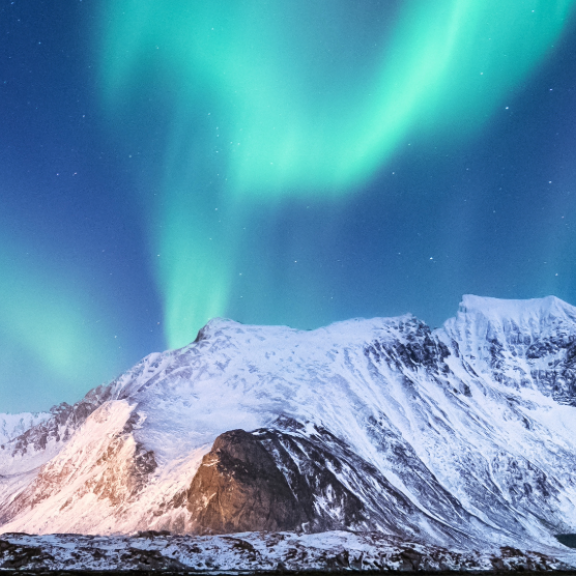
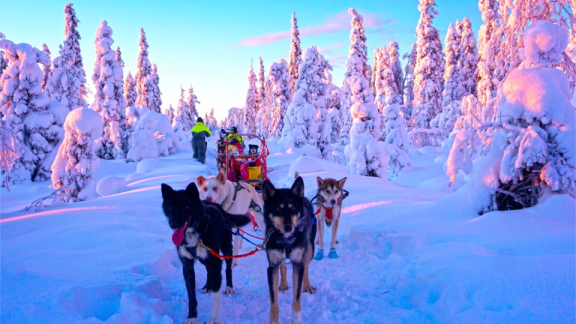
Anyone moving to Finland is not simply relocating to “the North,” but to a country with strong regional and seasonal contrasts. Average temperatures range from over five degrees in the southwest to below zero in northern Lapland. In addition, there are long, dark winters, very bright summers, and weather that can be much harsher, depending on the region, than many people are used to from Central Europe.
What this climate means for everyday life:
- The southwest is milder than the north
- The north is significantly colder, with Lapland being especially harsh
- Winters are often below freezing, and in some regions far colder
- Winter days are dark, and in the far north the sun may not rise for weeks
- Summers are very bright and can be surprisingly mild to warm, depending on the region
- Weather and road conditions can change quickly
Tip for expats: In Finland, climate is not a side issue. Your location, clothing, mobility, daylight exposure, and personal resilience all need to fit the country — otherwise initial fascination can quickly turn into everyday operational friction.
What shapes language, culture, and everyday life in Finland?
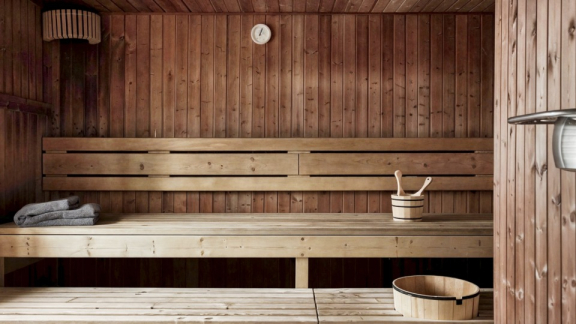
Anyone moving to Finland should not define the country only by its nature and tranquillity. Finnish and Swedish are the official languages, and many people also speak English very well. At the same time, equality, honesty, punctuality, trust, a close connection to nature, and a rather non-hierarchical culture in everyday life and at work shape life much more strongly than in many other countries. Sauna culture is also an integral part of everyday life in Finland and is far more than just leisure or wellness — it is a natural part of both social and private life.
What really helps in everyday life:
- Finnish and Swedish are the official languages
- English is widely spoken
- Punctuality and reliability matter a great deal
- Equality and fairness shape everyday life
- Work culture is generally direct and not very hierarchical
- Nature and sauna culture play an important role in the Finnish way of life
Tip for expats: In Finland, it is often possible to get by well with English, but for long-term integration and many job opportunities, Finnish or Swedish remains a real advantage. Anyone who takes language, punctuality, and the rather understated communication style seriously will settle into everyday life much more quickly.
What makes Finland particularly attractive as a destination for expats?
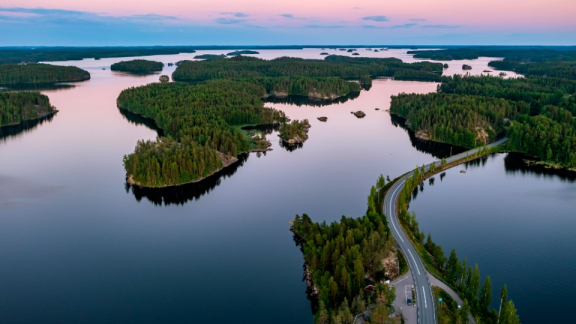
Finland stands out as a destination for expats above all because of its combination of nature, reliability, and quality of life. The country has nearly 188,000 lakes and a deeply rooted sauna culture that is not just a tourist attraction, but a normal part of everyday life in many homes and residential buildings. It is precisely this mix of quality of life, tranquillity, nature, and well-functioning structures that makes Finland so distinctive.
In detail:
- Around 187,888 lakes
- Sauna is part of everyday life, not just a tradition
- Many apartments and houses have their own sauna
- Nature and water shape leisure and lifestyle
- Excellent quality of life
- Trust and strong social systems are part of the location advantage
Tip for expats: Finland does not work through noise or spectacle, but through structure. Anyone who truly values tranquillity, personal responsibility, nature, and reliable systems will find much more here than just an attractive Nordic image.

What should you bear in mind when moving to Finland with pets?
Moving with pets to Finland is generally very manageable within the EU, but it should not be left until the last minute. Clear rules apply to dogs, cats, and ferrets: a microchip or permitted tattoo, a valid rabies vaccination, and the correct veterinary documents are mandatory. If you are entering from a non-EU country, an EU health certificate and a clinical examination shortly before departure are also required.
What pet owners should keep in mind:
- Check vaccination status early
- Prepare veterinary documents in full
- Train your pet to use the travel crate before the flight
- Coordinate entry and airline requirements
- Minimise stress for the pet on moving day
- Actively support your pet’s adjustment to the new home
Tip for expats: When moving with pets, success depends not on improvisation, but on timing. Starting early reduces stress, helps avoid formal errors, and ensures a much smoother process overall.

Who is Finland suited to as a destination for expats?
Finland is particularly well suited to people who value quality of life, safety, nature, and a well-organised environment. The country is a good match for families, skilled professionals, and expats who can cope with high living costs, dark winters, and a rather quiet everyday culture. Finland is less suitable for anyone expecting low costs, a warm climate, or a highly dynamic labour market.
Checklist before moving to Finland:
✓ Clarify visa, passport, and entry requirements
✓ Put healthcare provision and insurance cover in place
✓ Plan your location, housing solution, and transition phase
✓ Calculate your budget realistically, including a financial buffer
✓ Improve your Finnish language skills in a focused way
Conclusion: Finland is a strong destination for expats who genuinely want structure, safety, nature, and a high quality of life — not just as an image, but as part of everyday life. This assessment is based on official information about daily life, climate, work culture, and quality of life.


FAQs - What do I need to know about emigrating to Finland?
Do I need a visa to move to Finland?
German nationals do not need a visa to enter Finland. However, anyone planning to live in Finland for the longer term should take care of residence registration and any other formal steps at an early stage.
What documents do I need to enter Finland?
A valid national ID card or passport is sufficient for entry into Finland. If you are planning a permanent move, you should also make sure that all documents relating to registration, residence, and the move itself are well prepared.
Is Finland a good country for expats?
Finland is particularly well suited to people who value safety, nature, structure, and a high quality of life. At the same time, the climate, living costs, and the rather quiet everyday culture should be assessed realistically.
How attractive is Finland economically?
Finland is considered economically stable, well organised, and technologically strong. Opportunities exist above all in areas such as industry, energy, services, logistics, construction, and technical professions.
How high is the cost of living in Finland?
The cost of living in Finland is generally high. Housing, services, and everyday life in larger cities in particular can be significantly more expensive than in many other European countries.
Is Finland a safe country to live in?
Overall, Finland is considered a very safe country with low crime rates. For many expats, winter conditions, snow, darkness, and long distances are more relevant than traditional security risks.
How good is the healthcare system in Finland?
Finland’s healthcare system is well developed and offers reliable medical care. It is important to clarify your residence status and access to public healthcare services carefully before moving.
Can you get by with English in Finland, or should you speak Finnish?
In everyday life, it is often possible to get by well with English in Finland, as many people speak it very well. For long-term integration, better job opportunities, and dealing with authorities, however, Finnish or Swedish is a clear advantage.
What do I need to consider when moving to Finland with a dog or cat?
Moving to Finland with pets is generally very manageable. The key requirements are the correct documents, a valid rabies vaccination, the legally required identification of the animal, and timely preparation.
Who is Finland particularly suited to as a destination for expats?
Finland is particularly well suited to families, skilled professionals, and expats who are looking for quality of life, safety, nature, and a well-organised environment. It is less suitable for anyone expecting a warm climate, low costs, or a very dynamic labour market.
Are you interested in moving to Finlad or another destination country?
Then do not hesitate and contact us today.
Donna Draganov
Teamlead Customer Service & Sales - ROAD