Emigrating to France Visa, safety, costs and climate in France: a reality check
Emigrating to France: The most important answers first
✓ Visa-free entry: A national ID card or passport is sufficient; residence status is only required for non-EU citizens.
✓ Economically strong: One of Europe’s largest economies with strong opportunities.
✓ Good safety situation: Low crime rate, although pickpocketing can occur in tourist areas.
✓ Efficient healthcare system: Registration in the system is required to gain access.
✓ Several climate zones: Strong regional differences, from Mediterranean to alpine and continental.
✓ Language skills: French is essential.
✓ Special feature: Rich in culture with a high level of diversity.
✓ Moving with pets: Very easy to plan within the EU, but requirements must be observed.
Moving abroad made easy with DACHSER & KOLB. Use our moving cost calculator. Get a quote and consultation. Book a tour. Move.
Facts about France

Capital City
Paris

Population
68.85 million

Surface Area
551,695 km²
Continent
Europe

Official Language
French

Currency
Euro (EUR)
What are the customs, visa and entry requirements for France?
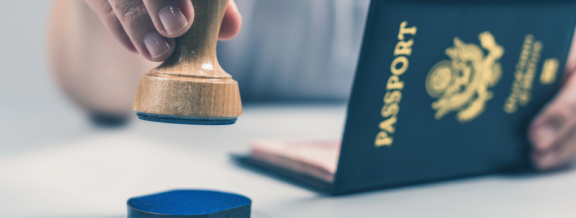
German citizens who want to move to France benefit from freedom of movement within the EU. In principle, a valid identity document is sufficient for entry. The key steps come after arrival: anyone planning to live, work or study in France long term should organise their residence, social security, health insurance, tax status and important everyday documents at an early stage. EU citizens generally do not need a mandatory residence card for stays of more than three months, but they must meet the requirements for residence.
Required documents for entry:
- Passport: Yes
- Temporary passport: Yes
- Identity card: Yes
- Provisional identity card: Yes, must be valid
- Children's passport: Yes
Tip for expats: When moving to France, entry itself is usually not the bottleneck. The real effort begins after the move with registration, health insurance, bank account, tax matters and administrative documents.
Is France economically attractive and how high are the living costs?
France is one of Europe’s strongest economies. Paris, Lyon, Toulouse and Marseille, among others, are particularly attractive for skilled professionals, expats and international companies. At the same time, expats should budget realistically: living costs vary significantly by region, with Paris and popular coastal areas often being much more expensive than smaller towns or rural areas.
Key facts at a glance:
-
Economy with stable GDP growth of around 1.2%
-
Income distribution: Gini coefficient = 31.8 (0 = complete equality; 100 = maximum inequality)
-
Good opportunities in industry, aerospace, healthcare, tourism, IT and services
-
Paris as an expensive but strong labour market
-
Very clear regional cost differences
-
High social security contributions, but strong public services
Tip for expats: Do not treat France as one uniform market. The business case depends heavily on whether you move to Paris, a metropolitan region, the coast or a rural area.

Safety in France: what do expats need to know?
France is a well-developed EU country with functioning infrastructure and a high quality of life. For expats, this provides a solid foundation. Nevertheless, the safety situation, residential environment and mobility should be assessed realistically, especially in major cities, tourist areas, train stations and at large events. The German Federal Foreign Office points out, among other things, pickpocketing, demonstrations and regional particularities.
What expats should know:
- Overall stable safety situation
- Pickpocketing possible in tourist areas
- Factor demonstrations and strikes into everyday life
- Be aware of regional differences between urban and rural areas
- Realistically assess traffic and commuting conditions
Tip for expats: Safety in France strongly depends on location. Those who check the residential environment, commute, schools, public transport and local infrastructure in advance will significantly reduce friction when getting started.
What is the healthcare system like in France?
France has an efficient healthcare system. Statutory health insurance is managed through the French social security system, often referred to as Assurance Maladie. Once registered in the system, insured persons receive a Carte Vitale. This card contains the administrative information needed for reimbursements and makes billing easier with doctors, pharmacies and hospitals. Many people also take out private supplementary insurance, known as a mutuelle.
Important before moving:
- Clarify social security and health insurance
- Apply for the Carte Vitale after registration
- Check the European Health Insurance Card for the transition period
- Understand the reimbursement system and personal contributions
- Check a mutuelle for additional benefits
- Prepare medication and medical records
Tip for expats: The French healthcare system is strong, but administratively demanding. Plan health insurance, Carte Vitale, choice of doctor and possible supplementary insurance at an early stage.

Are you planning to move to France?
With structured preparation, you can avoid financial surprises. Our moving cost calculator provides clarity—it's simple, convenient, and takes just a few steps.
What is the climate like in France?
France does not have one uniform climate, but several climate zones. The west and northwest are more Atlantic-influenced, the south has a Mediterranean climate, the Alps and Pyrenees are alpine, and parts of the interior are continental. This is relevant for expats because climate, housing comfort, heating and cooling needs, mobility and leisure activities can vary significantly depending on the region.
What the climate means for daily life:
- Atlantic coast: mild, humid and windy
- Mediterranean region: hot summers, mild winters
- Alps and Pyrenees: snow and mountain climate
- Interior regions: greater temperature differences
- Southern France: heatwaves possible in summer
Tip for expats: France offers many climate options, but that is exactly why location choice is crucial. Those who underestimate heat, rain, snow or wind may plan everyday life and housing conditions too narrowly.
What defines language, culture and everyday life in France?
France is strongly shaped by language, regional identity, food culture and a pronounced awareness of quality of life. French is much more important in everyday life than in many other international destinations: public authorities, rental agreements, healthcare, schools and many working environments operate mainly in French. At the same time, culture plays a major role in daily life, from mealtimes and markets to forms of politeness and regional traditions.
What really helps in everyday life:
- Build French language skills step by step
- Observe politeness and formal speech
- Take regional differences seriously
- Appreciate food culture and shared meals
- Allow patience for bureaucracy
- Actively build local networks
Tip for expats: French is not just a nice-to-have, but a key factor for integration. Those who understand the language, manners and local customs will settle in much faster, both professionally and personally.

What makes France special?
France stands for cultural diversity, strong regions, high quality of life, culinary culture, history, fashion, art and an enormous variety of landscapes. From Paris, Provence, Brittany and Alsace to the Atlantic coast, the Alps and the Côte d’Azur, the country offers very different ways of life. This diversity is exactly what makes France attractive for many expats.
In detail:
- Paris as a global cultural and economic centre
- Strong regional identities
- World-famous cuisine and food culture
- Atlantic coast, Mediterranean, Alps and Pyrenees
- High quality of life in many regions
- Wide range of culture, art and leisure activities
Tip for expats: France does not follow one single pattern. Those who choose the right region and respect local particularities can make much better use of the country’s location advantages.
What should you bear in mind when moving to France with pets?
Moving with pets to France is generally easy to plan within the EU. EU rules apply to dogs, cats and ferrets. An EU pet passport, microchip and valid rabies vaccination are particularly important. For certain dog breeds, other animal species or travel to French overseas territories, additional requirements should be checked separately.
What pet owners should keep in mind:
- Check vaccination status early
- Prepare veterinary documents in full
- Train your pet to use the travel crate before the flight
- Coordinate entry and airline requirements
- Minimise stress for the pet on moving day
- Actively support your pet’s adjustment to the new home
Tip for expats: Lead time is critical when moving with pets. Check vaccination status, documents, transport route and French special rules early so that the move runs smoothly for both people and animals.

Who is France suited to as a destination for expats?
Estonia is particularly well suited to people looking for a structured fresh start in a digital, safe, and nature-oriented environment. The country is a good fit for professionals in tech and innovation, remote workers, and people who are comfortable with a quieter everyday life. Estonia is less suitable for anyone expecting major big-city dynamism, very warm winters, or an especially large labour market.
Checklist before moving to France:
✓ Clarify visa, passport, and entry requirements
✓ Put healthcare provision and insurance cover in place
✓ Plan your location, housing solution, and transition phase
✓ Calculate your budget realistically, including a financial buffer
✓ Improve your Estonian language skills in a focused way
Conclusion: Estonia is a strong destination for expats who genuinely want digital efficiency, safety, nature, and clear structures — not just as an image, but as part of everyday life. This assessment is a well-founded conclusion based on official information about administration, the labour market, climate, safety, and everyday culture.


FAQ – What do I need to know about moving to France?
Do German citizens need a visa for France?
No, German citizens do not need a traditional visa for France. As EU citizens, they can enter with a valid national ID card or passport and stay in France under the conditions of EU freedom of movement.
Can I enter France with a national ID card?
Yes, German citizens can enter France with a valid national ID card or passport. Temporary documents and children’s passports are also accepted.
Is France expensive?
France varies in cost depending on the region. Paris, the Côte d’Azur and popular metropolitan areas can have high housing and living costs. Smaller towns and rural areas are often more affordable, but require a closer look at the labour market and infrastructure.
Is English enough to live in France?
English can help at the beginning, especially in international companies or tourist regions. However, French is clearly essential for dealing with public authorities, rental agreements, the healthcare system, schools, job searches and integration.
How do I get access to the healthcare system?
Access is provided through the French social security system and Assurance Maladie. After registration, you can apply for the Carte Vitale, which makes reimbursements and billing within the healthcare system much easier.
Can I bring my pet to France?
Yes, this is easy to plan within the EU. For dogs, cats and ferrets, an EU pet passport, microchip and valid rabies vaccination are particularly important.
What makes France special as a destination for expats?
France combines strong economic regions, a high quality of life, cultural diversity, a rich food culture and very different regions. At the same time, expats should realistically factor in bureaucracy, language barriers, cost differences and regional particularities.
Are you interested in moving to France or another destination country?
Then do not hesitate and contact us today.
Donna Draganov
Teamlead Customer Service & Sales - ROAD