Emigrating to Madagascar Visa, safety, costs, and climate in Madagascar: a reality check
Emigrating to Madagascar: The most important answers first
✓ Visa required: Entry is only possible with a visa; for short stays, visas on arrival and tourist e-visas are available.
✓ Economy with niche potential: Opportunities exist in certain sectors, but the market environment remains challenging.
✓ Security situation: Be aware of safety risks in tourist regions, there is a risk of theft and armed robberies.
✓ Weak healthcare system: Medical care is generally very limited.
✓ Tropical climate: A hot rainy season, a cooler dry season, and a pronounced cyclone season characterize daily life.
✓ Language skills: Malagasy and French are the official languages; English is gaining importance.
✓ Special feature: Fourth-largest island in the world with unique flora and fauna.
✓ Moving with pets: Thorough preparation and detailed documentation required.
Easy emigration with DACHSER & KOLB. Use the moving cost calculator. Receive a quote and consultation. Book a viewing. Move.
Facts about Madagascar

Capital City
Antananarivo

Population
30.33 million

Surface Area
226657,797 mi² or 587.041 km²
Continent
Africa

Official Language
Malagasy, French
Currency
Ariary (MGA)
What are the customs, visa, and entry requirements for Madagascar?
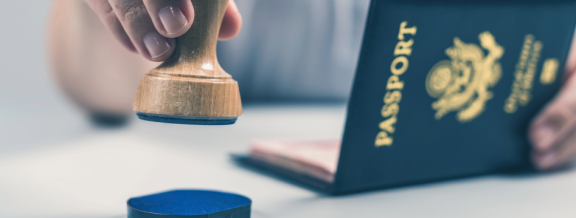
Anyone wishing to emigrate to Madagascar should carefully coordinate their entry, residence, and relocation. German citizens require a visa, and for longer stays, the appropriate solution should be planned well in advance.
Documents required for entry:
- Passport: Yes
- Provisional passport: Yes
- Identity card: No
- Provisional identity card: No
- Child's passport: Yes
Tip for expats: First clarify your residency status and import requirements, then schedule your move. Failing to properly coordinate visas, documents, and shipping will result in avoidable delays and additional costs.
Is Madagascar economically attractive for expats?
Madagascar is not an easy market economically, but it is a growing market with niche opportunities. Growth is being driven primarily by services, tourism-related sectors, telecommunications, and private investment. At the same time, productivity, infrastructure, and poverty remain major operational constraints. Anyone looking to establish themselves here needs more than just good ideas: a solid budget, patience, and a realistic business model are essential.
The most important facts at a glance:
- Solid growth, but uneven, with average GDP growth of 2–3% per year (1961–2024)
- Income distribution: Gini coefficient = 36.8 (0 = perfect equality; 100 = maximum inequality)
- Tourism is showing renewed potential
- Agribusiness remains a core sector
- Digital services are becoming more important
- Infrastructure and administrative processes remain challenging
- A financial buffer is indispensable
Tip for expats: From an economic perspective, Madagascar is best suited to people with a clearly defined niche. Those focusing on tourism, agribusiness, export products, or project-based business models have significantly better prospects than those offering generic standard services.
Safety in Madagascar: What do expats need to know?
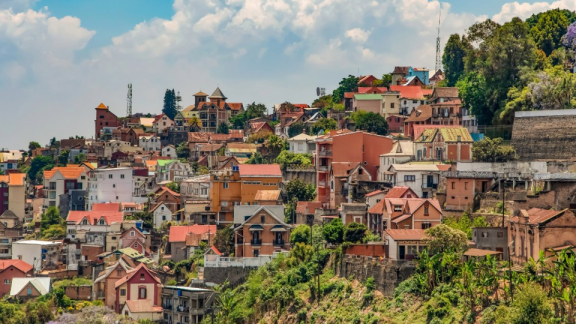
In Antananarivo, pickpocketing is common, and armed robberies have increased significantly, including during the daytime. Particularly sensitive areas include the city center, the areas around hotels and restaurants, transportation hubs, and certain tourist regions. Your residential location, everyday routes, timing, and routines should therefore be factored into your planning from the very beginning.
What expats should know:
- Antananarivo is a security hotspot (including pickpocketing and armed robbery)
- Armed attacks are possible
- Tourist areas and transportation hubs are especially sensitive
- Limit movement in the evening and at night
- Keep your original passport readily available for checks
- Do not choose where to live based on price alone
Tip for expats: In Madagascar, security is determined less by the country in the abstract and more by your immediate living environment. Prioritizing a good location, short daily routes, and clear routines can significantly reduce risk later on.
What is the healthcare system like in Madagascar?
For expats, Madagascar’s healthcare system is a clear risk factor. No mandatory vaccinations are required for direct entry from Germany, although proof of yellow fever vaccination may be required when entering from yellow fever risk areas. Medical care is only available to a limited extent. Outside the capital, specialist staff are often lacking, medications can be in short supply, and counterfeit drugs do occur.
Overview:
- No mandatory vaccinations for direct entry from Germany
- Proof of yellow fever vaccination is relevant in certain entry scenarios
- Hepatitis A vaccination is usually advisable
- High malaria risk year-round throughout the country
- Dengue, chikungunya, and other infectious disease risks
- Medical care outside Antananarivo is weak
- Evacuation insurance is strongly recommended
Tip for expats: In Madagascar, healthcare is not a side issue. Good international health insurance, medical evacuation coverage, a travel medical kit, mosquito protection, and a reliable local clinic plan should all be in place before the move.

Are you planning to move to Madagascar?
With structured preparation, you can avoid financial surprises. Our moving cost calculator provides clarity — it's simple, convenient, and takes just a few steps.
Climate in Madagascar: How do weather patterns, temperatures, and rainy seasons differ?
Madagascar does not have a single uniform climate, but several very distinct climate zones. In general, the hot, humid season runs roughly from November to April, while the cooler, drier period lasts from May to October. The cyclone season from December to April is especially relevant, as tropical storms, flooding, and landslides must be expected along the coasts. This affects living comfort, transportation routes, and the entire moving process.
What the climate means for your everyday life:
- Rainy season usually runs from November to April
- Dry season usually runs from May to October
- East coast: humid and tropical
- Highlands: cooler, milder, and often more comfortable
- Southwest: dry to arid
- Cyclones can place heavy strain on infrastructure
Tip for expats: The heat in Cyprus is often underestimated. If you want to live there permanently, you should not only consider the sea view, but also the microclimate, building standards, shade, and suitability for everyday life in midsummer.
Diversity in Madagascar? – Language, culture, and everyday life
In everyday life in Madagascar, a combination of linguistic flexibility and cultural sensitivity is especially helpful. Malagasy and French are the official languages, while English is slowly gaining importance. The population is linguistically and culturally connected to the Austronesian world, while African and Arab influences have also shaped the country. Family ties, regional identities, and traditional rituals continue to play an important role in daily life.
What really helps in everyday life:
- Malagasy and French are key
- English is becoming more common, but it is still not enough everywhere
- Around 20 ethnic groups shape the country
- Traditions and ancestor culture remain important
- Urban and rural life function very differently
- Patience and relationship-building are valuable in daily life
Tip for expats: You can get by quickly in Cyprus with English, but you can build relationships much faster with a little Greek. If you want to stay for the long term, you should respect local routines and not just move in expat circles.
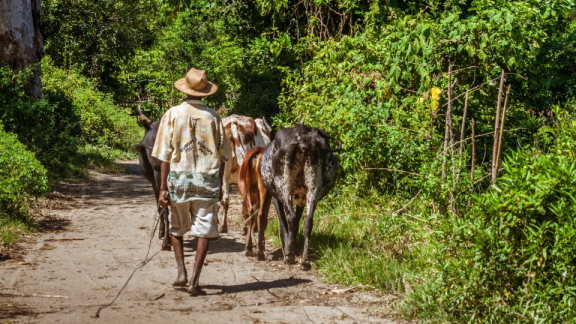
What makes Madagascar special?
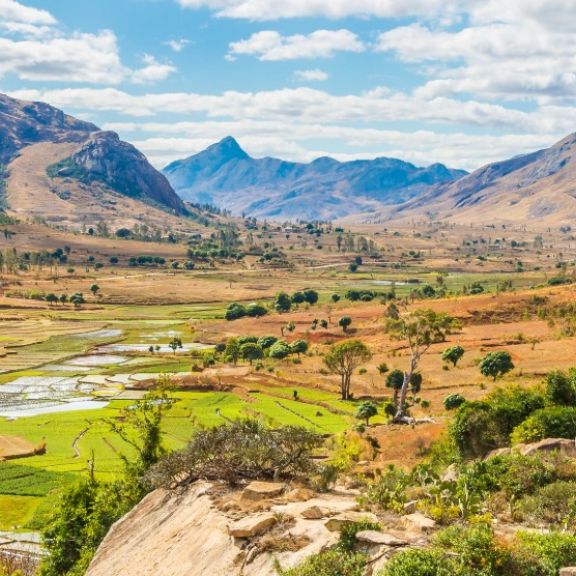
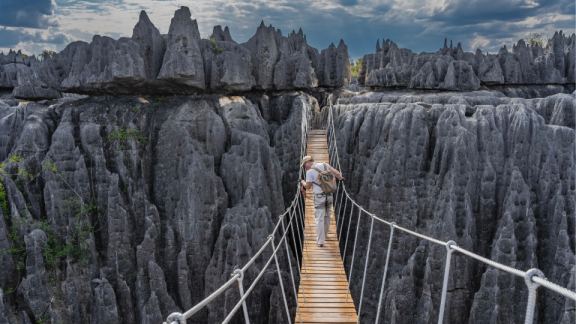
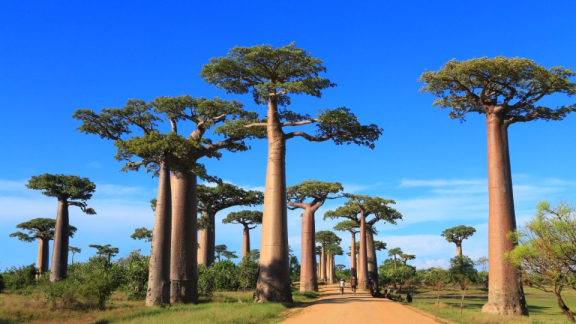
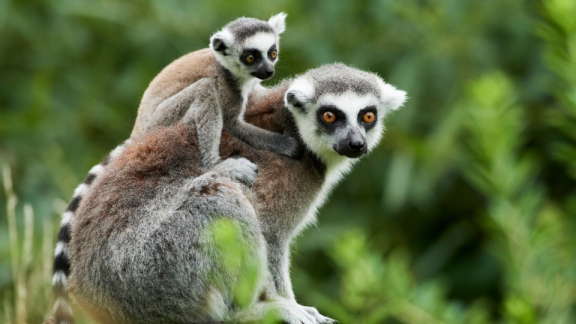
Madagascar is the fourth-largest island in the world, has a natural profile that is almost unmatched, and is home to an exceptionally high number of endemic species. In the rainforests of Atsinanana, the endemism rate is around 80 to 90 percent depending on the species group. Lemurs, numerous reptiles, baobabs, Tsingy landscapes, and tropical coastlines make Madagascar a country with a truly distinctive identity.
In detail:
- Fourth-largest island in the world
- Lemurs are native only to Madagascar
- Very high rate of endemism
- Baobabs and Tsingy are iconic
- Several UNESCO sites
- Nature is the country’s biggest USP
Tip for expats: Anyone interested in nature, biodiversity, tourism, or conservation – whether personally or professionally – will find an environment in Madagascar with exceptional appeal. That is one of the country’s strongest location advantages.
What should you bear in mind when moving to Madagascar with animals?
Moving to Madagascar with pets is a formal process with tight timing requirements. For pets, a veterinary health certificate or certificate of freedom from infectious disease is required, and it must be no more than three days old at the time of entry. In addition, you need an EU pet passport or vaccination record, a valid rabies vaccination, a current rabies antibody test, and proof of tapeworm treatment. Starting too late can lead to real problems shortly before departure.
What you should keep in mind:
- Check vaccination status early on
- Rabies vaccination is mandatory, and a rabies antibody test is required
- Prepare all veterinary documents
- Train your pet to use the transport crate before the flight
- Coordinate entry and flight requirements
- Minimize stress for the animal on moving day
- Actively support the animal in settling into its new home
- Health certificate or certificate of freedom from infectious disease, both no more than 3 days old
- Carry an EU pet passport or vaccination record
Tip for expats: When relocating with pets to Madagascar, success depends not on speed but on precision. Vaccination status, veterinary certificates, flight clearance, and the entry date all need to align perfectly.

For whom is Madagascar a suitable destination for emigration?
Madagascar is particularly well suited to nature-oriented expats, entrepreneurs with a niche focus, project and development work, people connected to tourism or agribusiness, and individuals with a high degree of flexibility and resilient expectations. It is less suitable for people who rely on highly predictable processes, strong medical infrastructure, high security standards, and European-style comfort in daily life.
Checklist before emigrating to Madagascar:
✓ Check entry requirements and residence regulations for Madagascar
✓ Secure health insurance and medical care coverage in Madagascar
✓ Determine a suitable place to live in Madagascar and arrange initial housing
✓ Plan your emigration budget for Madagascar, including a buffer
✓ Prepare your move to Madagascar carefully, including household goods and documents
✓ Improve your French skills to make everyday life easier
Conclusion: Emigrating to Madagascar can be highly appealing, especially because of its unique natural environment, cultural distinctiveness, and genuine niche opportunities. At the same time, the country requires more preparation, resilience, and pragmatism than classic expat destinations.


FAQs for emigrating to Madagascar
What do I need to consider when emigrating to Madagascar?
Anyone planning to move to Madagascar should clarify their visa, residence status, health insurance, place of residence, budget, and access to medical care early on. Language skills and realistic preparation for daily life, climate, and infrastructure are also important.
What visa and entry requirements apply to Madagascar?
German citizens need a visa to enter Madagascar. Anyone planning to stay longer or emigrate permanently should arrange the appropriate residence status in good time and prepare all documents carefully and completely.
Is Madagascar a safe country to emigrate to?
The security situation in Madagascar should be assessed with nuance. In the capital, Antananarivo, and in certain tourist regions, greater caution is advisable in daily life, which is why your place of residence and everyday routes should be chosen carefully.
What is the healthcare system like in Madagascar?
Madagascar’s healthcare system is limited, and especially outside the capital, it is significantly weaker. For expats, good international health insurance with repatriation coverage and reliable protection is therefore especially important.
What language is spoken in Madagascar?
The official languages of Madagascar are Malagasy and French. Although English is becoming more important, French is usually much more helpful in daily life and in many practical matters.
What is the climate like in Madagascar?
Madagascar has a tropical climate that varies greatly depending on the region. The rainy season, dry season, and cyclone season all have a major impact on daily life, housing, and travel and should be taken into account when planning an emigration.
Who is Madagascar suitable for as an emigration destination?
Madagascar is particularly suitable for people seeking nature, individuality, and an unusual living environment. It can be especially attractive for flexible expats, nature-oriented individuals, and people interested in tourism, projects, or niche markets.
Are you interested in moving to Madagascar or another destination country?
Then do not hesitate and contact us today.
Sabrina Klier
Customer Service & Sales - AIR & SEA