Emigrating to Cambodia Visa, safety, costs, and climate in Cambodia: a reality check
Emigrating to Cambodia: The most important answers first
✓ Visa required: Entry is only possible with a visa; the appropriate residence status is required for longer stays.
✓ An economy with opportunity and friction: Cambodia remains a growth market, but at the same time it is vulnerable to shocks.
✓ Security situation: Cambodia is very usable overall, but caution is advised in border areas and regarding robbery and bag snatching.
✓ A limited healthcare system: Medical care is usable, but uneven in quality, and high out-of-pocket costs remain common.
✓ A tropical, monsoon-driven climate: Heat, high humidity, and heavy rainfall clearly shape everyday life.
✓ Language skills: Khmer is the official language; English helps in cities and in tourism, but it does not carry everything.
✓ Special feature: Strong cultural appeal and a tropical everyday environment, with Angkor as the center of the Khmer Kingdom.
✓ Moving with pets: Good preparation is required; rabies vaccination and a health certificate are mandatory.
Relocating made easy with DACHSER & KOLB. Use our moving cost calculator. Get a quote and consultation. Book a tour. Move.
Facts about Cambodia

Capital City
Phnom Penh

Population
17.6 million

Surface Area
69,898 mi² or 181,040 km²
Continent
Asia

Official Language
Khmer

Currency
Riel (KHR)
What are the customs, visa, and entry requirements for Cambodia?
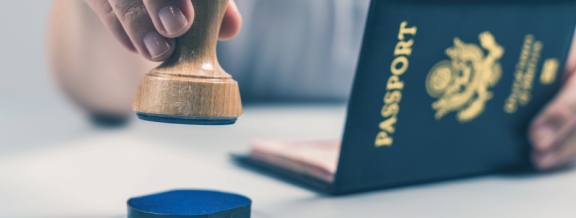
For German citizens, entry is not visa-free. Since 2024, an additional electronic entry procedure has applied: travelers must register through Cambodia e-Arrival. The tourist visa and the business visa can both be applied for online. The eVisa is valid for single entry, remains valid for three months, and generally allows a stay of one month.
Documents required for entry:
- Passport: Yes
- Temporary passport: Yes
- National ID card: No
- Temporary national ID card: No
- Child passport: Yes
Tip for expats: Entry into Cambodia may seem simpler than it really is for a genuine emigration plan. First get your visa pathway, purpose of stay, work permit, and moving date properly aligned, then finalize your new start.
What are the economic conditions and standard of living like in Cambodia for expats?
Cambodia is not an easy-win market economically, but it is a market with potential and strong growth. At the same time, there are ongoing pressures, including the real estate downturn as well as external and domestic economic shocks. Structurally, the economy still relies on agriculture, tourism, the garment industry, and other export sectors.
Key facts at a glance:
- Very strong growth, with average GDP growth of 6–7% per year (1994–2024).
- Income distribution: Gini coefficient = 54.6 (0 = perfect equality; 100 = maximum inequality)
- Agriculture remains important
- Tourism, garments, and export sectors are other important industries
- Infrastructure constraints and the shortage of skilled workers are holding the economy back, along with real estate and financial market risks
- Living costs are comparatively low
Tip for expats: From an economic perspective, Cambodia is especially suitable for people with a clear business model, local roots, and a solid budget. Anyone focusing only on low costs can quickly underestimate the market structure, processes, and risks.
Safety in Cambodia: What do expats need to know?
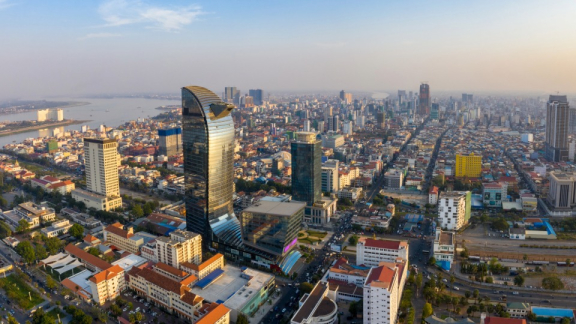
Cambodia is generally safe, but special caution is advisable in certain areas. Travel to the border region with Thailand is currently discouraged. In some parts of the country, there is also still a risk from landmines. In tourist centers, especially Phnom Penh, Sihanoukville, and Kampot, isolated robberies targeting foreigners and thefts in accommodations do occur.
What expats should know:
- Military tensions in border provinces remain possible
- Partial travel warning for the border area with Thailand
- Landmine risk near the borders with Thailand and Vietnam
- Robberies targeting foreigners in tourist centers, as well as thefts in hotels and guesthouses, do occur
- Phone and bag theft (bag snatching) by passing motorcyclists
- Demonstrations and large crowds are best avoided
Tip for expats: In Cambodia, what matters is often not just the country itself, but the specific reality of everyday life on the ground. Anyone who plans their residential area, commute, and evening routine consciously can reduce risk significantly.
What is the healthcare system like in Cambodia?
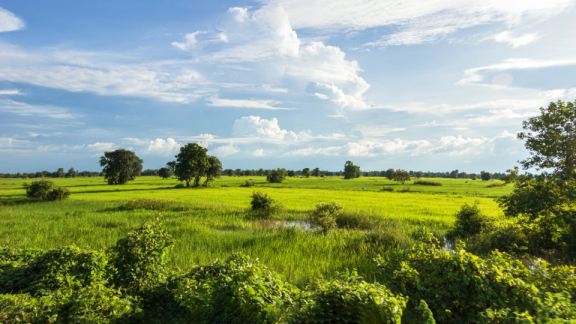
The healthcare system is usable for expats, but clearly limited. Medical care in the country is not comparable to Europe and can often be technically or hygienically problematic. At the same time, Cambodia has made progress in social health coverage. Even so, more than 60 percent of healthcare spending is still paid directly out of pocket by households.
At a glance:
- Direct entry from Germany without mandatory vaccinations
- Proof of yellow fever vaccination only when entering from yellow fever risk areas
- Hepatitis A recommended
- For long-term stays, depending on your profile, dengue, hepatitis B, typhoid, rabies, and Japanese encephalitis may also be relevant
- Dengue is an issue nationwide
- High out-of-pocket healthcare costs remain a real risk
- Strong international health insurance and repatriation coverage are clearly advisable
Tip for expats: In Cambodia, healthcare is not a side issue. Strong international health insurance, a travel medicine kit, up-to-date vaccinations, and consistent mosquito protection should already be in place before the move.

Are you planning to move to Cambodia?
With structured preparation, you can avoid financial surprises. Our moving cost calculator provides clarity — it's simple, convenient, and takes just a few steps.
Climate in Cambodia: How do the weather, temperatures, and rainy seasons differ?
Cambodia has a tropical monsoon climate with two clear basic patterns: rainy season and dry season. The rainy season usually runs from May to October, and the dry season from November to April. December and January are considered the cooler months, while April is usually the hottest month. Average temperatures are around 27 to 28°C, often combined with high humidity.
What the climate means for your daily life:
- Tropical and warm year-round
- Rainy season usually from May to October
- Dry season usually from November to April
- December and January are comparatively cooler
- April is often the hottest month
- Average temperatures around 27–28°C
- Heavy rainfall and local flooding are part of the seasonal reality
Tip for expats: Cambodia’s tropical climate is an important location factor. Rainy season, heat, and high humidity should all be factored into everyday planning well in advance.
What shapes language, culture, and daily life in Cambodia?
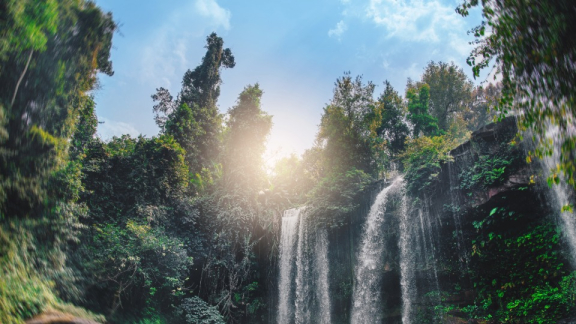
Khmer is the country’s official language. At the same time, English is clearly present in cities, tourism, and parts of the service sector, even though it does not fully carry everyday life outside urban and international contexts. Cambodia is culturally strongly shaped by Khmer civilization. Angkor and the heritage of the Khmer Empire still have a very visible influence on the country’s culture and identity today.
What really helps in everyday life:
- Khmer is the official language
- English is clearly helpful in cities and in tourism
- Outside urban areas, everyday life quickly becomes more local linguistically
- Culture and identity are strongly shaped by Khmer heritage
- Religion and tradition carry significant weight in daily life
- Linguistic and cultural sensitivity make integration much easier
Tip for expats: English will often get you far in Cambodia, but not everywhere. Anyone who understands at least the basics of Khmer or approaches local everyday culture with respect will settle in much faster.
What makes Cambodia special?
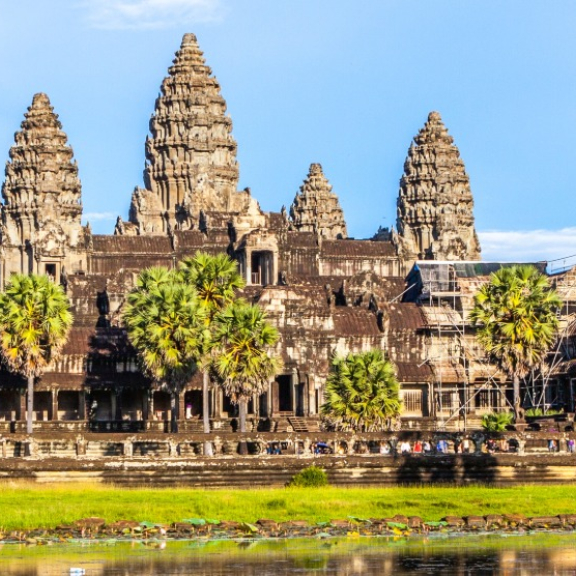
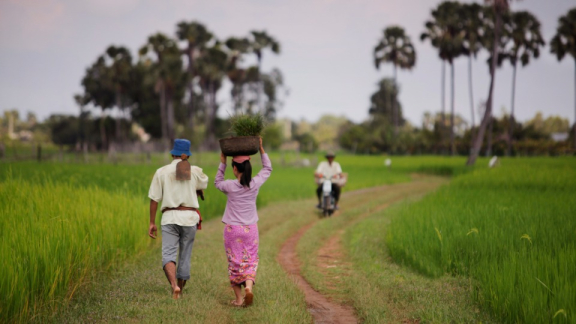
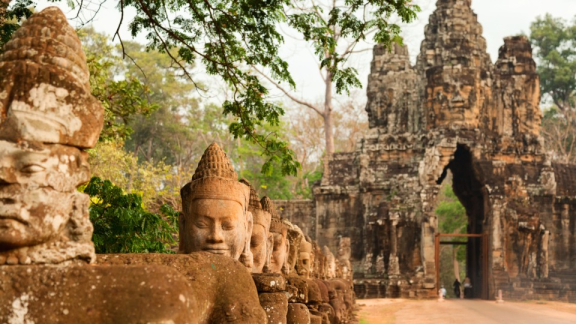
Cambodia’s greatest distinguishing feature is the connection between cultural significance and a tropical everyday setting. Angkor is especially striking: UNESCO describes the complex as one of the most important archaeological sites in Southeast Asia. The area covers around 400 square kilometers of temples, hydraulic systems, and transport structures and was the center of the Khmer Kingdom for centuries.
In detail:
- Angkor is one of Southeast Asia’s most important cultural sites
- About 400 km² of archaeological area
- Center of the historic Khmer Kingdom
- Strong cultural recognizability
- Tropical landscape and cultural heritage are closely intertwined
- The country feels culturally much larger than its size would suggest
Tip for expats: Cambodia is especially interesting for people who are not just looking for a cheaper life, but for a country with a strong cultural profile and a very distinctive rhythm of its own.
What should you bear in mind when moving to Cambodia with animals?
A move with pets is comparatively lean in formal terms, but should still be prepared carefully. Pets can generally be imported if proof of rabies vaccination and a veterinarian-issued health certificate are available. For animals other than dogs and cats, the relevant Cambodian representation should be contacted in advance.
What you should keep in mind:
- Check your pet’s vaccination status early, with rabies vaccination required as the basic proof
- Prepare all veterinary documents completely in advance and carry them with you; a veterinary health certificate is required
- Train your pet to use the travel crate before the flight
- Coordinate entry requirements and airline regulations
- Minimize stress for your pet on moving day
- Actively support your pet’s adjustment to the new home
- Other pets besides dogs or cats should be cleared in advance
Tip for expats: When relocating with pets to Cambodia, it is better to plan conservatively. Vaccination status, health certificate, and travel date should all line up properly so there are no unnecessary delays at the airport.

For whom is Cambodia a suitable destination for emigration?
Cambodia is especially well suited to people looking for a tropical environment, lower living costs than in many Western countries, and a clearly different everyday rhythm. It is a good fit for flexible expats, location-independent income models, and people with a high degree of adaptability.
Checklist before emigrating to Cambodia:
✓ Check entry requirements and residence regulations for Cambodia
✓ Secure health insurance and medical care coverage in Cambodia
✓ Choose the right place to live in Cambodia and arrange your initial accommodation
✓ Plan your emigration budget for Cambodia, including a financial buffer
✓ Prepare your move to Cambodia carefully, including household goods and documents
✓ Use English and make everyday life easier with basic Khmer skills
Conclusion: Emigrating to Cambodia can be attractive, especially because of its cultural depth, tropical living environment, and economic niche opportunities. At the same time, the country requires a realistic view of visas, security, healthcare, and day-to-day organization.


FAQs for emigrating to Cambodia
What do I need to consider when emigrating to Cambodia?
Anyone planning to emigrate to Cambodia should clarify visas, residence status, health insurance, place of residence, the security situation, and budget early on. Because healthcare, infrastructure, and everyday risks vary significantly by region, solid preparation is essential.
What visa and entry requirements apply to Cambodia?
For German citizens, a visa is generally required to enter Cambodia. In addition, travelers must complete the digital Cambodia e-Arrival registration in advance. The eVisa is valid for single entry and generally allows a stay of about one month.
How can you emigrate to Cambodia permanently?
For a long-term stay, a short tourist visa is not sufficient. In practice, the most relevant route is the Ordinary or Business Visa in category E, which can then be extended after entry depending on the purpose of stay.
Is Cambodia a safe country to emigrate to?
Cambodia is generally safe, but should be assessed with nuance by region. There are currently warnings against travel to the border area with Thailand within 20 kilometers of the borderline. In addition, robberies in cities and tourist centers, thefts in accommodations, and bag snatching by motorcyclists do occur.
What is the healthcare system like in Cambodia?
Cambodia’s healthcare system is only usable to a limited extent for expats. Medical care is not comparable to Europe and can be technically and hygienically problematic. Good international health insurance, reliable access to private clinics, and consistent mosquito protection are therefore especially important.
What language is spoken in Cambodia?
The official language in Cambodia is Khmer. English helps in cities, tourism, and international contexts, but it does not fully support everyday life outside urban and international settings.
Who is Cambodia a suitable emigration destination for?
Cambodia is especially suitable for flexible expats, location-independent income models, and people with realistic expectations when it comes to tropical climate, infrastructure, and everyday organization. It is less suitable for people expecting maximum predictability, European healthcare standards, and a uniformly high level of safety.
Are you interested in moving to Cambodia or another destination country?
Then do not hesitate and contact us today.
Sabrina Klier
Customer Service & Sales - AIR & SEA