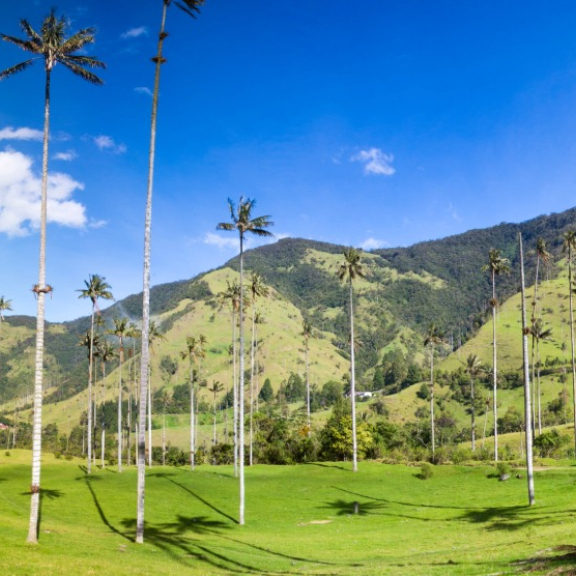
Emigrating to Colombia Visa, safety, costs, and climate in Colombia: a reality check
Emigrating to Colombia: The most important answers first
✓ Visa-free entry: Entry is possible without a visa for up to 90 days; registration is required for longer stays.
✓ An economy with opportunity: Opportunities especially in services, trade, logistics, infrastructure, and investment-driven sectors.
✓ A nuanced security situation: Colombia is generally safe, but caution is advised in certain higher-risk areas.
✓ Healthcare varies by region: Medical care is good in major cities, but significantly weaker in rural areas.
✓ Climate depends heavily on elevation: The coast, the highlands, and the rainforest differ significantly in terms of climate.
✓ Language skills: Spanish is clearly essential for everyday life, dealing with authorities, and integration.
✓ What makes Colombia stand out: Colombia combines the Andes, the Caribbean, the Pacific, the Amazon, and coffee culture.
✓ Moving with pets: Good preparation is required, and health documents should be organized early.
Relocating made easy with DACHSER & KOLB. Use our moving cost calculator. Get a quote and consultation. Book a tour. Move.
Facts about Colombia

Capital City
Bogotá

Population
51.87 million

Surface Area
882,347.09 mi² or 1,420,000 km²

Continent
South America

Official Language
Spanish

Currency
Colombian peso (COP)
What are the customs, visa, and entry requirements for Colombia?
For German citizens, no visitor visa is required for short stays of under 90 days. However, anyone who wants to live, work, invest, or settle permanently in Colombia will need the appropriate residence status depending on the purpose of stay, typically in the form of a migrant or resident visa.
Documents required for entry:
- Passport: Yes
- Temporary passport: Yes, but only with a valid visa
- National ID card: No
- Temporary national ID card: No
- Child passport: Yes
Tip for expats: Entry into Colombia may seem straightforward, but the real effort begins when it comes to long-term status. First get your purpose of stay, documents, and timeline properly in place, then schedule the move.

What are the economic conditions and standard of living like in Colombia for immigrants?
Colombia is not an easy-win market economically, but it is a relevant market in Latin America. Further economic growth is expected over the coming years. The country is especially attractive for services, trade, consumer markets, logistics, and private-sector investment.
Key facts at a glance:
- Robust growth, with average GDP growth of 3–4% per year (2001–2025).
- Income distribution: Gini coefficient = 53.9 (0 = perfect equality; 100 = maximum inequality)
- Large domestic market
- Services remain central
- Trade and consumer demand are relevant
- Logistics and infrastructure are attractive sectors
- Investment is picking up again
- Strong market potential, but with operational complexity
Tip for expats: Colombia is not a market for spontaneous gut decisions. Anyone entering with a clear business model, a strong local network, and realistic cost planning will be in a much better position.

Safety in Colombia: What do expats need to know?
Colombia should be assessed with a clear-eyed view from a security perspective. There is a partial travel advisory for certain border and conflict regions, especially near Venezuela and in several rural departments. At the same time, the security situation in major cities is comparable to that of other Latin American metropolitan areas, but street robbery, distraction theft, short-term kidnappings, and scopolamine attacks (drugging incidents) remain real risks.
What expats should know:
- Partial travel advisory for several regions
- The border area with Venezuela is particularly sensitive
- Clearly avoid certain rural areas
- In Bogotá, Medellín, and other cities, crime remains a major issue
- Dating scams and drugging incidents are a real concern
- Avoid night travel and isolated routes
Tip for expats: In Colombia, what often matters most is not the country in the abstract, but the reality of everyday life on the ground. Anyone who plans their place of residence, routes, transportation, and evening routines strategically can significantly reduce risk and friction.
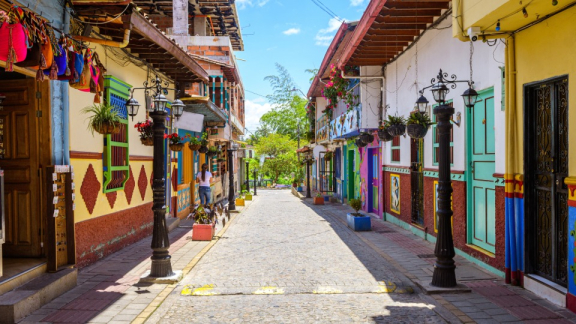
What is the healthcare system like in Colombia?
Colombia’s healthcare system is usable for expats, but it varies clearly by region. In larger cities, especially Bogotá, the overall standard of care is solid. In rural areas, however, both the level of care and emergency response systems decline significantly. Additional health concerns include yellow fever, dengue, chikungunya, and malaria, all of which vary considerably depending on the region and elevation.
At a glance:
- Hepatitis A and yellow fever are usually important
- Depending on the area, additional concerns include dengue, chikungunya, hepatitis B, and rabies
- Healthcare is better in major cities
- Rural areas are significantly weaker in terms of medical care
- Malaria is mainly relevant in lower-lying regions
- Bogotá, Cartagena, and Medellín are considered malaria-free
Tip for expats: In Colombia, healthcare is a location issue. Good insurance, reliable access to clinics, and a realistic view of altitude, mosquito-related risks, and the specific region make all the difference.

Are you planning to move to Colombia?
With structured preparation, you can avoid financial surprises. Our moving cost calculator provides clarity — it's simple, convenient, and takes just a few steps.
What is the climate like in Colombia?
Colombia lies close to the equator and therefore does not have classic seasons like Europe. The major differences are driven by elevation: the coasts and lowlands are tropical and hot, while higher-altitude areas are significantly milder. In addition, there are pronounced rainy seasons, especially in April/May and October/November.
What the climate means for your daily life:
- Coasts and lowlands: tropical and warm
- Highlands: significantly milder
- Temperature differences depend heavily on elevation
- Rainy season usually in April/May
- The second rainy period is usually in October/November
- On the northern coast, hurricane season runs from June to December
Tip for expats: In Colombia, climate is not a side issue. Anyone who treats Bogotá, Medellín, Cartagena, and the rainforest as if they had the same climate can quickly choose the wrong location.
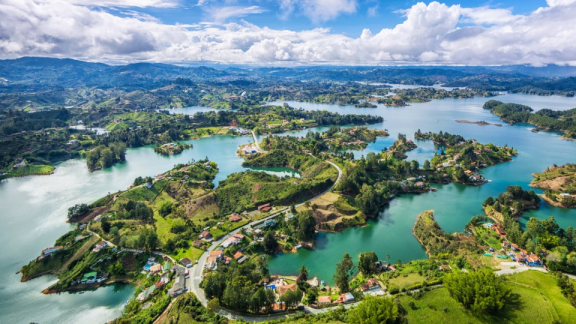
Diversity in Colombia? – Language, culture, and everyday life
In everyday life, Spanish is the key that matters most. Colombia is culturally diverse, strongly shaped by its regions, and in daily interactions often more relationship-oriented than Germany. On top of that, there are major differences between big cities, the Caribbean coast, the Andean region, and rural areas.
What really helps in everyday life:
- Spanish is essential for everyday life and dealing with authorities
- Regional differences in lifestyle are significant
- Big-city life and provincial life work very differently
- Building relationships makes many things easier
- A direct German process mindset is not always the right fit
- Cultural openness speeds up integration
Tip for expats: Good Spanish makes life in Colombia much easier right away. Even more important, however, is taking regional differences seriously and not judging everything through a single, uniform idea of Latin America.
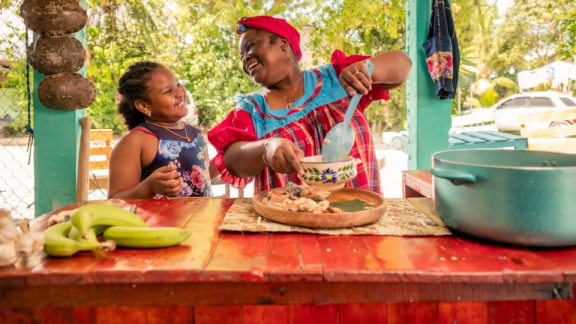
What makes Colombia special?
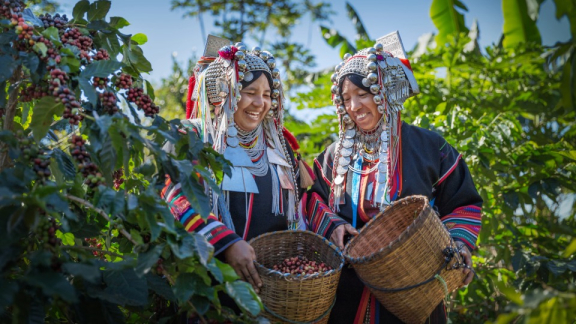
Colombia stands out for its extraordinary diversity. The country brings together the Caribbean, the Pacific, the Andes, the Amazon, and an internationally recognized coffee culture. Added to that is the Coffee Cultural Landscape, a UNESCO World Heritage Site that uniquely connects nature, the economy, and culture.
In detail:
- Caribbean and Pacific coastlines in one country
- Andean regions with clearly distinct identities
- Amazon region with high biodiversity
- Coffee culture with global appeal
- The UNESCO Coffee Cultural Landscape as a unique distinguishing feature
- Very strong contrasts in both landscape and culture
Tip for expats: Colombia is not appealing just because of its lifestyle and scenery. Its combination of nature, urban life, and coffee culture makes the country truly distinctive — and that is a major part of its appeal.
What should you bear in mind when moving to Colombia with animals?
A move with pets to Colombia is a formal process and should be prepared early. Before entry, the veterinary procedure must be initiated through the relevant official system. Upon arrival, the documents and the animal itself are inspected by the authorities at the airport, seaport, or border crossing. What matters most is a current official health certificate, antiparasitic treatment, and complete vaccination records.
What you should keep in mind:
- Check your pet’s vaccination status early, and provide proof of deworming and parasite treatment
- Prepare all veterinary documents completely and accurately
- Train your pet to use the travel crate before the flight
- Coordinate entry requirements and airline regulations
- Complete the registration and application in the system in advance
- Minimize stress for your pet on moving day
- Actively support your pet’s adjustment to the new home
- The original health certificate is required and must be no more than 10 days old
Tip for expats: When relocating with pets to Colombia, speed is not the priority – document quality is. Vaccination records, veterinary documentation, and the entry date all need to align seamlessly.

For whom is Colombia a suitable destination for emigration?
Colombia is especially well suited to people looking for everyday life in a Spanish-speaking environment, scenic diversity, and a dynamic Latin American setting. It is a strong fit for entrepreneurs, remote workers with stable income, international professionals, and expats who can handle regional differences, urban complexity, and a heightened awareness of security.
Checklist before emigrating to Colombia:
✓ Check entry requirements and residence regulations for Colombia
✓ Secure health insurance and medical care coverage in Colombia
✓ Choose the right place to live in Colombia and arrange your initial accommodation
✓ Plan your emigration budget for Colombia, including a financial buffer
✓ Prepare your move to Colombia carefully, including household goods and documents
✓ Use Spanish intentionally to make everyday life on the ground significantly easier
Conclusion: Emigrating to Colombia can be highly attractive, especially because of its scenic diversity, cultural energy, and economic prospects. At the same time, the country requires a realistic view of security, healthcare, and regional differences.


FAQs for emigrating to Colombia
What do I need to consider when emigrating to Colombia?
Anyone planning to emigrate to Colombia should clarify entry requirements, residence status, health insurance, place of residence, security considerations, and budget early on. Because of the country’s strong regional differences, thorough preparation is especially important to ensure a realistic and structured start to everyday life.
What visa and entry requirements apply to Colombia?
For German citizens, tourist entry into Colombia is generally visa-free for short stays of under 90 days. However, anyone planning to live, work, or invest in Colombia on a long-term basis will need the appropriate visa or residence solution.
Is Colombia a safe country to emigrate to?
Colombia should be assessed with nuance from a security perspective. There is a partial travel advisory for certain regions, and even in major cities, crime, residential location, and a safety-conscious approach to everyday life all play an important role.
What is the healthcare system like in Colombia?
Colombia’s healthcare system varies by region. In larger cities, medical care is significantly better than in many rural areas, which is why good health insurance and reliable access to medical care are especially important for expats.
What language is spoken in Colombia?
The official language of Colombia is Spanish. For everyday life, dealing with authorities, and integration, Spanish is clearly the most important key, even though many Indigenous languages are also spoken in certain regions.
What is the climate like in Colombia?
Colombia’s climate is not uniform, but strongly shaped by elevation. The coasts and lowlands are tropical and warm, while higher-altitude areas are significantly milder. On top of that, many regions have pronounced rainy seasons.
Who is Colombia a suitable emigration destination for?
Colombia is especially well suited to people looking for everyday life in a Spanish-speaking environment, scenic diversity, and a dynamic Latin American setting. The country is particularly appealing to flexible expats, entrepreneurs, international professionals, and people with a realistic view of security and regional differences.
Are you interested in moving to Colombia or another destination country?
Then do not hesitate and contact us today.
Sabrina Klier
Customer Service & Sales - AIR & SEA