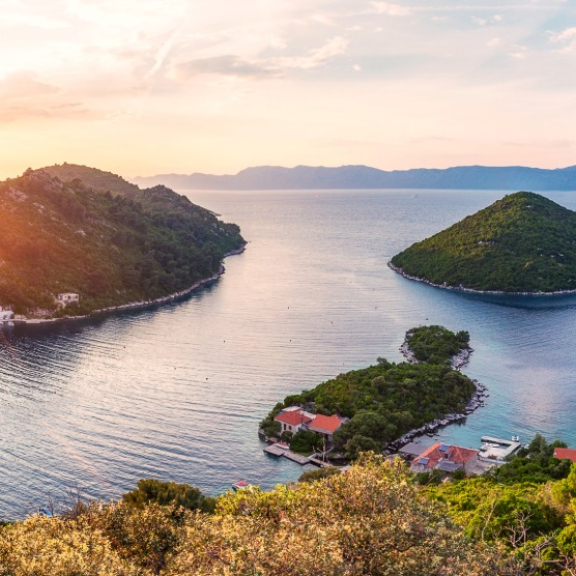
Emigrating to Croatia Visa, safety, costs, and climate in Croatia: a reality check
Emigrating to Croatia: The most important answers first
✓ Visa-free entry: Entry is possible without a visa, with registration required for longer stays.
✓ A broadly based economy: Opportunities exist especially in tourism, skilled trades, engineering, and services.
✓ A generally stable security situation: Keep petty crime in hotspots and natural hazards in mind.
✓ A publicly organized healthcare system: Clarify statutory coverage and your status early on.
✓ A varied and sunny climate: Mediterranean along the coast, temperate continental inland.
✓ Language skills: English often helps, but Croatian remains an advantage in everyday life.
✓ Special feature: The Adriatic, historic cities, and national parks all lie close together.
✓ Moving with pets: Good preparation, pet documentation, and vaccinations are required.
Relocating made easy with DACHSER & KOLB. Use our moving cost calculator. Get a quote and consultation. Book a tour. Move.
Facts about Croatia

Capital City
Zagreb

Population
3.87 million

Surface Area
21,851.066 mi² or 56,594 km²

Continent
Europe

Official Language
Croatian

Currency
Euro (EUR)
What are the customs, visa, and entry requirements for Croatia?
For German citizens, entry into Croatia is straightforward: a passport or ID card is sufficient, and no visa is required. What matters, however, is the distinction between entry and long-term residence. Any EU citizen staying longer than three months must register temporary residence.
Documents required for entry:
- Passport: Yes
- Temporary passport: Yes
- National ID card: Yes
- Temporary national ID card: Yes
- Child passport: Yes
Tip for expats: Because Croatia looks formally simple, residence and registration requirements are often underestimated. First sort out the legal side, then organize the fresh start.

Economy in Croatia: What opportunities are there for expats?
Croatia’s economy is more broadly based than many people expect: besides tourism, qualified professions, skilled trades, and other specialist profiles remain in demand, reinforced by demographic pressure. For expats, the cost structure also matters. The country is often cheaper than Western Europe, but not uniformly so: coastal regions and islands can be significantly more expensive than inland locations.
Key facts at a glance:
- Good growth, with average GDP growth of 2–3% per year (1996–2025).
- Income distribution: Gini coefficient = 30.1 (0 = perfect equality; 100 = maximum inequality)
- Shortage of skilled workers in several areas, skilled trades and qualified professions are in demand
- Tourism as a major economic factor
- Zagreb is usually more expensive than many inland regions, and coastal locations are often costlier than expected
- Plan housing costs realistically at an early stage
Tip for expats: Do not focus only on the sea and the climate. In Croatia, the mix of location, job profile, rent, and everyday costs determines whether a fresh start is truly economically successful.
Safety in Croatia: What do expats need to know?
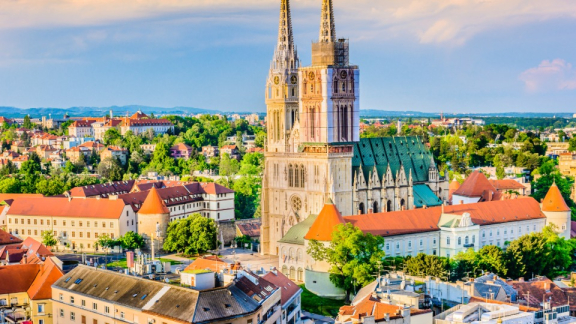
Croatia is considered a stable and safe destination for emigrating. In everyday life, the focus is more on typical risks such as pickpocketing in tourist zones, burglary, or seasonal natural hazards. Especially in summer, bush and forest fires are possible, and the country lies in a seismically active zone, which should be taken into account when choosing a place to live and assessing risks.
What expats should know:
- The security situation is generally stable
- Petty crime is possible in hotspots
- Stay extra alert in tourist centers
- Bush and forest fires are relevant in summer
- Earthquake risk is generally present
- Infrastructure may be affected regionally
Tip for expats: Security issues are usually not a major factor in Croatia. Normal everyday precautions and a realistic view of natural and seasonal risks are enough to get a solid picture of the current security situation.
What is the healthcare system like in Croatia?
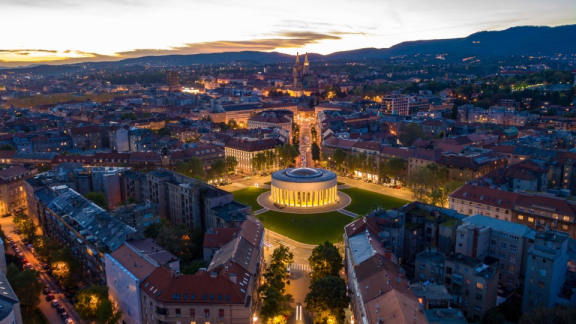
The healthcare system in Croatia is based on mandatory statutory health insurance. For everyday life on a long-term basis, clarified insurance status is essential. Without it, medical care quickly becomes complicated and expensive. The EHIC (European Health Insurance Card) only helps for short stays; for permanent life in Croatia, access to the regular system is needed.
At a glance:
- Mandatory health insurance as the foundation
- Clarify statutory coverage early on
- EHIC is more for temporary stays
- Public healthcare is structurally organized
- Co-payments can become an issue
- Check your status before moving
Tip for expats: In Croatia, healthcare is above all a structural issue. Anyone who clarifies insurance, status, and responsibilities before the move will save time, money, and uncertainty later on.

Are you planning to move to Croatia?
With structured preparation, you can avoid financial surprises. Our moving cost calculator provides clarity — it's simple, convenient, and takes just a few steps.
What is the climate like in Croatia?
Croatia does not have one uniform climate. Along the coast, the climate is Mediterranean, while inland it is predominantly temperate continental. These differences shape everyday life far more strongly than many people expect before moving. Anyone choosing the Adriatic will live differently than someone in Zagreb or inland. Summer heat, the feel of winter, humidity, and seasonality differ clearly depending on the region.
What the climate means for your daily life:
- The coast is Mediterranean in character
- Inland is temperate continental
- Summers on the coast are hot and dry
- Winters inland are significantly cooler
- Regional differences are noticeable in everyday life
- Take summer natural hazards into account, such as bush and forest fires, extreme heat, and sudden storms
Tip for expats: Climate in Croatia is a location issue. Anyone who treats the coast, the capital, and inland areas as the same will be planning against the reality of life on the ground.
What shapes language, culture, and everyday life in Croatia?
Croatian is the official language and central to everyday life, including dealings with authorities and local services. English helps in tourism and international contexts, but it does not replace Croatian. Culturally, the country combines a Mediterranean coastal culture with a more Central European inland character, with correspondingly different everyday rhythms: more relaxed and seasonal on the coast, and often more structured inland.
What really helps in everyday life:
- Croatian is the everyday language
- English helps especially in tourism regions
- Administrative life is clearly shaped by Croatian
- Life on the coast is often more seasonal
- Inland is usually more structured and more matter-of-fact
- Language significantly speeds up integration
Tip for expats: Relying only on English is rarely enough in Croatia. Even basic Croatian makes everyday life faster and relationships more stable.
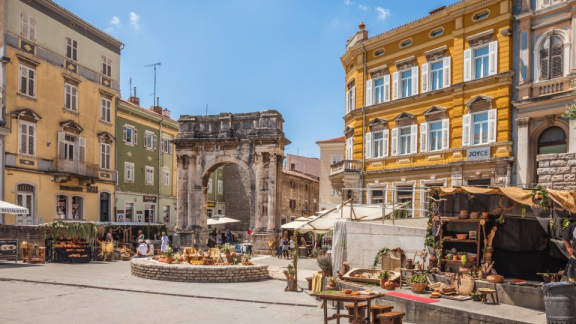
What makes Croatia special?
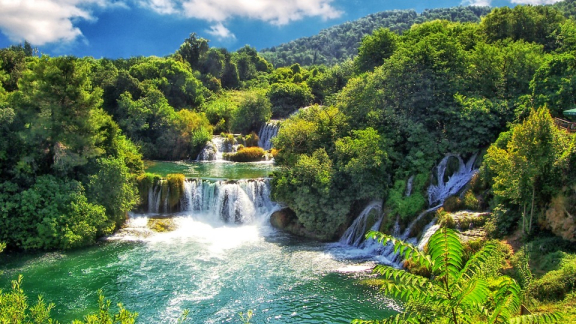
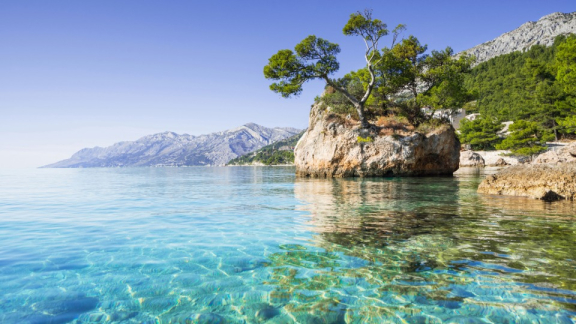
Croatia stands out through the close connection between the Adriatic, historic cities, and natural experiences. Coastal towns, islands, Zagreb, and national parks are comparatively close to one another and create a setup that offers an unusual amount of variety between sea, culture, and nature within short distances. It is not purely a beach destination, not purely a city destination, and not purely a nature destination, but a functioning mix of all three.
In detail:
- The Adriatic and the island world as a major plus
- Historic cities with strong character
- National parks as a real location advantage
- City life and nature are often quickly reachable
- The coast and inland are clearly different
- A great deal of variety in a relatively small space
Tip for expats: Croatia stands out above all through its variety. The country is especially suitable for people who value not only the sea, but also culture, nature, and regional differences.
What should you bear in mind when moving to Croatia with animals?
A move with pets to Croatia is generally easy to plan within the EU. In addition to transport, veterinary documents, deadlines, vaccinations, and animal welfare need to be coordinated properly. The key requirements are complete pet documentation, a microchip, and a valid rabies vaccination. Entry from third countries becomes more complex, because additional veterinary requirements then apply.
What you should keep in mind:
- Check your pet’s vaccination status early, as a valid rabies vaccination is required
- Prepare veterinary documents completely in advance
- Microchip required
- Train your pet to use the travel crate before the flight
- Coordinate entry requirements and airline rules
- Minimize stress for your pet on moving day
- Actively support your pet’s adjustment to the new home
Tip for expats: When moving pets to Croatia, speed matters less than completeness. Anyone who checks vaccination status and documents in time will avoid unnecessary delays.

For whom is Croatia a suitable destination for emigration?
Croatia is a good fit for EU citizens, people drawn to coastal life, those with clear job profiles, and anyone looking for calm and nature. What matters is that expectations and reality match – a beautiful location alone is not enough. The country is less suitable for people who move into sought-after coastal regions without a plan, expect low costs everywhere, or underestimate language and administration.
Checklist before emigrating to Croatia:
✓ Check entry requirements and residence regulations for Croatia
✓ Secure health insurance and medical care coverage in Croatia
✓ Choose the right place to live in Croatia and arrange your initial accommodation
✓ Plan your emigration budget for Croatia, including a financial buffer
✓ Prepare your move to Croatia carefully, including household goods and documents
✓ Use English and settle into everyday life faster with Croatian
Conclusion: Croatia is an attractive destination for anyone looking for an EU country with the sea, a high quality of life, and a good everyday climate. Above all, the combination of coastal living, a comparatively manageable fresh start, eurozone membership, and abundant nature makes the country appealing.


FAQs for emigrating to Croatia
Do I need a visa for Croatia?
No. German citizens can enter Croatia with a valid passport or ID card. Any EU citizen wishing to stay longer than three months must register temporary residence.
What do I especially need to consider when emigrating to Croatia?
Anyone planning to emigrate to Croatia should not only plan entry, but above all settlement. Key points are residence registration, the OIB, health insurance, choice of location, rental budget, and the question on what legal basis you will live and work in Croatia.
What is the OIB in Croatia?
The OIB is the personal identification number in Croatia and plays a central role both in official matters and in everyday life. It is required for many legal, tax-related, and organizational processes and is assigned to foreigners, among other situations, when registering their residence.
Is Croatia a good country to work in?
Yes, especially for skilled professionals and people with an international or practical professional profile. The labor market is under pressure due to a shortage of skilled workers, and qualified professions as well as tourism-related and skilled-trade sectors remain particularly relevant.
How high is the cost of living in Croatia?
Croatia is usually cheaper than many Western European countries, but it is not universally low-cost. In popular coastal regions and in Zagreb in particular, rents and everyday costs can be noticeably higher than many expect before moving.
How does the healthcare system work in Croatia?
The healthcare system is based on mandatory health insurance. For long-term everyday life, regulated statutory coverage is essential, while the EHIC (European Health Insurance Card) is mainly relevant for temporary stays.
Can I move to Croatia with a dog or cat?
Yes. Within the EU, moving with a dog, cat, or ferret is generally easy to plan if a microchip, a valid rabies vaccination, and the required pet documents are in place.
Are you interested in moving to Croatia or another destination country?
Then do not hesitate and contact us today.
Sabrina Klier
Customer Service & Sales - AIR & SEA