Emigrating to the Dominican Republic Visa, safety, costs, and climate in the Dominican Republic: a reality check
Emigrating to the Dominican Republik: The most important answers first
✓ Visa-free entry: Entry is possible without a visa for up to 30 days; registration is required for longer stays.
✓ An economy with strong momentum: One of the stronger locations in the Caribbean, with opportunities in tourism and services.
✓ Assess the security situation realistically: High crime rates, including armed robbery in some cases.
✓ A two-tier healthcare system: Good medical care in Santo Domingo and in the private sector, but significantly weaker elsewhere.
✓ A tropical climate with warm temperatures: In addition, there is hurricane season, heavy rainfall, and a seismically active location.
✓ Language skills: Spanish is the official language, while merengue and bachata visibly shape the country’s cultural identity.
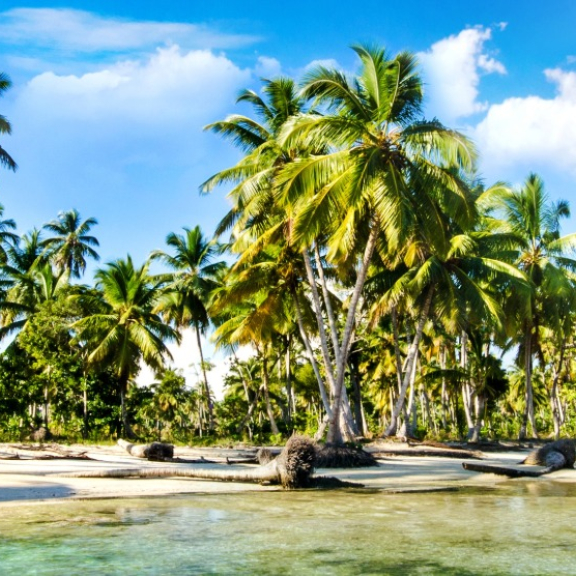
✓ What makes the country stand out: Caribbean beaches, colonial UNESCO heritage, and the highest mountain in the Caribbean.
✓ Moving with pets: Good preparation and early planning are required.
Relocating made easy with DACHSER & KOLB. Use our moving cost calculator. Get a quote and consultation. Book a tour. Move.
Facts about Dominican Republic

Capital City
Santo Domingo

Population
11,2 million

Surface Area
48.442 km² or 18703,56 mi²

Continent
North America

Official Language
Spanish

Currency
Dominican peso (DOP)
What are the customs, visa, and entry requirements for the Dominican Republic?
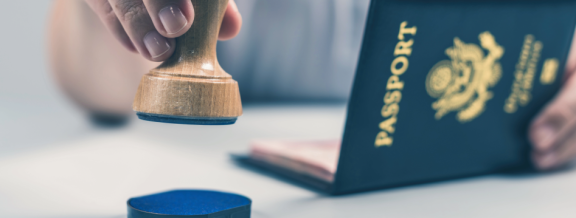
Anyone planning to emigrate to the Dominican Republic should clearly distinguish between tourist entry and permanent residence. For German citizens, no visa is required for entry for stays of up to 30 days. After that, residency status becomes necessary. A return ticket and a valid passport should always be readily verifiable. In addition, the E-Ticket is mandatory for both entry and exit.
Documents required for entry:
- Passport: Yes
- Temporary passport: Yes
- National ID card: No
- Temporary national ID card: No
- Child passport: Yes
Tip for expats: Entry into the Dominican Republic may seem simple, but the real effort begins when it comes to long-term status. Anyone who aligns their purpose of stay, residence permit, E-Ticket, and moving date early on can avoid unnecessary back-and-forth with authorities and airlines.
Is the Dominican Republic economically attractive?
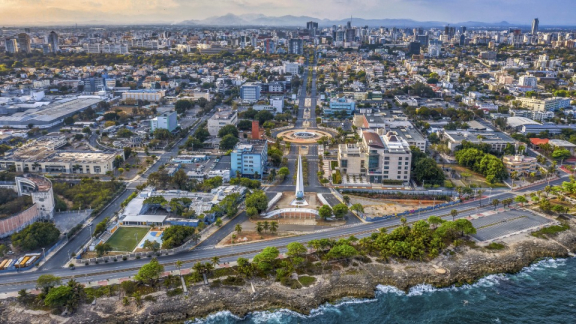
The Dominican Republic is economically much stronger than many people assume at first glance. The country ranks among the more robust growth locations in Latin America and the Caribbean, even though growth has moderated somewhat recently. Tourism, services, investment, agriculture, mining, and export-oriented sectors remain especially important.
Key facts at a glance:
- Very strong growth, with average GDP growth of 5–6% per year (1992–2025).
- Income distribution: Gini coefficient = 39 (0 = perfect equality; 100 = maximum inequality).
- Agriculture, mining, and services remain important drivers.
- Tourism and foreign direct investment provide additional support for the market.
- At the same time, differences between urban and rural areas remain clearly visible.
Tip for expats: From an economic perspective, the Dominican Republic is especially attractive when a clear business model meets real local demand. Anyone focusing only on sunshine and low costs can quickly underestimate the market structure, pace, and regional differences.
Safety in the Dominican Republic: What do expats need to know?
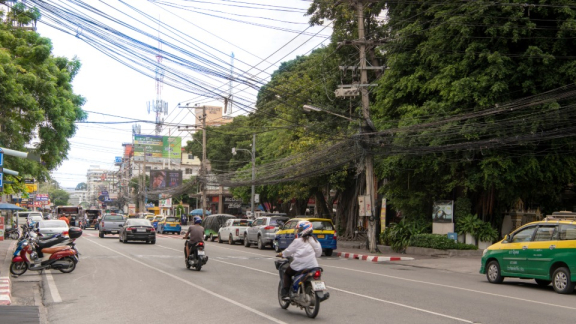
The Dominican Republic is not fundamentally an unsuitable destination, but it does require a realistic assessment of the security situation. Violent crime, armed robbery, and road safety risks are real concerns, including in Santo Domingo and tourist areas. As a result, choosing the right location is especially important for expats.
What expats should know:
- The crime rate is relatively high.
- Armed robberies also occur in Santo Domingo and in tourist areas.
- Motorcycle robberies targeting cell phones, bags, and jewelry are increasing noticeably.
- Avoid large crowds and demonstrations.
- Night driving is especially problematic because of both crime and road safety risks.
- Road traffic is one of the greatest everyday dangers, and the country has one of the highest road fatality rates in the world.
Tip for expats: In the Dominican Republic, what often matters most is not the country in the abstract, but the reality of everyday life on the ground. Anyone who plans their residential area, routes, times of day, and security routines professionally can significantly reduce the risks involved.
What is the healthcare system like in the Dominican Republic?
The healthcare system is usable for expats, but it is clearly divided into two tiers. In Santo Domingo and in the private sector, medical care is in some cases at a good standard, while outside urban centers and in the public system, the level of care is significantly weaker. On top of that, upfront payment, mosquito-borne diseases, and the lack of automatic coverage through German public health insurance are all relevant factors.
At a glance:
- For direct entry from Germany, there are no mandatory vaccinations.
- When entering from yellow fever risk areas, proof of yellow fever vaccination is required.
- Hepatitis A is recommended, and for long-term stays additional vaccinations may also be advisable depending on exposure.
- Dengue is relevant nationwide.
- Malaria is present year-round nationwide, though the risk is low.
- Private treatment often has to be paid in advance.
Tip for expats: Healthcare is not a side issue here. Good international health insurance, medical repatriation coverage, sufficient credit limits for upfront payment, and a clear plan for local clinic access should all be in place before the move.

Are you planning to move to the Dominican Republic?
With structured preparation, you can avoid financial surprises. Our moving cost calculator provides clarity — it's simple, convenient, and takes just a few steps.
What is the climate like in the Dominican Republic?
The climate is tropical and warm year-round, but it is not entirely uniform across the country. Elevation, trade winds, and mountain zones mean that inland areas can sometimes feel more comfortable than the coasts. At the same time, weather needs to be taken seriously, because hurricanes, heavy rainfall, and flooding have a direct impact on everyday life and infrastructure.
What the climate means for your daily life:
- A warm tropical climate all year round.
- Average temperatures range from around 21 to 28 degrees Celsius, depending on the region.
- Mountain areas and higher elevations are noticeably milder than the coastal plains.
- From May to November, it is hurricane season.
- Tropical storms, heavy rainfall, and flooding are realistic risks during this period.
- The country is also located in a seismically active zone.
Tip for expats: Anyone thinking only about beaches and sunshine is planning too narrowly. In the Dominican Republic, hurricane season, heavy rainfall, and location choice affect everyday life much more than many people expect at first.
Diversity in the Dominican Republic? – Language, culture, and everyday life
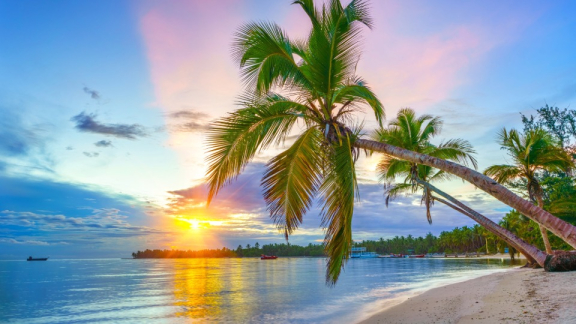
Spanish is clearly the key to everyday life. In tourist areas, you can sometimes get by with English, but for dealing with authorities, contracts, housing, and real integration, that is not enough. Culturally, the country is strongly shaped by music, family, community, and a Caribbean way of life. This is especially visible in merengue and bachata, which are internationally recognized as defining expressions of Dominican identity.
What really helps in everyday life:
- Spanish is the official language.
- Without Spanish, everyday life, dealing with authorities, and integration become unnecessarily difficult.
- Merengue (an energetic dance and music style) is considered part of the national identity.
- Bachata (a partner dance) is deeply rooted in everyday life and celebrations.
- Family, social connections, and personal interaction play a major role in daily life.
Tip for expats: With strong Spanish skills, life in the Dominican Republic becomes much easier right away. Even more important, however, is not to view the country only as a vacation destination, but as a social environment with clear cultural codes and a strong relationship-driven dynamic.

What makes the Dominican Republic special?
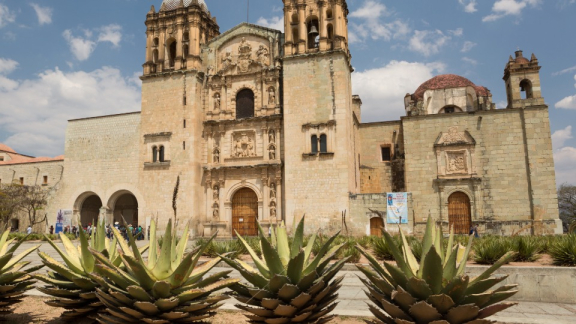
The Dominican Republic is far more than a Caribbean cliché. The country combines colonial heritage, mountains, rainforest, coastlines, and Caribbean culture in a way that stands out across the region. Particularly striking are the Colonial City of Santo Domingo and Pico Duarte, the highest mountain in the Caribbean.
In detail:
- The Colonial City of Santo Domingo is a UNESCO World Heritage Site.
- Santo Domingo was home to the first cathedral, the first hospital, the first customs house, and the first university in the Americas.
- Pico Duarte is the highest mountain in the Caribbean.
- The country combines Caribbean beaches, mountains, dry zones, and rainforest within a relatively small area.
Tip for expats: Anyone judging the Dominican Republic only by beach images is missing the bigger picture. The country stands out precisely because of its combination of the Caribbean, history, mountains, and vibrant everyday culture.
What should you bear in mind when moving to the Dominican Republic with animals?
A move with pets is a formal process and should be prepared early. In addition to transportation, veterinary documentation, deadlines, vaccinations, and animal welfare all need to be coordinated properly. What matters most is a correctly issued official veterinary certificate containing all relevant health information. There are also clear requirements regarding rabies vaccination and parasite treatment.
What you should keep in mind:
- Check your pet’s vaccination status early; rabies vaccination is mandatory
- Treatment for internal and external parasites must be documented
- Prepare all veterinary documents completely in advance
- An official veterinary health certificate is required, and it must be issued within 72 hours before departure
- Train your pet to use the travel crate before the flight
- Coordinate entry requirements and airline regulations
- Minimize stress for your pet on moving day
- Actively support your pet’s adjustment to the new home
Tip for expats: When relocating with pets, speed is not the priority — precision is. Anyone who coordinates the health certificate, vaccination status, and flight date too late almost always creates unnecessary last-minute pressure.

For whom is the Dominican Republic a suitable destination for emigration?
The Dominican Republic is especially well suited to people looking for a Caribbean climate, everyday life in a Spanish-speaking environment, and a fresh start in a tourism-related or service-oriented setting. It is a strong fit for self-employed professionals, retirees, location-independent profiles with stable income, and expats who are prepared to actively manage security, healthcare, and bureaucracy.
Checklist before emigrating to the Dominican Republic:
✓ Check entry and residence regulations for the Dominican Republic
✓ Secure medical care coverage in the Dominican Republic
✓ Choose the right place to live and arrange accommodation in the Dominican Republic
✓ Plan your emigration budget for the Dominican Republic, including a financial buffer
✓ Prepare your move to the Dominican Republic carefully, including household goods and documents
✓ Use Spanish intentionally to make everyday life on the ground significantly easier
Conclusion: Emigrating to the Dominican Republic can be very attractive, especially because of the climate, lifestyle, cultural vitality, and economic momentum in parts of the country. At the same time, the country requires a realistic view of security, healthcare, residence status, and location choice.


FAQs for emigrating to the Dominican Republic
What do I need to consider when emigrating to the Dominican Republic?
Anyone planning to emigrate to the Dominican Republic should clarify entry requirements, residence status, health insurance, place of residence, security considerations, and budget early on. Especially for a longer stay, thorough preparation is important to ensure a realistic and structured start to everyday life.
What visa and entry requirements apply to the Dominican Republic?
For German citizens, tourist entry is generally possible without a visa for stays of up to 30 days. However, anyone planning to stay longer or live permanently in the Dominican Republic will need the appropriate residence solution. In addition, the electronic entry and exit form is mandatory.
Is the Dominican Republic a safe country to emigrate to?
The Dominican Republic should be assessed realistically from a security perspective. Crime, armed robbery, and road safety risks are part of everyday life, which is why your place of residence, mobility, and a safety-conscious approach should all be taken into account when planning an emigration.
What is the healthcare system like in the Dominican Republic?
The healthcare system varies by region. In Santo Domingo and in the private sector, medical care is generally better than in many rural areas. At the same time, private facilities often require payment in advance. For expats, strong health insurance with reliable access to clinics is therefore especially important.
What language is spoken in the Dominican Republic?
The official language of the Dominican Republic is Spanish. For everyday life, dealing with authorities, finding housing, and integration, Spanish is clearly the most important language.
What is the climate like in the Dominican Republic?
The climate is tropical and warm year-round, although higher elevations make some regions noticeably milder. In addition, hurricane season, heavy rainfall, and flooding from May to November play an important role in location choice and day-to-day planning.
Who is the Dominican Republic a suitable emigration destination for?
The Dominican Republic is especially well suited to people looking for a Caribbean climate, everyday life in a Spanish-speaking environment, and a fresh start in a service-oriented or tourism-related setting. The country is particularly attractive for flexible expats, self-employed professionals, retirees, and people with stable income who are prepared to actively plan for security and healthcare.
Are you interested in moving to the Dominican Republic or another destination country?
Then do not hesitate and contact us today.
Sabrina Klier
Customer Service & Sales - AIR & SEA