
Emigrating to Dubai and Abu Dhabi Visa, safety, costs, and climate in Dubai and Abu Dhabi: a reality check
Emigrating to the United Arab Emirates: The most important answers first
Dubai and Abu Dhabi are two of the seven emirates of the United Arab Emirates (UAE). For expats, these two emirates are especially relevant because they are economically strong, highly international, and particularly well developed in terms of infrastructure. The other emirates are Sharjah, Ras Al Khaimah, Ajman, Umm Al Quwain, and Fujairah.
✓ Visa-free entry: Entry is possible without a visa for up to 90 days; for longer stays, the appropriate residence solution is required.
✓ Strong economic growth: The UAE offers high purchasing power and strong international connectivity.
✓ The current security situation is sensitive, and it is also important to observe the legal and social rules of the respective emirate.
✓ A high-performing healthcare system: Overall, medical care is very strong, but comparatively expensive.
✓ An extremely hot climate: An extremely dry, subtropical desert climate with very little rainfall and temperatures from 30 to 50°C.
✓ Language skills: Arabic is the official language, while English is widely used in both business and everyday life.
✓ What makes it stand out: A unique interplay of modernity and deeply rooted Arab traditions.
✓ Moving with pets: Good preparation and complete documentation are required.
Relocating made easy with DACHSER & KOLB. Use our moving cost calculator. Get a quote and consultation. Book a tour. Move.
Facts about the United Arab Emirates

Capital City
Abu Dhabi

Population
10.99 million

Surface Area
51,946.632 mi² or 83,600 km²

Continent
Asia

Official Language
Arabic

Currency
UAE-Dirham (AED)
What are the customs, visa, and entry requirements for Dubai and Abu Dhabi?
For German citizens, short trips to the UAE are straightforward, but this status is not sufficient for a permanent move. Depending on the purpose of stay, different categories may apply for a residence visa, and from the age of 18, a Medical Fitness Test is generally also required. During the visa-free stay, neither paid nor unpaid work is permitted.
Documents required for entry:
- Passport: Yes
- Temporary passport: No
- National ID card: No
- Temporary national ID card: No
- Child passport: Yes, provided it has not been extended
Tip for expats: In the UAE, it is not tourist entry that determines whether your new start will work, but the right residence status. First get your visa pathway, employer or sponsor setup, medical examination, and shipment aligned properly, then schedule the move.

Economy in Cyprus: What opportunities are there for expats?
Economically, Dubai is much more broadly based than many people initially assume. Unlike the common image of a location driven purely by oil, Dubai relies primarily on trade, logistics, ports, air freight, tourism, financial services, and international business.
Key facts at a glance:
- Strong growth, with average GDP growth of 3–4% per year (2013–2025).
- Income distribution: Gini coefficient = 26.4 (0 = perfect equality; 100 = maximum inequality)
- Dubai is one of the region’s most important trade and logistics hubs.
- The UAE offers high purchasing power and strong international connectivity.
- Economically important sectors include trade, real estate, construction, aviation, tourism, and services.
- The location remains attractive for investors and international companies.
- The market and everyday life are heavily shaped by the expat population
Tip for expats: From an economic perspective, Dubai is especially well suited to people with a clear role, a strong network, and a solid budget. Anyone focusing only on glamour or tax advantages can quickly underestimate the visa logic, the labor market, and ongoing costs.
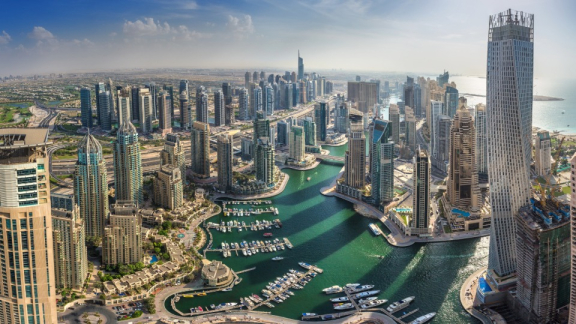
Safety in Dubai and Abu Dhabi: What do expats need to know?
Because of the military escalation involving Iran, travel to the UAE is currently being advised against. Air traffic may be restricted or suspended at short notice. Independently of that, Dubai and Abu Dhabi are regarded in everyday life as highly regulated and comparatively controlled cities — but with very strict laws, severe penalties, and little tolerance for misconduct by local standards.
What expats should know:
- Flight cancellations and airspace disruptions are currently possible.
- Public gatherings can have criminal law implications.
- Photographing sensitive facilities is strictly prohibited.
- Public intoxication is a criminal offense.
- Drug possession is severely punished, even in very small quantities.
- Statements about religion or the state can have legal consequences.
Tip for expats: In Dubai and Abu Dhabi, security is not just about crime, but above all about compliance with the rules. Anyone who ignores local laws, social norms, and the current regional situation creates unnecessary risk in everyday life.
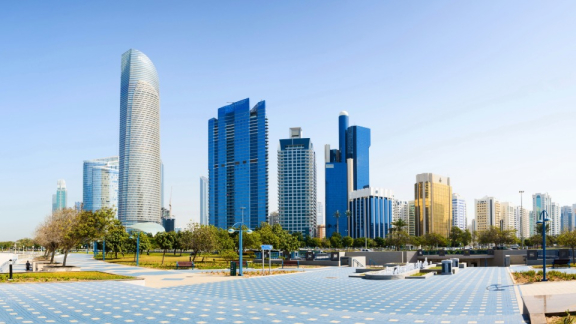
What is the healthcare system like in Dubai and Abu Dhabi?
Medical care in the UAE is generally strong and comparable to Germany. For expats, however, one point is especially important: in Dubai and Abu Dhabi, health insurance is mandatory for employees, and medical tests are required for residence visas. At the same time, because of possible transition periods, high private-sector costs, and formal procedures, no one should arrive without reliable coverage in place.
At a glance:
- For direct entry from Germany, there are no mandatory vaccinations.
- When entering from yellow fever risk areas, proof of yellow fever vaccination is required.
- Hepatitis A is recommended; depending on your profile, dengue, hepatitis B, and typhoid may also be relevant.
- The overall standard of medical care is high.
- For residence visas, a Medical Fitness Test is required from age 18 onward.
- Medical evacuation insurance remains advisable.
Tip for expats: In Dubai, healthcare is not a side issue, but part of the residence setup. Health insurance, the Medical Fitness Test, access to clinics, and medication checks should all be fully clarified before the move.

Are you planning to move to the United Arab Emirates (UAE)?
With structured preparation, you can avoid financial surprises. Our moving cost calculator provides clarity — it's simple, convenient, and takes just a few steps.
Sun, heat, and mild winters – what is the climate like in Cyprus?
The United Arab Emirates has a predominantly hot desert climate, with very warm winters and extremely hot summers. Along the coast, such as in Dubai and Abu Dhabi, the heat is often combined with high humidity, while inland areas are drier. Rainfall is rare and irregular. At the same time, intense heat, dust, sand, and a heavily air-conditioned indoor lifestyle shape daily life much more strongly than many people initially expect.
What the climate means for your daily life:
- A warm to extremely hot climate year-round
- Summer temperatures regularly rise above 40°C
- Coastal regions are often also very humid
- Inland areas are drier, but in some cases even hotter
- Rainfall is rare and irregular
- In summer, daily life shifts heavily indoors
Tip for expats: In the UAE, including Dubai and Abu Dhabi, climate is not a side issue. Anyone who does not realistically plan for the heat, humidity, car dependency, and heavily air-conditioned daily life in advance is underestimating one of the country’s most important location factors.

Diversity in UAE? – Language, culture, and everyday life in Dubai and Abu Dhabi
Arabic is the official language of the UAE, but in everyday life in Dubai and Abu Dhabi, English is extremely prevalent and often serves as the functional working language in the expat world. At the same time, the legal and cultural framework remains clearly shaped by Arab norms. That means business is international, but everyday life is by no means unlimitedly liberal. Public intoxication, proselytizing, disrespectful statements about religion or the state, and taking photos without permission can all have serious consequences.
What really helps in everyday life:
- Arabic is the official language.
- English is widely used in business and expat life.
- Everyday life is highly international, but legally clearly regulated.
- Social and religious sensitivity is important.
- Communication and behavior in public spaces should be adjusted consciously.
- Without English, even in Dubai, many things become unnecessarily difficult.
Tip for expats: Everyday life in Dubai often works in English, but not according to Western-style anything-goes norms. Anyone who combines international business comfort with cultural sensitivity will settle in much more easily.

What makes Dubai and Abu Dhabi special?
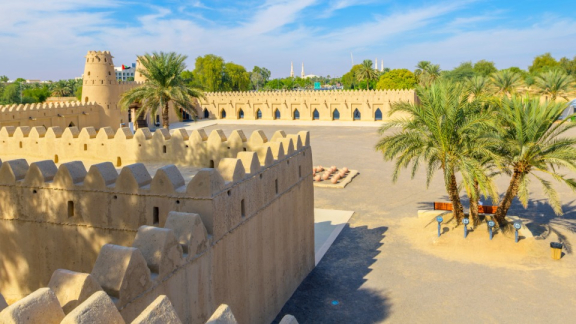
The real distinguishing feature of the UAE is its combination of a global business hub, a tightly regulated desert state, and spectacular urban development. Dubai is regarded as one of the most important trade and financial centers in the Middle East. Abu Dhabi is the capital of the federation, and Dubai is home to the Burj Khalifa, the tallest building in the world. At the same time, Al Ain is a UNESCO World Heritage Site, showing that the UAE is more than just skyline and luxury.
In detail:
- Dubai is a central trade and financial hub in the region.
- Abu Dhabi is the capital of the UAE and its political center.
- The Burj Khalifa is the tallest building in the world.
- The UAE combines desert, coastline, global hubs, and cultural heritage within a compact area.
- Al Ain holds UNESCO World Heritage status.
Tip for expats: Dubai and Abu Dhabi are especially appealing to people looking for international careers, high-quality infrastructure, and a strongly urban environment. For some, that is the biggest advantage; for others, it is also the biggest adjustment.
What should you bear in mind when moving to the United Arab Emirates with animals?
A move with pets is a formal process and should be prepared early. In addition to transportation, veterinary documentation, deadlines, vaccinations, and animal welfare all need to be coordinated properly. For dogs and cats in particular, an official health certificate, vaccination record, microchip, and import permit are required before entry. Violations can result in refusal of entry or confiscation.
What you should keep in mind:
- Check your pet’s vaccination status and vaccination record early, and make sure parasite treatment within 14 days before entry is documented
- Rabies vaccination is mandatory, and for high-risk countries an additional titer test may also be required.
- Prepare all veterinary documents completely in advance, especially the official health certificate
- Train your pet to use the travel crate before the flight
- Coordinate entry requirements and airline regulations; the import permit must be issued before entry
- Minimize stress for your pet on moving day
- Actively support your pet’s adjustment to the new home
- For private imports, the limit is a maximum of two pets per person per year.
- A microchip is required for cats and dogs
Tip for expats: When relocating with pets to Dubai, speed is not the priority – document quality is. Anyone who does not get the permit, microchip, vaccination status, health certificate, and flight routing properly aligned early on is almost guaranteed to create last-minute problems.

For whom is the UAE a suitable destination for emigration?
The UAE is especially well suited to people looking for an international work environment, modern infrastructure, and a clearly regulated everyday life. It is particularly attractive for skilled professionals, entrepreneurs, investors, remote workers with stable income, and people who can handle formal residence pathways, high temperatures, and clearly defined cultural norms well.
Checklist before emigrating to the United Arab Emirates:
✓ Check entry requirements and residence regulations for the UAE
✓ Secure health insurance and medical care coverage in the UAE
✓ Choose the right place to live in the UAE and arrange your initial accommodation
✓ Plan your emigration budget for the UAE, including a financial buffer
✓ Prepare your move to the UAE carefully, including household goods and documents
✓ Use English and take the legal and cultural particularities into account
Conclusion: Emigrating to the United Arab Emirates, such as Dubai or Abu Dhabi, can be highly attractive – especially because of the infrastructure, international environment, economic dynamism, and high density of services. At the same time, the location requires a very realistic view of residence status, climate, rules, and the currently sensitive regional security situation.


FAQs for emigrating to the United Arab Emirates (UAE)
What do I need to consider when emigrating to Dubai or Abu Dhabi?
Anyone planning to emigrate to Dubai or Abu Dhabi should clarify their residence status, health insurance, place of residence, budget, and the legal framework early on. Tourist entry is not the same as a genuine emigration path, because work, family reunification, retirement, or remote work all require the appropriate residence solution.
What are the entry requirements for Dubai and Abu Dhabi?
For German citizens, entry into the United Arab Emirates (UAE) for tourist, business, or visit purposes is generally visa-free for stays of up to 90 days within a 180-day period. However, anyone planning to live in Dubai or Abu Dhabi permanently will need the appropriate residence permit and, depending on the category, must meet additional requirements.
Are Dubai or Abu Dhabi safe emigration destinations?
Dubai and Abu Dhabi are generally regarded in everyday life as highly regulated and comparatively controlled locations. At the same time, the current regional escalation makes the situation more sensitive, which is why travel to the UAE is currently being advised against. In daily life, strict laws and clear rules of conduct also play a bigger role than classic everyday crime.
What is the healthcare system like in Dubai and Abu Dhabi?
Medical care in the UAE is generally high-performing. For expats, however, it is important to know that health insurance is mandatory for employees in Dubai and Abu Dhabi, and that medical examinations are generally required from age 18 onward for residence visas.
What language is spoken in Dubai and Abu Dhabi?
Arabic is the official language of the UAE. In everyday life in Dubai and Abu Dhabi, however, English is highly prevalent and serves as the functional standard language in many professional and day-to-day situations.
What is the climate like in Dubai?
Dubai has a hot desert climate with very warm winters and extremely hot summers. During the summer months, temperatures regularly rise above 40 degrees Celsius, and the coast often also has high humidity, which has a strong impact on everyday life.
Who is emigrating to Dubai or Abu Dhabi a good fit for?
Dubai and Abu Dhabi are especially well suited to expats with a clear residence pathway, stable income, and an international work environment. The emirates are particularly attractive for skilled professionals, entrepreneurs, investors, remote workers, and people who can handle heat, clear rules, and a highly international everyday environment well.
Are you interested in moving to Cyprus or another destination country?
Then do not hesitate and contact us today.
Sabrina Klier
Customer Service & Sales - AIR & SEA