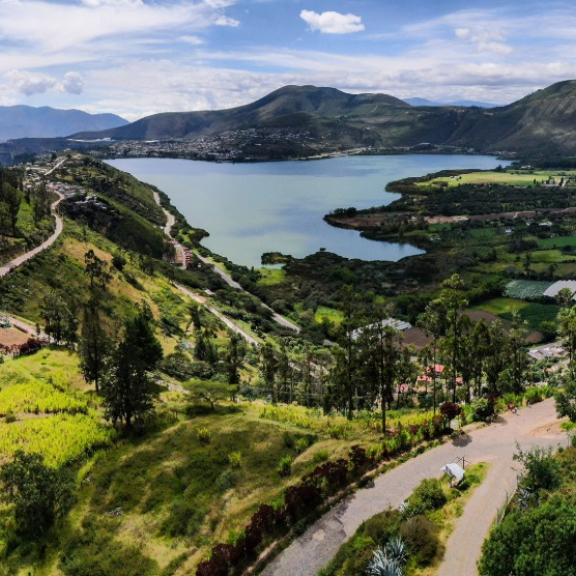
Emigrating to Ecuador Visa, safety, costs, and climate in Ecuador: a reality check
Emigrating to Ecuador: The most important answers first
✓ Visa-free entry: Entry is possible without a visa for up to 90 days; registration is required for longer stays.
✓ An economy with opportunity: Key sectors include agricultural and fishing exports, tourism, mining, and services.
✓ Pay close attention to the security situation: Crime and violence levels are high, and certain regions should be avoided.
✓ A two-tier healthcare system: Medical care is good in major cities and in the private sector, but significantly weaker in rural areas.
✓ Climate depends on location: The coast and the Amazon are tropical, while the Andean highlands are significantly milder.
✓ Language skills: Spanish is essential for everyday life and dealing with authorities; Quichua and Shuar also play a regional role.
✓ Special feature: Ecuador combines the Pacific coast, the Andes, the Amazon, and the Galápagos within a compact area.
✓ Moving with pets: Good preparation is required, and permits should be arranged early.
Relocating made easy with DACHSER & KOLB. Use our moving cost calculator. Get a quote and consultation. Book a tour. Move.
Facts about Ecuador

Capital City
Quito

Population
16 million

Surface Area
109483,51 mi² or 283.561 km²
Continent
South America

Official Language
Spanish

Currency
US Dollar
What are the customs, visa, and entry requirements for Ecuador?
For German citizens, entry is visa-free for up to 90 days per year and can be extended once for an additional 90 days. For longer stays, the appropriate visa or residence permit is required, along with health insurance valid in Ecuador. Since 2024, anyone entering overland from Peru or Colombia must also present an apostilled and translated police clearance certificate.
Documents required for entry:
- Passport: Yes
- Temporary passport: Yes
- National ID card: No
- Temporary national ID card: No
- Child passport: Yes
Tip for expats: Entry into Ecuador may seem straightforward at first, but the real effort begins when it comes to long-term status. Anyone who aligns their residence permit, health insurance, entry route, and moving date early on can avoid unnecessary friction later.

Is Ecuador economically attractive?
Ecuador is not an easy-win market economically, but it is a market with clear niche opportunities. Key sectors remain private investment, agriculture, fishing, mining, services, and tourism-related industries. At the same time, the security situation, financing, energy supply, and structural hurdles all slow momentum.
Key facts at a glance:
- Robust growth, with average GDP growth of 3–4% per year (2000–2025).
- Income distribution: Gini coefficient = 45.2 (0 = perfect equality; 100 = maximum inequality)
- The agricultural and fishing sectors remain strong
- Mining is gaining importance
- Services and tourism remain relevant
- Financing and legal certainty remain important issues
Tip for expats: From an economic perspective, Ecuador is especially attractive when a clear business model meets real local demand. Without market knowledge, a financial buffer, and a strong network, the country quickly becomes more challenging than it may seem at first glance.
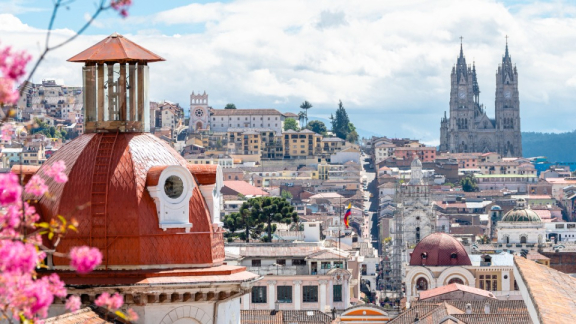
Safety in Ecuador: What do expats need to know?
Ecuador’s security situation currently needs to be assessed as critical. Travel to the border area with Colombia, the city of Esmeraldas, parts of Guayaquil south of Avenida Portete de Tarquí, and Durán is strongly discouraged. Crime and violence between gangs have increased sharply. Theft, robbery, and assaults also remain a real risk in Quito and in tourist areas. A state of emergency is still in effect in several provinces.
What expats should know:
- The border area with Colombia is critical
- Avoid Esmeraldas
- Avoid southern Guayaquil and Durán
- Quito and coastal destinations come with an elevated risk of robbery
- Buses, bus stations, and tourist hotspots are especially sensitive
- Avoid night travel whenever possible
Tip for expats: In Ecuador, the specific region often matters more than the country as a whole. Anyone who plans their place of residence, mobility, and daily routines professionally can significantly reduce future risk.
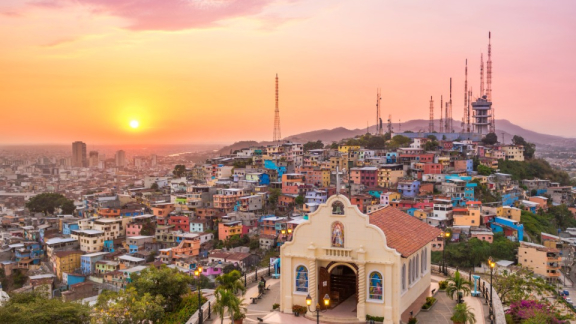
What is the healthcare system like in Ecuador?
Ecuador’s healthcare system is generally usable for expats, but it is clearly divided into two tiers. In larger cities and in the private sector, medical care largely meets current standards, while the public sector shows significant staffing, technical, and logistical shortcomings. In rural areas, the quality of care can decline dramatically, and on the Galápagos Islands, medical services are very basic.
At a glance:
- No mandatory vaccinations for direct entry from Germany
- Hepatitis A is advisable
- Yellow fever is recommended for eastern lowland regions
- Malaria is mainly relevant below 1,500 meters, and there are additional mosquito-borne risks
- Quito, Guayaquil, and the Galápagos are considered malaria-free
- Keep altitude sickness in the Andes (from around 2,500 meters) in mind
Tip for expats: In Ecuador, healthcare is a location issue. Good private health insurance, reliable access to clinics, and a realistic view of altitude, mosquito-related risks, and regional differences in medical care are all essential.

Are you planning to move to Ecuador?
With structured preparation, you can avoid financial surprises. Our moving cost calculator provides clarity — it's simple, convenient, and takes just a few steps.
Weather, temperatures, and rainy seasons – what is the climate like in Ecuador?
Ecuador has several clearly distinct climate zones. The coast and the Oriente are warm year-round. The Andean highlands are significantly milder and shaped by stronger temperature fluctuations. Temperatures drop with elevation. During the rainy season, traffic disruptions, landslides, and rockfalls can occur. Ecuador is also located in a seismically active zone, where volcanic activity can affect everyday life as well.
What the climate means for your daily life:
- Coast: tropical and warm
- Amazon region: hot and humid
- Andean highlands: milder, but with strong temperature fluctuations
- Your location determines what the climate feels like in everyday life
- Rainy seasons can significantly affect roads and mobility
- Keep natural hazards such as landslides and volcanic activity in mind
Tip for expats: In Ecuador, climate is not a side issue. Anyone who treats Quito, Cuenca, Guayaquil, and the Oriente as if they had the same climate can quickly end up in the wrong place.
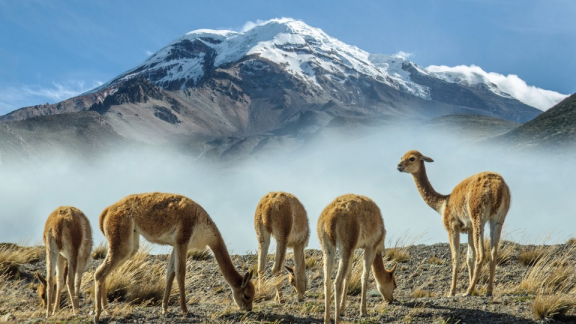
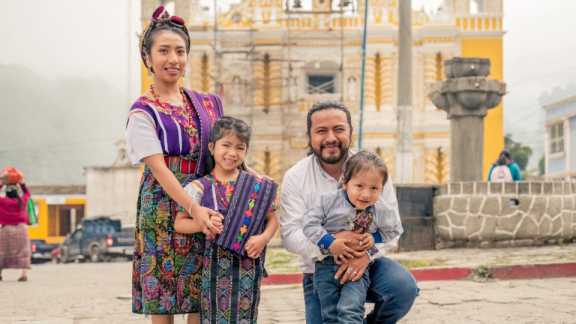
What shapes language, culture, and everyday life in Ecuador?
In Ecuador, Spanish is the central key to everyday life, work, and dealing with authorities. Quichua and Shuar are official intercultural languages, and more than ten Indigenous languages are spoken across the country overall. At the same time, Ecuador is strongly shaped by its regions culturally: the Sierra, the Costa, and the Amazon region differ noticeably in everyday life, and family as well as local identity play a major role.
What really helps in everyday life:
- Spanish is essential for everyday life
- Quichua and Shuar also shape parts of the country
- Regional differences between the Sierra, Costa, and Oriente are significant
- Family and one’s personal network carry a lot of weight
- Patience and relationship-building make everyday life easier
- Without Spanish, many things become unnecessarily complicated
Tip for expats: With strong Spanish skills, life in Ecuador becomes noticeably easier right away. Anyone who also takes regional differences seriously will usually settle into daily life much faster than someone relying on a one-size-fits-all view of Latin America.
What makes Ecuador special?
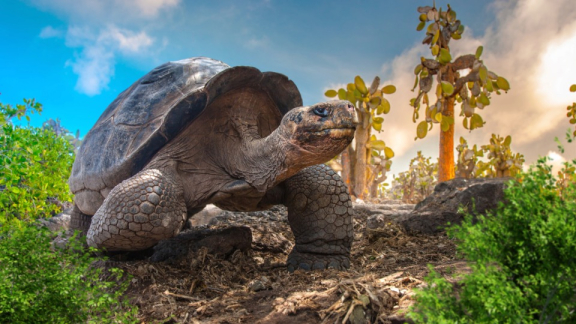
Ecuador offers enormous diversity within a compact area. The country brings together the Pacific coast, the Andes, and the Amazon, and with the Galápagos Islands it is home to one of the world’s most famous natural regions. The archipelago lies around 1,000 kilometers off the mainland, includes 127 islands, islets, and rocks, and 97 percent of its land area was designated a national park as early as 1959. Its marine reserve is also one of the largest in the world.
In detail:
- The Galápagos as a globally unique natural landmark
- The Pacific coast, the high Andes, and the Amazon in one country
- Exceptional scenic diversity across short distances
- National parks and biodiversity shape the country’s identity
- Nature-based tourism is a real location advantage
- Ecuador feels much larger and more diverse than it looks on the map
Tip for expats: Ecuador is especially appealing to people who are not just looking for a new country, but for multiple ways of life within one destination. That diversity is one of the country’s biggest strengths.
What should you bear in mind when moving to Ecuador with animals?
A move with pets to Ecuador should be prepared early and with great care. In addition to transportation, veterinary documentation, deadlines, vaccinations, and animal welfare all need to be coordinated properly. Some documents, such as the health certificate, may need to be issued in Spanish. There are also certain mandatory vaccinations.
What you should keep in mind:
- Check your pet’s vaccination status early; rabies vaccination is mandatory
- Prepare all veterinary documents completely ; the health certificate must be in Spanish
- Train your pet to use the travel crate before the flight
- Coordinate entry requirements and airline regulations
- Minimize stress for your pet on moving day
- Actively support your pet’s adjustment to the new home
- For cargo transport, an additional import permit is required
Tip for expats: When relocating with pets to Ecuador, document quality matters more than speed. Anyone who coordinates the health certificate, vaccination status, transport method, and arrival airport early on can avoid unnecessary complications shortly before departure.

For whom is Ecuador a suitable destination for emigration?
Ecuador is especially well suited to people who already speak Spanish or want to actively learn it, can handle regional differences well, and appreciate nature, climate choice, and a comparatively flexible everyday life. The country is a strong fit for self-employed professionals, remote workers with stable income, people in tourism-related fields, and expats who want to make a conscious choice between the highlands and the coast.
Checklist before emigrating to Ecuador:
✓ Check entry requirements and residence regulations for Ecuador
✓ Secure health insurance and medical care coverage in Ecuador
✓ Choose the right place to live in Ecuador and arrange your initial accommodation
✓ Plan your emigration budget for Ecuador, including a financial buffer
✓ Prepare your move to Ecuador carefully, including household goods and documents
✓ Use Spanish intentionally to make everyday life on the ground significantly easier
Conclusion: Emigrating to Ecuador can be highly attractive, especially because of its geographic diversity, strong natural appeal, and the flexibility to choose between the coast, the highlands, and the Amazon. At the same time, the country requires a realistic view of security, healthcare, and residence status.


FAQs for emigrating to Ecuador
What do I need to consider when emigrating to Ecuador?
Anyone planning to emigrate to Ecuador should clarify entry requirements, residence status, health insurance, place of residence, security considerations, and budget early on. Because of the country’s strong regional differences, thorough preparation is especially important to ensure a realistic and structured start to everyday life.
What visa and entry requirements apply to Ecuador?
For German citizens, entry into Ecuador is generally visa-free for up to 90 days per year. However, anyone planning to live or work in Ecuador for a longer period will need the appropriate visa or residence solution and should review the requirements well in advance.
Is Ecuador a safe country to emigrate to?
Ecuador should be assessed with nuance from a security perspective. Crime, violence, and certain clearly defined high-risk regions all play an important role, which is why your place of residence, daily routines, and a realistic sense of security should be taken into account when planning an emigration.
What is the healthcare system like in Ecuador?
Ecuador’s healthcare system varies by region. In larger cities and in the private sector, medical care is generally better than in rural areas, which is why good health insurance and reliable access to medical care are especially important for expats.
What language is spoken in Ecuador?
The main language spoken in Ecuador is Spanish. In addition, Quichua and Shuar play an important role in certain parts of the country, which is why Spanish remains clearly the most important language for everyday life, dealing with authorities, and integration.
What is the climate like in Ecuador?
Ecuador’s climate is not uniform, but depends heavily on location. The coast and the Amazon region are warm and tropical, while the Andean highlands are significantly milder and temperatures drop noticeably with increasing elevation.
Who is Ecuador a suitable emigration destination for?
Ecuador is especially well suited to people looking for scenic diversity, everyday life in a Spanish-speaking environment, and a lifestyle with strong regional choice between the coast, the highlands, and tropical areas. The country is particularly attractive for flexible expats, self-employed professionals, remote workers, and nature-oriented people with realistic expectations regarding security and daily life.
Are you interested in moving to Ecuador or another destination country?
Then do not hesitate and contact us today.
Sabrina Klier
Customer Service & Sales - AIR & SEA