Emigrating to Germany Visa, safety, costs, and climate in Germany: a reality check
Emigrating to Germany: The most important answers first
✓ Visa-free entry: For EU citizens, entry is straightforward without a visa; for third-country nationals, visa requirements depend on the purpose of stay.
✓ A strong and broadly based economy: Opportunities exist especially in nursing, IT, skilled trades, engineering, and industry.
✓ A generally stable security situation: In major cities, keep pickpocketing and everyday crime in mind.
✓ A mandatory healthcare system: In Germany, health insurance is not optional, but standard.
✓ A temperate and regionally varied climate: Coastal areas are milder, while the south and higher elevations can be noticeably cooler.
✓ Language skills: English helps in some situations, but German remains the clear key in everyday life.
✓ Special feature: A strong labor market meets social security and a high level of regional diversity.
✓ Moving with pets: Good preparation, a pet passport, and vaccination status are crucial.
Relocating made easy with DACHSER & KOLB. Use our moving cost calculator. Get a quote and consultation. Book a tour. Move.
Facts about Germany

Capital City
Berlin

Population
83.2 million

Surface Area
138,069 mi² or 357,596 km²

Continent
Europe

Official Language
German

Currency
Euro (EUR)
What are the customs, visa, and entry requirements for Germany?
For EU citizens, entry into Germany is visa-free thanks to freedom of movement. For third-country nationals, it depends on the country of origin and the purpose of stay: short stays usually fall under the Schengen system, while longer stays require national visas. Anyone wishing to enter Germany for work should clarify the right route early on, such as Skilled Worker, EU Blue Card, or Opportunity Card. Personal household goods can, under certain conditions, be imported duty-free when moving from a non-EU country.
Documents required for entry:
- Passport: Yes
- Temporary passport: Yes
- National ID card: Yes (for EU citizens)
- Temporary national ID card: Yes (for EU citizens)
- Child passport: Yes
Tip for expats: Entry should not be viewed in isolation. Once the visa, purpose of stay, and, where relevant, customs matters are well prepared, the next steps become much smoother.

Is Germany economically attractive?
Germany remains one of Europe’s most important labor markets, especially in nursing, IT, engineering, skilled trades, transport, science, education, medical technology, as well as parts of hospitality and gastronomy. EU citizens have free access to the labor market, and for third-country nationals, the new skilled immigration rules now offer more routes than before. At the same time, Germany is not a cheap location: housing markets in metropolitan areas in particular are tight. Anyone who considers location, rent, commuting time, and job offer together is planning on a much more solid basis.
The key facts at a glance:
- Economic growth with average GDP growth of 1–2% per year (1971–2026).
- Income distribution: Gini coefficient = 33.7 (0 = perfect equality; 100 = maximum inequality)
- High demand for skilled workers in trades, transport, nursing, and healthcare
- Good opportunities also in IT, engineering, education, science, and medical technology
- EU citizens have free access to the labor market
- Finding housing in metropolitan areas is often difficult
Tip for expats: In Germany, it is not just salary that matters, but the overall picture. A slightly smaller location can often be the better economic decision than the most expensive big-city address.
Safety in Germany: What do expats need to know?
Germany is overall a stable and well-organized destination for emigrating. In everyday life, the main risks are typical big-city issues such as pickpocketing, distraction scams, or theft at transport hubs. At the same time, natural hazards should not be ignored: heavy rain, flooding, storms, heat, and other extreme weather events are real issues in Germany and are now communicated through official warning systems.
What expats should know:
- The security situation is generally stable
- Pickpocketing is possible in hotspots
- Stay especially alert in major cities and at transport hubs
- Take weather and natural hazard warnings seriously
- Flooding and heavy rainfall are regionally relevant
- Heat and storms are becoming increasingly important in summer
Tip for expats: Germany is safe enough for a normal, structured daily life. What matters is to consider urban and weather-related risks pragmatically rather than ignoring them completely.
What is the healthcare system like in Germany?
In Germany, health insurance is mandatory. There are basically two systems: statutory and private health insurance. Most people are covered by the statutory system. Employees are in many cases automatically integrated into the social security system, and health insurance covers necessary medical care. A general practitioner structure also plays an important role in everyday life.
At a glance:
- Health insurance is mandatory
- Statutory and private systems exist side by side
- Many employees are automatically covered by social insurance
- General practitioner is central in everyday life
- Family coverage may be relevant depending on the model
- Supplementary insurance can make sense
Tip for expats: In Germany, healthcare should be properly arranged from the start. Anyone who organizes insurance, family status, and an initial medical connection early will save themselves unnecessary effort later on.

Are you planning to move to Germany?
With structured preparation, you can avoid financial surprises. Our moving cost calculator provides clarity — it's simple, convenient, and takes just a few steps.
What is the climate like in Germany?
Germany has predominantly a temperate climate with moderate precipitation and comparatively rare extreme temperature swings. At the same time, regional differences are clearly noticeable in everyday life: coastal areas are usually milder and windier, the south and higher elevations cooler, and in many regions heatwaves, heavy rain, and severe weather events are increasing.
What the climate means for your everyday life:
- Predominantly a temperate climate
- Coastal areas are milder and windier
- The south and higher elevations are in some cases cooler
- Summers are usually warm, winters moderate
- Rain is spread throughout the year
- Weather extremes are increasing regionally
Tip for expats: Climate is a real everyday factor in Germany. Living on the North Sea coast, in Berlin, or near the Alps feels noticeably different in terms of weather.
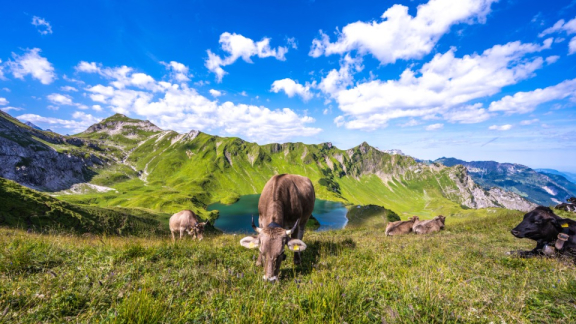
Diversity in Germany? – Language, culture, and everyday life
German is the central everyday language. English helps in international companies and large cities, but it does not replace German in dealings with authorities, housing, healthcare, or school. Germany is culturally shaped by structure, reliability, and regional differences. Daily life often feels factual and organized, and in some cases more formal than elsewhere. Pace, tone, and lifestyle vary noticeably by region.
What really helps in everyday life:
- German is the everyday language
- English helps mainly in specific situations
- Administrative life is clearly shaped by German
- Punctuality and structure carry weight
- Regions differ noticeably
- Language significantly speeds up integration
Tip for expats: Getting started in Germany works much better when language and everyday logic are considered together. Even solid basic German makes a big difference when it comes to housing, authorities, and social integration.

What makes Germany special?
Germany stands out through the combination of economic strength, social security, and regional diversity. Metropolitan areas, low mountain ranges, coastlines, lake districts, wine regions, forests, and Alpine areas all lie close together within a relatively compact space. On top of that, there is a dense network of infrastructure, education, labor market access, and social systems that makes the location highly stable in everyday life.
In detail:
- Strong labor and education market
- Good infrastructure
- High regional diversity
- Coasts, mountains, lakes, and cities lie close together
- Social security as a location advantage
- Economy and everyday life are closely interconnected
Tip for expats: Germany is especially suitable for people who are looking for stability not just on paper, but in everyday life. Exactly this combination of structure and opportunity is one of the country’s greatest advantages.

What should you bear in mind when moving to Germany with animals?
A move with pets to Germany is generally well manageable. In addition to transport, veterinary documentation, deadlines, vaccinations, and animal welfare need to be coordinated properly. Within the EU, the key points are a microchip, a valid rabies vaccination, and an EU pet passport. For entry from third countries, additional requirements apply, and the animals may need to be declared to customs.
What you should keep in mind:
- Check your pet’s vaccination status early, as a valid rabies vaccination is required
- Prepare veterinary documents and EU pet passport in advance, with third countries requiring additional proof
- Train your pet to use the travel crate before the flight
- Coordinate entry and airline requirements
- Minimize stress for your pet on moving day and actively support adjustment
- Customs declaration may be required
Tip for expats: When moving pets to Germany, documentation is the decisive factor. Anyone who checks vaccination status and paperwork early makes the process much less stressful for both pet and owner.

For whom is Germany a suitable destination for emigration?
Germany is especially suitable for skilled professionals, families, EU citizens with a clear relocation plan, and third-country nationals with a solid professional profile and a good visa strategy. The location is particularly strong for people who value job security, social security, good infrastructure, and a predictable everyday life. Germany is less suitable for anyone starting with very little preparation, without willingness to learn the language, or without a clear housing strategy.
Checklist before emigrating to Germany:
✓ Check entry requirements and residence regulations for Germany
✓ Secure health insurance and medical care coverage in Germany
✓ Choose the right place to live in Germany and arrange your initial accommodation
✓ Plan your emigration budget for Germany, including a financial buffer
✓ Prepare your move to Germany carefully, including household goods and documents
✓ Use English and settle into everyday life much faster with German
Conclusion: Germany is a strong destination for anyone looking for an economically stable, well-organized, and diverse country in Europe. In particular, the large labor market, mandatory social security system, good infrastructure, and the combination of city life, nature, and career opportunities make the country attractive.


FAQs for emigrating to Deutschland
Do I need a visa for Germany?
For EU citizens, entry into Germany is visa-free. For third-country nationals, entry depends on the country of origin and the purpose of stay: short stays often fall under the Schengen regime, while longer stays require national visas. There are also targeted immigration routes for qualified professionals, such as the EU Blue Card or the Opportunity Card.
What do I especially need to consider when emigrating to Germany?
Anyone planning to emigrate to Germany should not only think about entry, but above all about settlement. Key points are registration with the residents’ registration office, health insurance, choice of location, residence permit where applicable, and a realistic budget for housing and daily life.
Do I have to register in Germany?
Yes. Anyone living in Germany must generally register with the registration authority within two weeks of moving in. A valid identity document is required, and in the case of rented accommodation usually also a confirmation from the landlord.
Is Germany a good country to work in?
Yes, especially for skilled professionals with a clear professional profile. Germany is seeking staff in nursing, IT, engineering, skilled trades, transport, science, education, medical technology, and hospitality, among other fields. EU citizens have free access to the labor market, and many third-country nationals now benefit from eased immigration routes.
How high is the cost of living in Germany?
Germany is not a cheap relocation destination in any blanket sense. Housing in many metropolitan areas is particularly tight, especially in cities such as Munich, Hamburg, Frankfurt, Stuttgart, or Berlin. Outside the major centers, planning is often much more relaxed.
How does the healthcare system work in Germany?
Health insurance is mandatory in Germany. There are two systems: statutory and private health insurance. Many employees are automatically integrated into the social security system, and health insurance generally covers the cost of necessary medical treatment.
Can I move to Germany with a dog or cat?
Yes. Moving with a dog, cat, or ferret to Germany is generally well manageable. Within the EU, a microchip, valid rabies vaccination, and an EU pet passport are the key requirements. For entry from third countries, additional veterinary requirements apply.
Are you interested in moving to Germany or another destination country?
Then do not hesitate and contact us today.
Sabrina Klier
Customer Service & Sales - AIR & SEA