
Emigrating to Great Britain Visa, safety, costs, and climate in Great Britain: a reality check
Emigrating to Great Britain: The most important answers first
✓ Visa-free entry: Entry without a visa is possible, registration required for longer stays.
✓ Internationally oriented economy: Opportunities mainly in services, networks are important.
✓ Security situation generally stable: Cyprus is considered safe, but political division should be taken into account.
✓ Modern healthcare system: Care is provided through the GeSY system; additional private insurance is sometimes advisable.
✓ Sunny and hot climate: Mediterranean climate with mild winters and warm summers.
✓ Language skills: English is widely spoken in everyday life; knowledge of Greek is an advantage.
✓ Special feature: Political division of the island into South and North Cyprus.
✓ Moving with pets: Good preparation required
Easy emigration with DACHSER & KOLB. Use the moving cost calculator. Receive a quote and consultation. Book a viewing. Move.
Facts about Great Britain

Capital City
London

Population
69.4 million

Surface Area
151,372.24 mi² or 243,610 km²

Continent
Europe

Official Language
(British) English

Currency
(Britain) Pound (GBP)
What are the customs, visa, and entry requirements for Great Britain?
For German citizens, entry today involves a clear distinction between visiting and emigrating. For short stays, an ETA is generally required. It allows travel for up to six months, but does not replace a residence or work visa. For a genuine fresh start in the United Kingdom, the appropriate visa is required. When moving household goods, customs procedures such as the ToR1 process also play an important role.
Documents required for entry:
- Passport: Yes
- Temporary passport: Yes
- National ID card: No, exception: Gibraltar
- Temporary national ID card: No
- Child passport: Yes, though there can occasionally be recognition issues with extended child passports
Tip for expats: Do not plan the move around the flight date, but work backwards from your immigration status. Once the visa, ETA, eVisa access, and ToR1 are properly in place, everything else becomes much more manageable.

Is Great Britain economically attractive?
The UK remains highly attractive economically, especially for skilled professionals with an international profile. Particularly strong sectors at the moment are advanced manufacturing, clean energy industries, digital and technologies, financial services, life sciences, as well as professional and business services. That is a strong setup for qualified applicants, but it is not a cheap market. Housing costs and everyday prices significantly increase the real financial requirements.
Key facts at a glance:
- Economic growth with average GDP growth of 2–3% per year (1956–2025).
- Income distribution: Gini coefficient = 32.4 (0 = perfect equality; 100 = maximum inequality)
- Strong sectors with global reach
- Good opportunities in tech, finance, life sciences, and clean energy
- Professional services remain central
- Labor migration is usually tied to a visa route
- Housing costs are the biggest cost driver
Tip for expats: Do not compare gross salary alone. What matters is what remains after rent, commuting, healthcare costs beyond the standard system, and the general cost of daily life.
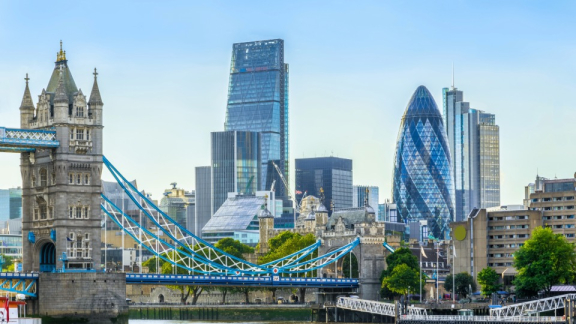
Safety in Great Britain: What do expats need to know?
The UK is generally a stable and well-organized destination for emigrating. In everyday life, typical big-city risks dominate, such as pickpocketing, phone snatching, and isolated violent incidents in hotspots. At the same time, the terror threat level for the entire United Kingdom was raised to level four out of five, or “Severe,” at the end of April 2026. For location planning, that is not a reason to panic, but it is also not something to ignore.
What expats should know:
- Elevated nationwide terror threat level
- Petty crime especially in major cities
- Use public transport and tourist areas with extra awareness
- Phone theft by drive-by offenders is a real risk
- In Northern Ireland, the situation can be somewhat more tense seasonally
- Take local security instructions seriously
Tip for expats: For everyday life, a healthy level of caution is advisable. Anyone who adapts their routines in cities and takes safety guidance seriously will start out much more relaxed.
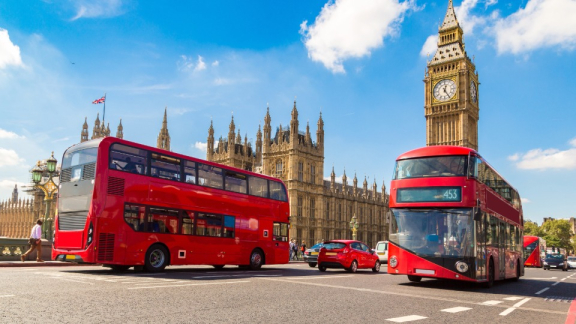
What is the healthcare system like in Great Britain?
The healthcare system operates through the NHS and is a key location factor for many newcomers. Anyone receiving a longer-term visa must in many cases pay the Immigration Health Surcharge (IHS) in addition to the visa fee and can then generally use the NHS free of charge from the start date of the visa. At the same time, certain services such as prescriptions, dental treatment, and eye care often still require separate payment.
At a glance:
- The NHS as the core public system
- Use under a longer-term visa is often tied to the IHS
- Access generally starts with the visa start date
- Prescriptions, dental care, and eye care often cost extra
- Private coverage can improve waiting times and flexibility
- Proof of status may be required digitally
Tip for expats: Do not treat healthcare as a side issue. Before moving, it should be clear which services are publicly covered and where private additions make everyday life noticeably easier.

Are you planning to move to Great Britain?
With structured preparation, you can avoid financial surprises. Our moving cost calculator provides clarity — it's simple, convenient, and takes just a few steps.
What is the climate like in Great Britain?
The UK has a predominantly mild, maritime climate. That sounds harmless, but in everyday life it feels much more changeable: rain, wind, rapid weather shifts, and noticeable regional differences are part of normal life. Anyone moving to the south coast, Scotland, or the west of the country will experience the climate very differently.
What the climate means for your daily life:
- Milder than many expect
- The weather changes quickly
- Rain and wind shape everyday life
- Winters are usually relatively mild rather than extreme
- Regional differences are clearly noticeable
- Atlantic storms are seasonally relevant
Tip for expats: Do not plan against the weather, plan with it. Good clothing, the right place to live, and realistic daily routes save more stress in the UK than any fair-weather expectations.

Diversity in Great Britain? – Language, culture, and everyday life
English is the country’s great locational advantage, because linguistically the start is much easier than elsewhere. Even so, the country remains culturally layered: England, Scotland, Wales, and Northern Ireland have their own identities, and regional differences are often more noticeable in everyday life than many expect. Pub culture, music, local traditions, and a communication style that is often direct yet coded with politeness shape the social environment.
What really helps in everyday life:
- English is the clear everyday language
- Regional identities remain clearly visible
- Pub culture is part of social everyday life, not just a tourist image
- Music and festivals are deeply embedded culturally
- Politeness and indirect phrasing often play a bigger role
- Outside London, daily life is usually calmer and more local
Tip for expats: Language alone is not enough if the cultural code is missing. Anyone who understands tone, timing, and regional differences will connect much faster both at work and in everyday life.

What makes Great Britain special?
The UK combines a global labor market with remarkable regional diversity. London stands for internationality and economic strength, while coasts, national parks, historic towns, and rural areas remain quickly accessible. It is exactly this mix of career options, English-speaking everyday life, and geographic variety that makes the location especially strong.
In detail:
- An English-speaking location with global visibility
- London as an international center
- A lot of nature despite high urbanization
- Historic towns and coasts close together
- Strong regional identities
- Culture and the economy are closely intertwined
Tip for expats: The UK is especially strong for people who do not want to choose between career and quality of life. Anyone who chooses their city, industry, and region carefully can find a very strong setup here.

What should you bear in mind when moving to Great Britain with animals?
A move with pets to the UK is well manageable, but more formally regulated than in many EU destination countries. What matters are approved routes, a microchip, rabies vaccination, the correct pet documents, and, in the case of dogs, often a tapeworm treatment shortly before entry. Anyone who overlooks the rules risks quarantine or refusal of entry.
What you should keep in mind:
- Check your pet’s vaccination status early, with a rabies vaccination and waiting period
- A microchip is required before the rabies vaccination
- Prepare veterinary documents and appropriate pet documentation completely
- Coordinate entry and flight requirements, an approved travel route is required
- Minimize stress for your pet on moving day and actively support adjustment
- Tapeworm treatment for dogs is often mandatory
- Errors can lead to quarantine or refusal of entry
Tip for expats: When moving pets to the UK, improvisation is not the answer. Vaccinations, documentation, and the travel route should all be finalized early enough so that nothing is still open on departure day.

For whom is Great Britain a suitable destination for emigration?
The UK is especially suitable for skilled professionals with an international profile, people with strong English skills, and anyone looking to gain a foothold in strong sectors. It is particularly well suited to profiles in tech, finance, life sciences, engineering, and business services. It is less suitable for anyone entering the market without a visa strategy, without a housing plan, and without a financial buffer.
Checklist before emigrating to the UK:
✓ Check entry requirements and residence regulations for the UK
✓ Secure health insurance and medical care coverage in the UK
✓ Choose the right place to live in the UK and arrange your initial accommodation
✓ Plan your emigration budget for the UK, including a financial buffer
✓ Prepare your move to the UK carefully, including household goods and documents
✓ Use English and actively take regional differences in everyday UK life into account
Conclusion: The UK is a strong emigration destination for anyone looking for an English-speaking environment, an international labor market, and a high degree of cultural and geographical diversity. The combination of a globally oriented economy, clear sector strengths, and strong everyday value makes the location attractive – provided that visa, housing, and budget are well planned.


FAQs for emigrating to Great Britain
Do I need a visa for the UK?
Usually not for a short visit, but since 2025 German citizens generally need an ETA to enter the country. For a permanent move to the UK, an ETA is not enough. A suitable visa is required depending on the purpose, for example for work or study.
What do I especially need to consider when emigrating to the UK?
Anyone planning to emigrate to the UK should not only plan entry, but above all settlement. Key points are visa status, the National Insurance Number, choice of location, healthcare logic through the NHS and the Immigration Health Surcharge, and a realistic budget for the strained housing market.
What is the National Insurance Number in the UK?
The National Insurance Number is the key personal number for work, social insurance, and many tax-related processes in the United Kingdom. In practice, anyone who wants to work in the UK will need it very frequently. It is applied for online, and in many cases a job can already be started before the number is issued, as long as residence and work rights can be proven.
Is the UK a good country to work in?
Yes, especially for skilled professionals with an international profile. Strong sectors currently include advanced manufacturing, clean energy, digital and technologies, financial services, life sciences, as well as professional and business services. For many standard work visa routes, a suitable job offer with sponsorship is required.
How high is the cost of living in the UK?
The UK is not a cheap emigration destination. Housing costs are among the biggest practical hurdles: for March 2026, the average monthly private rent in the UK stood at £1,377, and in England at £1,434. Regionally, and especially in sought-after cities, the level can be significantly higher.
How does the healthcare system work in the UK?
The healthcare system operates through the NHS. Anyone with a longer-term visa must in many cases pay the Immigration Health Surcharge and can then generally use the NHS free of charge from the start date of the visa. Certain services such as prescriptions, dental treatment, or eye tests, however, often still require additional payment.
Can I move to the UK with a dog or cat?
Yes, that is generally well manageable, but more formal than in many EU countries. What matters are an approved travel route, a microchip, rabies vaccination, the correct pet documents, and, for dogs, in many cases an additional tapeworm treatment. Violations can lead to quarantine or refusal of entry.
Are you interested in moving to Great Britain or another destination country?
Then do not hesitate and contact us today.
Sabrina Klier
Customer Service & Sales - AIR & SEA