
Emigrating to Italy Visa, safety, costs, and climate in Italy: a reality check
Emigrating to Italy: The most important answers first
✓ Visa-free entry: Entry is possible without a visa, with registration required for longer stays.
✓ A broad-based economy: Opportunities exist especially in industry, engineering, logistics, and services.
✓ A generally stable security situation: Keep petty crime in hotspots and natural hazards in mind.
✓ A publicly organized healthcare system: Clarify access through registration and the SSN properly.
✓ A highly varied climate: The north is more Alpine, while central and southern Italy are much more Mediterranean.
✓ Language skills: English helps in some situations, but Italian remains clearly more useful in everyday life.
✓ Special feature: Sea, cities, culture, and cuisine are often close together.
✓ Moving with pets: Good preparation, pet documentation, and vaccinations are required.
Relocating made easy with DACHSER & KOLB. Use our moving cost calculator. Get a quote and consultation. Book a tour. Move.
Facts about Italy

Capital City
Rome

Population
58.94 million

Surface Area
187,699.46 mi² or 302,073 km²

Continent
Europe

Official Language
Italian

Currency
Euro (EUR)
What are the customs, visa, and entry requirements for Italy?
For German citizens, a passport or ID card is sufficient for entry into Italy, and no visa is required. Any EU citizen staying longer than three months must register their residence or place of stay with the competent municipality. Valid identity documents should always be carried in everyday life. Enhanced checks are carried out for entry and exit by air.
Documents required for entry:
- Passport: Yes
- Temporary passport: Yes
- National ID card: Yes
- Temporary national ID card: Yes
- Child passport: Yes
Tip for expats: Italy looks formally straightforward, and that is exactly why registration and residence issues are often underestimated. First establish the legal basis, then coordinate housing, job start, and the move.

What is the economic situation like in Italy, and what are the costs of living for expats?
Italy has a broad-based economy and is highly regional in character. In addition to industry, mechanical engineering, design, food, and logistics, ICT, greentech, and specialized services also play an important role. EU citizens generally do not need a work permit. Rental and housing conditions vary significantly by region. In historic city centers and tourist areas in particular, housing is much more expensive and limited than in less sought-after locations.
Key facts at a glance:
- Economic growth with average GDP growth of 2–3% per year (1961–2026).
- Income distribution: Gini coefficient = 34.3 (0 = perfect equality; 100 = maximum inequality)
- Opportunities in industry and mechanical engineering
- Other strong sectors: design, fashion, food, logistics, services, ICT, and greentech
- The labor market varies greatly by region
- Factor in housing costs realistically at an early stage
Tip for expats: Do not focus only on climate and lifestyle. In Italy, the mix of location, job profile, language, and rent determines whether a fresh start is economically worthwhile.
Safety in Italy: What do expats need to know?
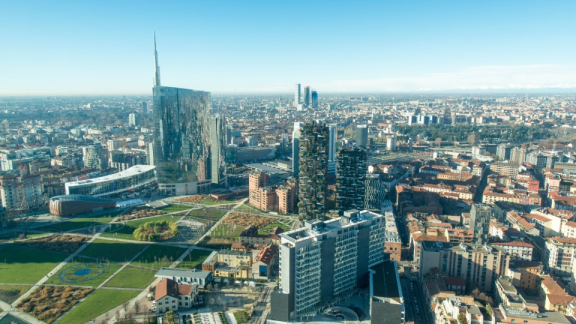
Italy is generally a stable and safe destination for emigrating. In everyday life, the main concerns are typical urban risks: pickpocketing in tourist hotspots, theft on public transport, and car break-ins. Violent crime is normally not the main issue for expats. In addition, regional natural and climate-related risks such as earthquakes, fires, and severe weather should not be underestimated.
What expats should know:
- Petty crime in tourist centers
- Pickpocketing in cities and on public transport
- Car break-ins occasionally relevant
- Earthquake risk and volcanic activity in parts of the country
- Forest and brush fires seasonally possible
- Take severe weather and flooding into account regionally
Tip for expats: Security is rarely a major issue in Italy. With normal everyday precautions and a clear view of natural and seasonal risks, the location can usually be assessed well.

What is the healthcare system like in Italy?
Italy’s healthcare system is based on the SSN and provides public healthcare for citizens and registered residents. For that reason, your own integration into the system should be clarified early. Access to the health card, a general practitioner, and regular services depends on it. The regional dimension also matters: while the system is organized nationally, actual healthcare provision differs noticeably by region in terms of speed, availability, and everyday experience.
At a glance:
- The SSN as the public healthcare system
- Registration is central for practical access
- The health card and GP are relevant in everyday life
- Public healthcare differs by region
- Private supplementation can be useful in individual cases
- Check your status before moving
Tip for expats: In Italy, healthcare is above all a structural issue. Anyone who clarifies registration, coverage, and practical access to the SSN before moving will save time, money, and uncertainty later on.

Are you planning to move to Italy?
With structured preparation, you can avoid financial surprises. Our moving cost calculator provides clarity — it's simple, convenient, and takes just a few steps.
What is the climate like in Italy?
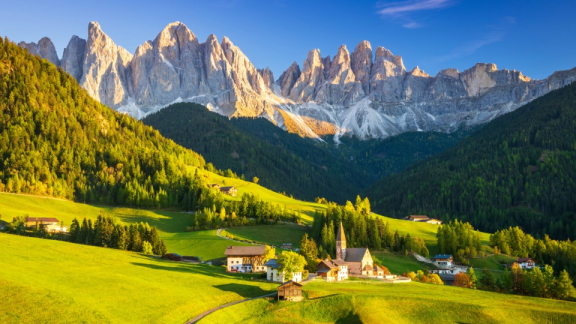
Italy does not have one uniform climate. The north is much more Alpine and continental, central Italy and many coastal regions are more Mediterranean, and the feel of everyday life changes noticeably depending on altitude and distance from the sea. This is a real location factor. Temperature, humidity, winter conditions, and seasonality differ clearly by region.
What the climate means for your daily life:
- The north is in parts more Alpine and cooler
- Central and southern Italy are much more Mediterranean
- Coastal regions are often milder
- Higher elevations are clearly different from lowlands
- Summers are very hot in some regions
- Take climate into account when choosing your new place to live
Tip for expats: In Italy, climate is a location issue. Anyone who treats the coast, the major cities, and Alpine areas as the same will be planning against the reality of everyday life.
What shapes language, culture, and daily life in Italy?
Italian is the clear everyday language and the most important lever for integration. English helps in some situations, but it does not replace Italian when dealing with authorities, housing, healthcare, and local daily life. Culturally, Italy is strongly regional: daily life, pace, and routines differ noticeably between the north, center, and south. At the same time, the combination of cuisine, community, city life, and regional identity remains one of the country’s biggest location factors.
What really helps in everyday life:
- Italian is the everyday language
- English helps mainly in specific situations
- Administrative life is clearly shaped by Italian
- Regional differences in everyday life are highly visible
- Cuisine and community shape daily life
- Language significantly speeds up integration
Tip for expats: Anyone who really wants to settle in Italy should not rely only on English and sunshine. Even basic Italian skills pay off directly in everyday life and in building relationships.

What makes Italy special?
Italy stands out through the close connection between culture, cuisine, landscapes, and regional diversity. Historic cities, the Mediterranean coast, Alpine areas, wine regions, and world-famous cultural sites are comparatively close to one another, creating a setup that offers an unusual breadth between city life, nature, and lifestyle.
In detail:
- Historic cities with global appeal
- Coasts, lakes, and mountains close together
- Strong regional identities
- Cuisine as a real everyday factor
- High cultural density
- A great deal of variety within short distances
Tip for expats: Italy is especially suitable for people who are looking not only for climate, but also for culture, enjoyment, and regional diversity. It is not purely a beach destination, not purely a city destination, and not purely a nature destination, but a working mix of all three.
What should you bear in mind when moving to Cyprus with animals?
A move with pets to Italy is generally easy to plan within the EU. In addition to transport, veterinary documents, deadlines, vaccinations, and animal welfare must be coordinated properly. The key requirements are complete pet documentation, a microchip, and a valid rabies vaccination. It becomes more complicated with very young animals or when entering from non-EU countries, because additional veterinary requirements then apply.
What you should keep in mind:
- Check your pet’s vaccination status early, as a valid rabies vaccination is required
- Prepare pet documentation in full
- Microchip required
- Train your pet to use the travel crate before the flight
- Coordinate entry requirements and airline rules
- Minimize stress for your pet on moving day
- Actively support your pet’s adjustment to the new home
- Very young animals are only allowed on a limited basis
Tip for expats: When moving pets to Italy, completeness matters more than speed. Anyone who checks vaccination status and documents in time will avoid unnecessary delays.

For whom is Italy a suitable destination for emigration?
Italy is especially well suited to EU citizens, people with a clear location strategy, skilled professionals with a solid job profile, and anyone who wants to combine culture, climate, and quality of life. It is less suitable for anyone moving into highly sought-after regions without willingness to learn the language, without a housing strategy, and without realistic budget planning. Housing and regional differences in particular require a sober plan.
Checklist before emigrating to Italy:
✓ Check entry requirements and residence regulations for Italy
✓ Secure health insurance and medical care coverage in Italy
✓ Choose the right place to live in Italy and arrange your initial accommodation
✓ Plan your emigration budget for Italy, including a financial buffer
✓ Prepare your move to Italy carefully, including household goods and documents
✓ Use English and settle into everyday life faster with Italian
Conclusion: Italy is an attractive destination for anyone looking for an EU country with high cultural density, strong everyday quality, and great regional diversity. Above all, the combination of quality of life, good infrastructure, eurozone membership, and the proximity of city, sea, mountains, and culture makes the country especially appealing.


FAQs for emigrating to Italy
Do I need a visa for Italy?
No. German citizens can enter Italy with a valid passport or ID card. Anyone wishing to stay longer than three months must, as an EU citizen, register their residence or stay with the competent municipality.
What do I especially need to consider when emigrating to Italy?
Anyone planning to emigrate to Italy should not only plan entry, but above all settlement. Key points are residence registration, residence declaration, the codice fiscale, health insurance, choice of location, and a realistic budget for rent and everyday life.
What is the codice fiscale in Italy?
The codice fiscale is the personal tax and identification number in Italy. It is required for many administrative and everyday processes, for example when dealing with authorities, signing contracts, and often also for organizational steps connected with starting a new life in Italy.
Is Italy a good country to work in?
Yes, especially for people with a clear professional profile. EU citizens do not need a work permit, and Italy offers opportunities in industry, mechanical engineering, design, logistics, food, tourism, ICT, and other specialized sectors. At the same time, the labor market and job opportunities differ greatly by region.
How high is the cost of living in Italy?
Italy is not universally a low-cost destination for emigrating. In historic city centers and tourist regions in particular, rents are significantly higher. EURES currently cites an average of around 850 euros for a two-room apartment, with cheaper options outside the most sought-after locations.
How does the healthcare system work in Italy?
Italy has a public healthcare system called the SSN. For long-term everyday life, what matters is that registration and integration into the system are properly clarified. After that, the health card, a general practitioner, and regular access to healthcare become relevant.
Can I move to Italy with a dog or cat?
Yes. Within the EU, moving with a dog, cat, or ferret is generally easy to plan if a microchip, a valid rabies vaccination, and the required pet documents are in place. Additional rules apply for very young animals and for entry from non-EU countries.
Are you interested in moving to Italy or another destination country?
Then do not hesitate and contact us today.
Sabrina Klier
Customer Service & Sales - AIR & SEA