Emigrating to Lithuania Visa, safety, costs, and climate in Lithuania: a reality check
Emigrating to Lithuania: The most important answers first
✓ Visa-free entry: Entry is possible without a visa, with registration required for longer stays.
✓ An economy on the rise: Opportunities exist especially in industry, tech, fintech, and skilled professions.
✓ A generally stable security situation: Keep petty crime in city centers and near border areas in mind.
✓ A publicly organized healthcare system: Access is provided through mandatory health insurance.
✓ A climate with clear seasons: Warm summers, cold winters, and changeable transitional periods.
✓ Language skills: English helps at work, but Lithuanian is clearly an advantage in everyday life.
✓ Special feature: Baroque Vilnius meets the Baltic Sea, lakes, and the Curonian Spit.
✓ Moving with pets: Usually well manageable within the EU with a pet passport and vaccination.
Relocating made easy with DACHSER & KOLB. Use our moving cost calculator. Get a quote and consultation. Book a tour. Move.
Facts about Lithuania

Capital City
Vilnius

Population
2.97 million

Surface Area
25,212.47 mi² or 65.300 km²

Continent
Europe

Official Language
Lithuanian

Currency
Euro (EUR)
What are the customs, visa, and entry requirements for Lithuania?
For German citizens, a passport or ID card is sufficient for entry into Lithuania, and no visa is required. For a longer stay of more than three months within a six-month period, a document confirming temporary residence rights becomes relevant for EU citizens. In addition, anyone relocating permanently should also declare their place of residence. At present, full checks are carried out for arrivals by sea and air, while spot checks are possible on land routes.
Documents required for entry:
- Passport: Yes
- Temporary passport: Yes
- National ID card: Yes
- Temporary national ID card: Yes
- Child passport: Yes
Tip for expats: As an EU destination, Lithuania gives the impression of having low entry barriers, which means residence and registration issues are often addressed too late. It makes sense to first clarify the legal framework properly and only then align housing, job start, and the move.
What are the economic conditions and standard of living like in Lithuania?
Lithuania is economically highly dynamic. Alongside traditional industrial and manufacturing sectors, tech, fintech, engineering, and life sciences are growing in particular. At the same time, there are regional differences: Vilnius is more expensive and more international, while other cities such as Kaunas or Klaipėda are often more affordable and easier to navigate. Rent, mobility, insurance, and the actual fit with the local job market should therefore be calculated in advance.
Key facts at a glance:
- Good growth, with average GDP growth of 4–5% per year (1996–2025).
- Income distribution: Gini coefficient = 36 (0 = perfect equality; 100 = maximum inequality)
- Good opportunities in industry and manufacturing
- A growing tech and fintech location, with life sciences as a strong future sector
- EU citizens do not need a work permit
- Vilnius is usually more expensive than other cities
- Plan housing costs realistically at an early stage
Tip for expats: Do not focus only on lower prices than in Western Europe. In Lithuania, the mix of location, job profile, language, and housing costs determines whether a fresh start is truly economically successful.
Safety in Lithuania: What do expats need to know?
Lithuania is generally a stable and safe emigration destination. In everyday life, the main concerns are typical city risks such as pickpocketing in old towns, at railway and bus stations, occasional car break-ins, and isolated cases of fraud or drink spiking in bars and clubs. Violent crime is rather rare. Special rules apply near the border with Belarus, several crossings are closed, and increased caution is advisable in the border area.
What expats should know:
- Petty crime in tourist centers
- Pickpocketing at railway stations and on public transport
- Car break-ins are occasionally possible
- Stay extra alert in bars and clubs
- Border area with Belarus under special conditions
- Violent crime is rather rare
Tip for expats: Security is rarely a decisive issue in Lithuania. With solid basic precautions in urban daily life and a realistic view of border regions, the location can be assessed well.

What is the healthcare system like in Lithuania?
The Lithuanian healthcare system is based on mandatory health insurance. Anyone who is insured or for whom contributions are being paid has access to many treatments, doctor visits, and further services in facilities that cooperate with the responsible health funds. Care is available in both public and private institutions. Without proper coverage, medical treatment can quickly become expensive.
At a glance:
- Mandatory health insurance as the basis, with access linked to insured status
- Public and private providers are available
- Many services are covered through contractual arrangements
- Emergency care available around the clock
- Private additional coverage may be useful in individual cases
Tip for expats: In Lithuania, healthcare is above all a structural issue. Anyone who clarifies before moving how their coverage works and which services are actually covered will start out much more relaxed.

Are you planning to move to LIthuania?
With structured preparation, you can avoid financial surprises. Our moving cost calculator provides clarity — it's simple, convenient, and takes just a few steps.
What is the climate like in Lithuania?
Lithuania has a pronounced four-season climate shaped by both maritime and continental influences. Summers are pleasantly warm, winters are cold, and the transitional seasons can be changeable. Anyone living on the Baltic coast, in the capital region, or further inland will experience Lithuania differently. Your choice of location should therefore also match your own weather preferences and everyday rhythm.
What the climate means for your daily life:
- Four clear seasons
- Summer pleasantly warm, winter significantly colder
- Average annual temperature of 7.4 °C
- July is the warmest month (around 18.3 °C)
- January is the coldest month (around -2.9 °C)
- The coast and inland areas differ noticeably
Tip for expats: In Lithuania, the climate plays a noticeable role. Anyone who aligns their place of residence, moving date, and everyday life with the seasonal rhythm will settle in much faster.
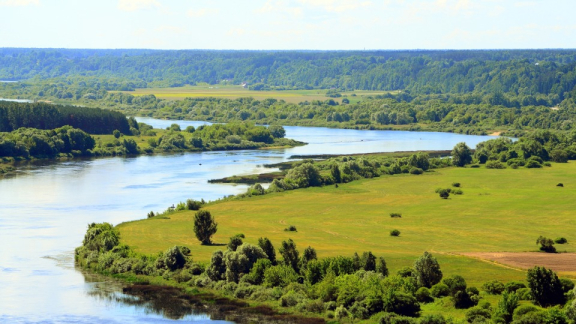
What shapes language, culture, and everyday life in Lithuania?
Lithuanian is the official language and central in everyday life. English works well in international companies and among younger people, but Lithuanian remains important for authorities and local services. Culturally, Lithuania tends to be rather reserved and direct, with a strong connection to tradition and language. Everyday life feels calmer and more structured than in many Western European big cities, while cities such as Vilnius are also becoming increasingly international.
What really helps in everyday life:
- Lithuanian is the everyday language
- English helps in international environments
- Administrative life is strongly shaped by Lithuanian
- The culture is rather down-to-earth and direct
- Tradition and language have a high value
- Vilnius is more international than many other regions
Tip for expats: Anyone who truly wants to settle in Lithuania should not rely only on English. Even basic Lithuanian directly improves everyday life, speed, and trust.
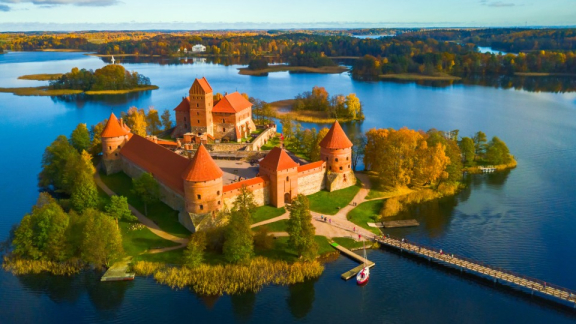
What makes Lithuania special?
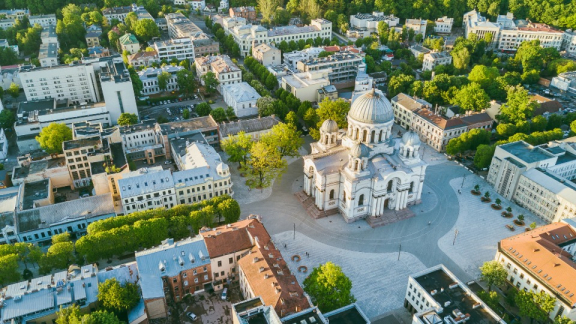
Lithuania stands out through an unusually strong combination of calm, nature, history, and digital progress. Vilnius combines a baroque old town with modern urban life, Trakai represents one of the country’s most iconic historic images, and the Curonian Spit is a genuine unique feature with international World Heritage status.
In detail:
- Vilnius with strong historical substance
- Trakai as an iconic national image
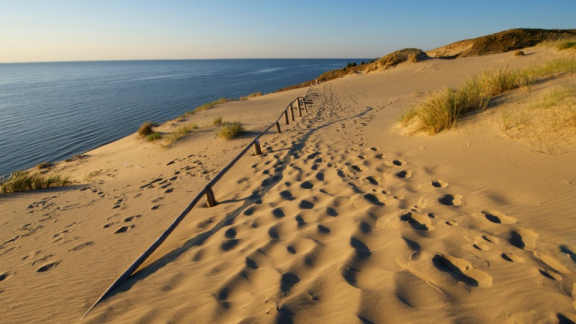
- Curonian Spit as a UNESCO highlight
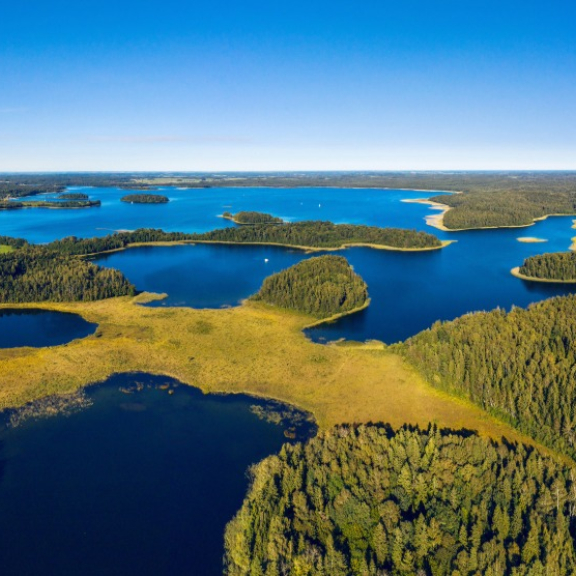
- Baltic coast and lake landscapes
- Strong connection to nature in everyday life
- A calmer lifestyle than in many major cities
Tip for expats: Lithuania is especially suitable for people looking not just for a new place to live, but also for more calm, nature, and clarity in everyday life. That combination is one of the country’s biggest strengths.
What should you bear in mind when moving to Lithuania with animals?
A move with pets to Lithuania is generally easy to plan within the EU. In addition to transport, veterinary documentation, deadlines, vaccinations, and animal welfare need to be coordinated properly. The key requirements are a microchip, a valid rabies vaccination, and an EU pet passport. Entry from non-EU countries becomes more complex, as additional veterinary requirements may then apply.
What you should keep in mind:
- Check your pet’s vaccination status early, as a valid rabies vaccination is required
- Prepare veterinary documents completely in advance, with the EU pet passport being relevant
- Microchip required
- Train your pet to use the travel crate before the flight
- Coordinate entry requirements and airline rules
- Minimize stress for your pet on moving day
- Actively support your pet’s adjustment to the new home
Tip for expats: When moving pets to Lithuania, speed matters less than completeness. Anyone who checks vaccination status and documents in time will avoid unnecessary delays.

For whom is Lithuania a suitable destination for emigration?
Lithuania is especially well suited to EU citizens, skilled professionals, digitally oriented profiles, and people looking for a calmer, more structured environment with solid economic prospects. The country is particularly strong for people with backgrounds in engineering, industry, fintech, life sciences, or international business. Lithuania is less suitable for anyone entering the market without language readiness and without a clear housing and employment plan.
Checklist before emigrating to Lithuania:
✓ Check entry requirements and residence regulations for Lithuania
✓ Secure health insurance and medical care coverage in Lithuania
✓ Choose the right place to live in Lithuania and arrange your initial accommodation
✓ Plan your emigration budget for Lithuania, including a financial buffer
✓ Prepare your move to Lithuania carefully, including household goods and documents
✓ Use English and settle into everyday life faster with Lithuanian
Conclusion: Lithuania is an attractive emigration destination for anyone who wants to make a structured, comparatively straightforward fresh start within the EU with a good balance of cost and value. The growing economy, strong digital infrastructure, high density of nature, and the blend of calm, culture, and urban life make the country especially appealing.


FAQs for emigrating to Lithuania
Do I need a visa for Lithuania?
No. German citizens can enter Lithuania with a valid passport or ID card. For a stay of more than three months within six months, however, proof of temporary residence rights becomes relevant for EU citizens.
What do I need to pay particular attention to when emigrating to Lithuania?
Anyone planning to emigrate to Lithuania should not only plan entry, but above all settlement. Key points are residence rights, declaration of residence, health insurance, employment basis, choice of location, and a realistic budget for rent and everyday life.
Is Lithuania a good country to work in?
Yes, especially for skilled professionals with a technical, industrial, or international profile. EU citizens do not need a work permit. The labor market has shortages, among others, in manufacturing, construction, and skilled technical trades. At the same time, Lithuania is growing in areas such as tech, fintech, and life sciences.
How high is the cost of living in Lithuania?
Compared with the EU, Lithuania is often cheaper than many Western European countries, but not equally affordable everywhere. In Vilnius in particular, rents are now significantly higher than in smaller cities. EURES cites around 410 euros and more for a one-room apartment in Vilnius and around 650 euros and more for a two-room apartment per month.
How does the healthcare system work in Lithuania?
The healthcare system is based on mandatory health insurance. Anyone insured in Lithuania or for whom contributions are paid is entitled to many services in public and also contract-linked private institutions. Emergency care is available around the clock.
What language do I need in Lithuania?
The official language is Lithuanian. English often works well in international companies and among younger groups, but for authorities, everyday life, and long-term integration, Lithuanian offers a clear advantage.
Can I move to Lithuania with a dog or cat?
Yes. Within the EU, moving with a dog, cat, or ferret is generally easy to plan if a microchip, a valid rabies vaccination, and an EU pet passport are in place. Additional requirements apply when entering from non-EU countries.
Are you interested in moving to Lithuania or another destination country?
Then do not hesitate and contact us today.
Sabrina Klier
Customer Service & Sales - AIR & SEA