Emigrating to Luxembourg Visa, safety, costs, and climate in Luxembourg: a reality check
Emigrating to Luxembourg: The most important answers first
✓ Visa-free entry: Entry is possible without a visa, but registration is required for longer stays.
✓ A strong and international economy: Opportunities exist especially in services, public administration, and skilled professions.
✓ A generally stable security situation: Crime is low, but petty theft at railway stations should be kept in mind.
✓ A solidly organized healthcare system: Access runs through social insurance and proper registration.
✓ A temperate and balanced climate: Moderately warm summers and rather cool, damp winters.
✓ Language skills: Everyday life is multilingual, with French and English often especially important.
✓ Special feature: An international environment combined with short distances and free public transport.
✓ Moving with pets: Good preparation, pet documentation, and for dogs municipal registration are required.
Relocating made easy with DACHSER & KOLB. Use our moving cost calculator. Get a quote and consultation. Book a survey appointment. Move with confidence.
Facts about Luxembourg

Capital City
Luxembourg

Population
681,900

Surface Area
998,46 mi² or 2.586 km²

Continent
Europe

Official Language
Luxembourgish, French, German

Currency
Euro (EUR)
What are the customs, visa, and entry requirements for Luxembourg?
For German citizens, a passport or ID card is sufficient for entry into Luxembourg, and no visa is required. What matters is the distinction between entry and long-term residence. Anyone staying longer than three months must report their arrival to the local municipality and complete residence registration on site. In addition, flexible internal border checks are possible at the German-Luxembourg land border.
Documents required for entry:
- Passport: Yes
- Temporary passport: Yes
- National ID card: Yes
- Temporary national ID card: Yes
- Child passport: Yes
Tip for expats: Luxembourg is formally simple, which is exactly why the first administrative steps are often underestimated. First clarify registration and residence logic, then coordinate housing, job start, and the move.

Economy and living conditions in Luxembourg: What opportunities are there for expats?
Luxembourg is economically small, but extremely high-performing. The labor market is international, multilingual, and dependent on skilled professionals in many sectors. At the same time, the country is expensive: rents, daily living costs, and property prices are among the clear hurdles that need to be priced in realistically when moving to Luxembourg.
Key facts at a glance:
- Good growth, also compared with the EU, with average GDP growth of 2–3% per year (1996–2025).
- Income distribution: Gini coefficient = 33.6 (0 = perfect equality; 100 = maximum inequality)
- Strong international labor market, with multilingualism as a real career lever
- Shortages of skilled workers especially in construction, administration, and social and cultural professions
- Healthcare, education, and services with ongoing demand
- Average apartment rent is around 1,500 euros, often higher in Luxembourg City
- Consumer and service prices are clearly above the EU average
Tip for expats: Luxembourg shines with top salaries, but everyday life is what decides the real value. Anyone who factors in rent, deductions, mobility, and language use realistically will understand the true value of the location.
Safety in Luxembourg: What do expats need to know?
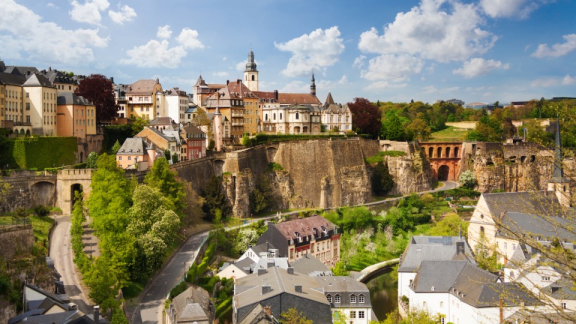
Luxembourg is generally a very safe emigration destination. Crime rates are low, and in everyday life the focus is more on standard precautions than on real security problems. More relevant are petty theft at railway stations and on public transport, as well as practical everyday issues such as weather, traffic, and cross-border commuter flows.
What expats should know:
- Crime rate is low
- Pickpocketing is possible especially at railway stations
- Stay alert on public transport and in crowds
- Keep weather and traffic conditions in mind in everyday life
- Border checks can take place flexibly
Tip for expats: In Luxembourg, security rarely becomes an issue. With solid basic precautions and good organization in cross-border daily life, most things run smoothly.
What is the healthcare system like in Luxembourg?
Luxembourg’s healthcare system is publicly organized and closely linked to social insurance. Anyone working in Luxembourg is generally enrolled through the responsible social security system. For employees, the employer handles the registration. After that, access to health and maternity insurance benefits is granted, and insured persons receive their national identification number as well as their social security card.
At a glance:
- Social insurance via the Luxembourg social security authority CCSS is central
- The employer registers employees
- Self-employed persons register themselves
- Access to healthcare services after registration
- The social security card is relevant for treatment
- Consider family co-insurance and additional coverage
Tip for expats: In Luxembourg, healthcare is above all a structural issue. Anyone who sorts out employment, registration, and family coverage early will start out much more relaxed.

Are you planning to move to Luxembourg?
With structured preparation, you can avoid financial surprises. Our moving cost calculator provides clarity — it's simple, convenient, and takes just a few steps.
What is the climate like in Luxembourg?
Luxembourg has a temperate climate with noticeable seasons. The weather sits between oceanic and continental influences: mild, rather damp winters, warmer summers, and rainfall throughout the year. For expats, the climate is very pleasant in everyday life because extreme swings are rare.
What the climate means for your daily life:
- Temperate climate
- Both oceanic and continental influences
- Rain is possible in every season
- Winter is rather cool and damp
- Summer is usually moderately warm
- From May to mid-October, conditions are often especially pleasant
Tip for expats: Climatically, Luxembourg is rarely extreme. That makes everyday life easier: housing, commuting, and settling in usually work without major weather-related stress factors.

Diversity in Luxembourg? – Language, culture, and everyday life
Luxembourg is linguistically and culturally one of Europe’s most interesting locations. Luxembourgish, French, and German are firmly embedded in the public and legal system, and in working life English is very often added as well. Which language dominates in daily life depends strongly on the sector, region, and function. Culturally, Luxembourg is small but extremely international. The country is cosmopolitan, multilingual, and strongly shaped by European institutions, commuter flows, and an international population. That is exactly why daily life often feels very open, efficient, and more international than in many larger countries.
What really helps in everyday life:
- Three official languages in the state system
- French is often the key everyday language in business life
- English is strong in finance and international companies
- German is important in skilled trades and in German-speaking companies
- Luxembourgish remains central for identity and integration
- Daily life is strongly international and cross-border in character
Tip for expats: In Luxembourg, one language is rarely enough as a complete solution. Anyone who handles multilingualism flexibly will gain traction much faster both at work and in everyday life.
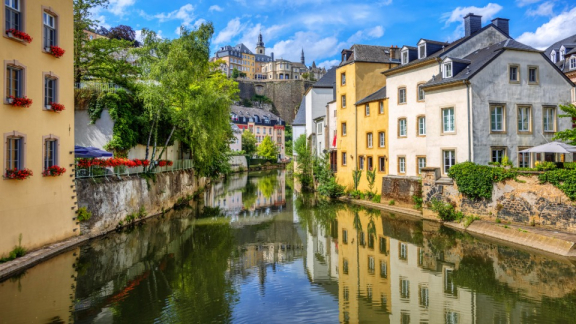
What makes Luxembourg special?
Luxembourg stands out through an unusually strong combination of internationality, prosperity, and everyday efficiency. The country may be small, but it functions remarkably efficiently. Short distances, EU institutions, high quality of life, strong internationality, and free public transport make the location almost unique in Europe.
In detail:
- Short distances throughout the country
- Free public transport within the country
- High internationality in a compact space
- Strong role of European institutions
- High quality of life and strong organization
- City life, nature, and commuting areas close together
Tip for expats: Luxembourg is especially suitable for people looking for an international professional life without long distances. That efficiency is one of the country’s strongest location advantages.

What should you bear in mind when moving to Luxembourg with animals?
A move with pets to Luxembourg is generally easy to plan, especially within the EU. What matters are complete pet documents, a microchip, and a valid rabies vaccination. For dogs, there is an additional local step after the move: they must be registered with the municipality within one month, and proof of liability insurance is required.
What you should keep in mind:
- Check your pet’s vaccination status early, as a valid rabies vaccination is required
- Prepare veterinary documents completely in advance, with the EU pet passport being relevant
- Microchip required
- Train your pet to use the travel crate before the flight
- Coordinate entry requirements and airline regulations
- Minimize stress for your pet on moving day
- Actively support your pet’s adjustment to the new home
- Dogs must be registered with the municipality within one month, and proof of liability insurance is required
Tip for expats: When moving pets to Luxembourg, the EU part is usually easy, but the local follow-up is what tends to be forgotten. Dog registration with the municipality in particular should be planned in from the start.

For whom is Luxembourg a suitable destination for emigration?
Luxembourg is especially well suited to skilled professionals, commuters, families, and people with an international or multilingual profile. The country is particularly strong for people who want to work in a structured, economically powerful, and European environment. It is less suitable for anyone expecting low housing costs or entering the market without a language and budget strategy.
Checklist before emigrating to Luxembourg:
✓ Check entry requirements and residence regulations for Luxembourg
✓ Secure health insurance and medical care coverage in Luxembourg
✓ Choose the right place to live in Luxembourg and arrange your initial accommodation
✓ Plan your emigration budget for Luxembourg, including a financial buffer
✓ Prepare your move to Luxembourg carefully, including household goods and documents
✓ Use French and English and take multilingualism into account
Conclusion: Luxembourg is a strong emigration destination for anyone looking for an economically strong, international, and at the same time very well-organized environment. Its central location, multilingualism, strong labor market, and high quality of life make the country especially attractive.


FAQs for emigrating to Luxembourg
Do I need a visa for Luxembourg?
No. German citizens can enter Luxembourg with a valid passport or ID card. Anyone wishing to stay longer than three months must, as an EU citizen, exercise their right of residence and complete the required reporting and registration steps with the local municipality.
What do I especially need to consider when emigrating to Luxembourg?
Anyone planning to emigrate to Luxembourg should not only plan entry, but above all settlement. Key points are registration with the municipality, residence registration, health insurance through the social security system, choice of location, and a realistic budget for rent and everyday life.
Is Luxembourg a good country to work in?
Yes, especially for skilled professionals with an international or multilingual profile. The labor market is strong, international, and tight in several areas. In recent years, the biggest shortages have included construction, business and administrative professions, as well as legal, social, and cultural professions.
How high is the cost of living in Luxembourg?
Luxembourg is not a low-cost emigration destination. Consumer goods and services have recently been clearly above the EU average, and EURES cites an average monthly rent of around 1,500 euros for an apartment, with Luxembourg City being especially expensive.
How does the healthcare system work in Luxembourg?
The healthcare system is publicly organized. Anyone working in Luxembourg is generally enrolled through the social security system. For employees, the employer handles the registration, and after that access to health and maternity insurance benefits is granted.
What language do I need in Luxembourg?
Luxembourg is strongly multilingual. In everyday life and at work, Luxembourgish, French, German, and often English also play a role. Which language is actually needed depends heavily on the sector and function. French is especially common in retail and hospitality, English is strong in international companies and finance, and German is more common in skilled trades.
Can I move to Luxembourg with a dog or cat?
Yes, this is generally easy to plan. For pets traveling within the EU, the main requirements are a microchip, a valid rabies vaccination, and an EU pet passport. Anyone moving to Luxembourg with a dog must additionally register it with the municipality within one month and provide proof of liability insurance.
Are you interested in moving to Luxembourg or another destination country?
Then do not hesitate and contact us today.
Sabrina Klier
Customer Service & Sales - AIR & SEA