Emigrating to Malaysia Visa, safety, costs, and climate in Malaysia: a reality check
Emigrating to Malaysia: The most important answers first
✓ Visa-free entry: Entry is possible without a visa for up to 90 days; the appropriate residence status is required for longer stays.
✓ A broadly diversified economy: In addition to raw materials, the economy also relies on services, industry, trade, and manufacturing.
✓ A generally stable security situation: Caution is advised in eastern Sabah and in the sea area toward the Sulu Archipelago.
✓ A two-tier healthcare system: Public healthcare is widely available, while private medicine is especially strong in urban areas.
✓ A tropical and humid climate: High temperatures, humidity, and two monsoon systems shape everyday life.
✓ Language skills: Malay is the official language, while English remains very important in trade, industry, and urban daily life.
✓ Special feature: Malaysia stands out for its strong mix of economic relevance, tropical climate, and cultural diversity.
✓ Moving with pets: Good preparation and complete documentation are required.
Relocating made easy with DACHSER & KOLB. Use our moving cost calculator. Get a quote and consultation. Book a tour. Move.
Facts about Malaysia

Capital City
Kuala Lumpur

Population
34.2 million

Surface Area
330.803 km² or 127723,752 mi²
Continent
Asia

Official Language
Malaysian

Currency
Malaysian Ringgit (MYR)
What are the customs, visa, and entry requirements for Malaysia?
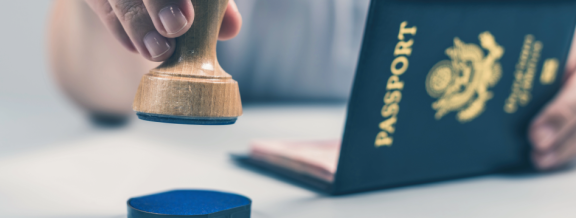
German citizens may enter for tourist purposes for up to 90 days, after which a long-term residence status is required. For employment, an Employment Pass is required, which is tied to the employer and can be valid for up to 90 days. For long-term private stay models, MM2H remains a separate long-term pathway. In addition, the Malaysia Digital Arrival Card (MDAC) must be completed before entry, and in some cases a return or onward ticket and proof of accommodation may be required.
Documents required for entry:
- Passport: Yes
- Temporary passport: No
- National ID card: No
- Temporary national ID card: No
- Child passport: Yes
Tip for expats: Entry into Malaysia may seem simple, but the real effort begins with long-term status. First get your purpose of stay, pass category, employer-based or MM2H logic, and documents properly aligned, then schedule the move.
Is Malaysia economically attractive?
Malaysia is economically more broadly positioned than many people initially expect. The country is one of the more diversified economies in Southeast Asia and does not rely only on raw materials, but also on services, industry, trade, and manufacturing.
Key facts at a glance:
- Strong growth, including compared with the EU, with average GDP growth of 3–4% per year (1980–2025).
- Income distribution: Gini coefficient = 40.7 (0 = perfect equality; 100 = maximum inequality)
- Services and industry are key pillars of the economy
- Electronics, chemicals, mechanical engineering, and trade are important sectors
- Raw materials such as palm oil, crude oil, and natural gas remain relevant
- Malaysia is strongly integrated into regional and global supply chains
- The market offers opportunities, but is not automatically friction-free
Tip for expats: Malaysia is especially attractive economically for people with a clear profile, solid income, and a well-structured market setup. Anyone focusing only on low costs can quickly underestimate competition, location choice, and visa logic.
Safety in Malaysia: What do expats need to know?
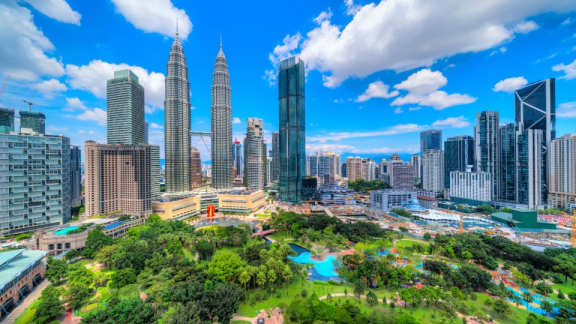
Malaysia should be assessed with nuance from a security perspective. Classic street crime does occur, especially theft and purse snatching by motorcyclists. At the same time, eastern Sabah is significantly more sensitive: travel is discouraged for parts of the east coast and the offshore islands, and in the sea area toward the Sulu Archipelago there are risks of kidnapping and armed attacks. In addition, the threat of terrorist attacks remains present nationwide.
What expats should know:
- Theft and robbery occur in cities and shopping malls
- Visible valuables left in cars increase the risk of break-ins
- The east coast of Sabah between Terusan and Tawau is especially sensitive
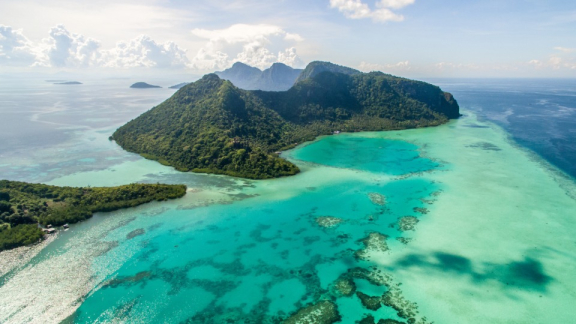
- Non-essential travel to islands and dive areas off eastern Sabah is discouraged
- Nighttime boat trips in the ESS Zone (Eastern Sabah Security Zone) are especially critical
- The risk of terrorism remains present nationwide.
Tip for expats: In Malaysia, what often matters most is not the country as a whole, but the specific region. Anyone who plans their place of residence, commute, and leisure travel strategically can reduce risk significantly.
What is the healthcare system like in Malaysia?
Malaysia operates a dual healthcare system consisting of tax-funded public healthcare and a growing private sector. The public system carries most of the basic care load. Private providers are especially strong in urban centers. At the same time, Malaysia applies separate fee structures for foreigners within the public system, which is why solid private coverage remains advisable.
At a glance:
- Public and private systems exist side by side
- Private care is especially well developed in cities
- For expats, private coverage is often the more practical route
- No mandatory vaccinations for direct entry from Germany
- Dengue and chikungunya are relevant mosquito-borne diseases
- Malaria risk is low in Peninsular Malaysia, higher in parts of East Malaysia; major urban centers such as Kuala Lumpur are considered malaria-free
- Rabies risk from stray animals is relevant.
Tip for expats: In Malaysia, healthcare is less about quality and more about access and risk management. Good health insurance, reliable access to clinics, and mosquito protection should all be in place before the move.

Are you planning to move to Malaysia?
With structured preparation, you can avoid financial surprises. Our moving cost calculator provides clarity — it's simple, convenient, and takes just a few steps.
Tropical and warm all year round – what is the climate like in Malaysia?
Malaysia has a tropical climate with high temperatures, high humidity, and heavy rainfall year-round. The climate is shaped by the northeast monsoon and the southwest monsoon, plus two transitional periods. The seasons are not sharply divided, but rainfall volumes and weather patterns clearly affect daily life and location choice.
What the climate means for your daily life:
- Tropical warmth year-round
- High humidity
- Heavy rainfall
- Northeast monsoon usually from November or December to March, southwest monsoon usually from May or June to September or early October
- Transition periods in spring and fall
- Weather and rainfall can noticeably affect mobility and everyday life
Tip for expats: Climate is not a side issue in Malaysia. Anyone who treats Kuala Lumpur, Penang, Johor Bahru, and Borneo as if they had the same climate is planning too broadly.
Diversity in Malaysia? – Language, culture, and everyday life
Malaysia’s official language is Bahasa Melayu. At the same time, the official government position explicitly states that other languages may be used freely, and English continues to dominate strongly in trade and industry. That is exactly what makes Malaysia more accessible in everyday life for many international professionals than other countries in the region. Culturally, the country is strongly shaped by Malay, Chinese, and Indian influences.
What really helps in everyday life:
- Bahasa Melayu (Malay) is the official language
- English is very important in urban life and in business
- Mandarin and Tamil are visibly present in society
- Malaysia is strongly multicultural in character
- Regional differences between the peninsula and East Malaysia are noticeable
- Linguistic flexibility makes everyday life and integration significantly easier.
Tip for expats: English will take you far in Malaysia. Everyday life becomes truly smooth, however, only when you not only see the country’s cultural diversity as an advantage, but also consciously take it into account in daily life.

What makes Malaysia special?
Malaysia stands out through its unusually strong combination of economic relevance, tropical climate, and cultural diversity. The country connects the peninsula with the Malaysian part of Borneo, is strongly integrated into Southeast Asia, and at the same time feels much more diverse than many people initially expect. Economically, Malaysia is one of the stronger and more diversified economies in the region.
In detail:
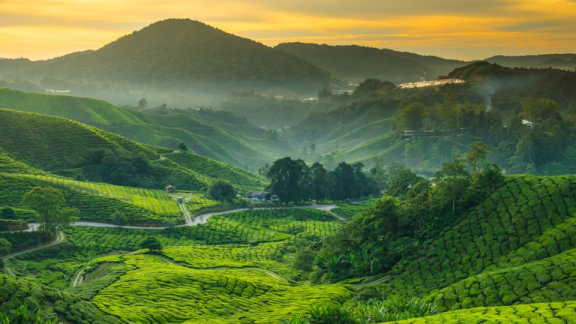
- With the Malay Peninsula and Borneo, Malaysia consists of two geographically separate parts that are not connected, but politically form one single state.
- Tropical natural landscapes combined with urban centers
- A highly multicultural society
- Economically strongly diversified
- An important location for industry, trade, and services
- In Southeast Asia, a clear bridge location between growth and everyday practicality.
Tip for expats: Malaysia is especially interesting for people who do not think of Southeast Asia only in terms of beaches and backpacking, but in terms of everyday life, markets, infrastructure, and cultural diversity. That is where the country’s real USP lies.
What should you bear in mind when moving to Malaysia with animals?
A move with pets to Malaysia is a formal process and should be prepared early. For dogs and cats, Malaysia requires valid and complete documentation and generally imposes quarantine of at least seven days upon arrival; depending on the risk category, this period can be extended significantly. In cases of non-compliance, refusal of entry, quarantine at the owner’s expense, or in extreme cases even euthanasia of the animal may occur.
What you should keep in mind:
- Check your pet’s vaccination status early; proof of rabies vaccination is mandatory
- Prepare all veterinary documents completely in advance; a veterinary certificate is required
- Train your pet to use the travel crate before the flight
- Coordinate entry requirements and airline regulations; an import license is required
- Minimize stress for your pet on moving day
- Actively support your pet’s adjustment to the new home
- Quarantine for at least 7 days, with possible extension up to 6 months
- Documentation errors can have serious consequences
Tip for expats: When relocating with pets to Malaysia, speed is not the priority — document security is. Anyone who does not get the license, vaccination records, veterinary papers, and quarantine logic organized early is almost certain to create last-minute problems.

For whom is Malaysia a suitable destination for emigration?
Malaysia is especially well suited to people looking for a relatively well-structured, linguistically accessible, and economically well-positioned location in Southeast Asia. The country is a good fit for skilled professionals with employer ties, international corporate roles, entrepreneurs with a clear setup, and longer-term private residence models.
Checklist before emigrating to Malaysia:
✓ Check entry requirements and residence regulations for Malaysia
✓ Secure health insurance and medical care coverage in Malaysia
✓ Choose the right place to live in Malaysia and arrange your initial accommodation
✓ Plan your emigration budget for Malaysia, including a financial buffer
✓ Prepare your move to Malaysia carefully, including household goods and documents
✓ Use English confidently and take regional differences into account
Conclusion: Emigrating to Malaysia can be highly attractive, especially because of its linguistic accessibility, economic breadth, and cultural diversity. At the same time, the country requires a realistic view of long-term residence, regional security differences, tropical climate, and access to healthcare.


FAQs for emigrating to Malaysia
What do I need to consider when emigrating to Malaysia?
Anyone planning to emigrate to Malaysia should clarify entry requirements, long-term residence status, health insurance, place of residence, budget, and regional security differences early on. Visa-free entry for short stays is not the same as a genuine emigration pathway, because work or long-term living requires separate residence solutions.
What are the entry requirements for Malaysia?
For German citizens, entry into Malaysia is visa-free for up to three months without employment. In addition, the Malaysia Digital Arrival Card must be completed before entry.
How can you emigrate to Malaysia permanently?
Visa-free entry is not sufficient for a long-term stay. Depending on your life model, the main pathways are work-based residence, such as through an Employment Pass, or long-term programs such as Malaysia My Second Home.
Is Malaysia a safe country to emigrate to?
Malaysia is generally very usable, but security is not the same everywhere. Warnings remain in place for travel to islands and diving areas off the east coast of Sabah, and travel by private boats off northern and eastern Sabah is strongly discouraged. In addition, petty theft and regional risks should be taken into account in daily life.
What is the healthcare system like in Malaysia?
Malaysia operates a dual healthcare system consisting of a tax-funded public sector and a growing private sector. For many expats, private care in cities is the more practical route, which is why good health insurance remains especially important.
What language is spoken in Malaysia?
Malaysia’s official language is Malay. At the same time, the official government position emphasizes that other languages may be used freely, and English continues to dominate strongly in trade and industry, which makes daily life noticeably easier for international professionals.
Who is emigrating to Malaysia a good fit for?
Malaysia is especially well suited to people looking for a comparatively linguistically accessible, economically active, and culturally diverse location in Southeast Asia. The country is particularly attractive for skilled professionals with employer ties, international corporate functions, entrepreneurs with a clear setup, and longer-term private residence models such as MM2H.
Are you interested in moving to Malaysia or another destination country?
Then do not hesitate and contact us today.
Sabrina Klier
Customer Service & Sales - AIR & SEA