Emigrating to Mexico Visa, safety, costs, and climate in Mexico: a reality check
Emigrating to Mexico: The most important answers first
✓ Visa-free entry: Entry is possible without a visa for up to 180 days; registration is required for longer stays.
✓ An economy with growth: One of the most important markets in Latin America, with solid growth.
✓ A generally stable security situation, but with several higher-risk regions and high urban crime levels.
✓ A two-tier healthcare system: Good medical care in cities and in the private sector, but weaker in rural areas.
✓ Climate: Coastal areas are tropical, higher-altitude regions are significantly milder, and natural hazards are also a factor.
✓ Language skills: Spanish is the official language and clearly essential for everyday life, dealing with authorities, and integration.
✓ Special feature: Mexico combines desert landscapes, highlands, the Caribbean, the Pacific, and pre-Columbian heritage.
✓ Moving with pets: Good preparation is required.
Relocating made easy with DACHSER & KOLB. Use our moving cost calculator. Get a quote and consultation. Book a tour. Move.
Facts about Mexico

Capital City
Mexico City

Population
127.5 million

Surface Area
1,225,965.36 mi² or 1,973,000 km²

Continent
North America

Official Language
Spanish

Currency
Peso (MXN)
What are the customs, visa, and entry requirements for Mexico?
For German citizens, entry is visa-free for tourism, business, or transit stays of under 180 days. However, this is not authorization for employment, retirement, study, or permanent residence. Actual entry is decided on a case-by-case basis, and for longer stays, the appropriate solution must be arranged in advance. As a rule, temporary residence applies to stays of more than 180 days and less than four years.
Documents required for entry:
- Passport: Yes
- Temporary passport: Yes
- National ID card: No
- Temporary national ID card: No
- Child passport: Yes
Tip for expats: Entry into Mexico may seem straightforward, but the real effort begins when it comes to long-term status. First align your purpose of stay, visa category, documents, and moving date properly, then finalize your new start.

Is Mexico economically attractive?
Mexico is one of the economic heavyweights of the region. The country has a broad industrial and services base, strong trade ties with North America, and substantial urban demand. Overall, Mexico is not a simple market, but a major one with noticeable complexity.
Key facts at a glance:
- Only limited growth is expected in the coming years, despite average GDP growth of 2% per year (1994–2025).
- Income distribution: Gini coefficient = 43.5 (0 = perfect equality; 100 = maximum inequality).
- A large domestic market with significant regional disparities.
- A broad industrial base.
- A large services sector.
- Proximity to the U.S. remains a strategic location advantage.
Tip for expats: From an economic perspective, Mexico is especially suitable for people with a clear business model, a solid budget, and a strong local network. Anyone focusing only on market size or a low cost of living can easily underestimate the reality on the ground.
Safety in Mexico: What do expats need to know?
Security in Mexico should be assessed with a clear-eyed view. Travel to several states and parts of other regions is strongly discouraged. On top of that, there are high crime levels, robbery, kidnapping risks, drugging incidents, tampered ATMs, and elevated risks of assault when using unregulated taxis or traveling at night.
What expats should know:
- Travel is strongly discouraged in particular to Colima, Guerrero, Michoacán, Sinaloa, parts of Tamaulipas, and Zacatecas.
- Other regions, such as parts of Jalisco and Guanajuato, are also problematic from a security perspective.
- Use official taxis only or ride-hailing apps.
- Whenever possible, travel overland only during the day.
- Rental cars are regularly targeted for break-ins.
- Drugging incidents, distraction theft, and card fraud are real risks.
Tip for expats: In Mexico, what often matters most is not the country in the abstract, but the reality of everyday life on the ground. Anyone who plans their residential area, routes, neighborhood, times of day, and transportation options professionally can reduce risk noticeably.
What is the healthcare system like in Mexico?
Mexico’s healthcare system is usable for expats, but it is clearly divided into two tiers. In rural areas, the standard of care often does not meet German technical or hygiene standards. In the private sector, immediate payment is usually required, even in emergencies. In addition, mosquito-borne diseases and tropical medicine issues are relevant depending on the region. There are no mandatory vaccinations for direct travel from Germany.
At a glance:
- No mandatory vaccinations for direct entry from Germany.
- Hepatitis A is recommended.
- For long-term stays, dengue, hepatitis B, typhoid, and rabies may also be relevant depending on exposure.
- Dengue is an issue in many parts of the country.
- A risk of malaria exists regionally, especially in lower-lying rural areas of certain states, while many other parts of the country are considered malaria-free.
- Private hospitals usually require payment in advance.
Tip for expats: For Mexico, strong private health insurance, medical repatriation coverage, sufficient credit limits, reliable access to clinics, and location-specific tropical health precautions should all be firmly in place before the move.

Are you planning to move to Mexico?
With structured preparation, you can avoid financial surprises. Our moving cost calculator provides clarity — it's simple, convenient, and takes just a few steps.
Climate in Mexico: How do weather patterns and temperatures differ?
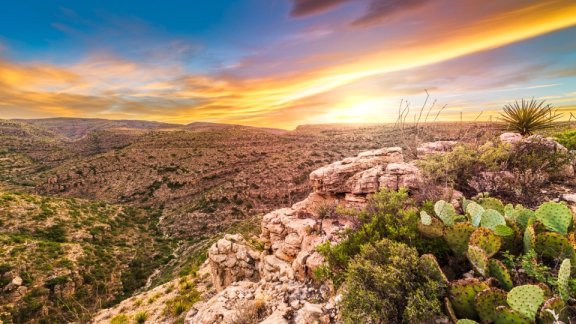
Mexico does not have a single uniform climate, but several clearly distinct climate zones. The coasts have a tropical climate, while higher elevations have a highland climate. The north is much drier, the highlands are often more temperate, and the south is more humid and tropical. In addition, hurricane season must be expected from June to November. Earthquake and volcanic risks are also part of the reality.
What the climate means for your daily life:
- Coasts: tropical and warmer.
- Higher elevations such as Mexico City: noticeably milder.
- North: drier to almost desert-like.
- South: more humid and more tropical.
- June to November: hurricane season along the coasts.
- Earthquakes and active volcanoes are part of the reality.
Tip for expats: In Mexico, climate is a real location factor. Anyone who thinks of Mexico City, Mérida, Guadalajara, Oaxaca, and the coasts as if they had the same climate can quickly make the wrong housing decision.
What shapes the language, culture, and daily life in Mexico?
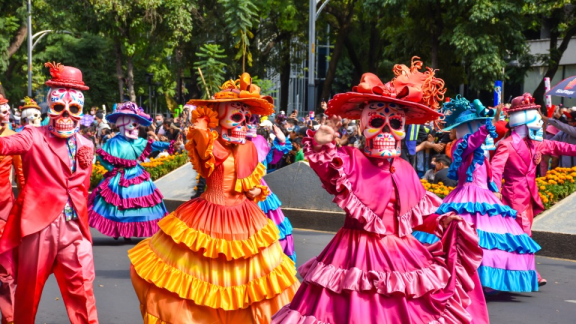
Mexico has the largest Spanish-speaking population in the world, and numerous Indigenous languages are also spoken throughout the country. Culturally, Mexico is strongly shaped by regional traditions, family, and community life. This is especially visible in festivals and celebrations, which play a major role in everyday life. Internationally, the best-known example is Día de Muertos, which shows how deeply history, spirituality, family culture, and identity remain intertwined in Mexico today.
What really helps in everyday life:
- Spanish is essential for dealing with authorities and for everyday life.
- Mexico has the world’s largest Spanish-speaking population.
- Numerous Indigenous languages also shape the country.
- Regional differences are clearly noticeable in everyday life.
- Cultural openness and relationship-building help you settle in more quickly.
- Festivals and traditions carry significant weight.
- Día de Muertos is one of the country’s best-known cultural traditions.
Tip for expats: With strong Spanish skills, life in Mexico becomes much easier right away. Even more important, however, is taking regional differences and cultural traditions seriously. That is exactly what makes settling into everyday life much easier.
What makes Mexico special?
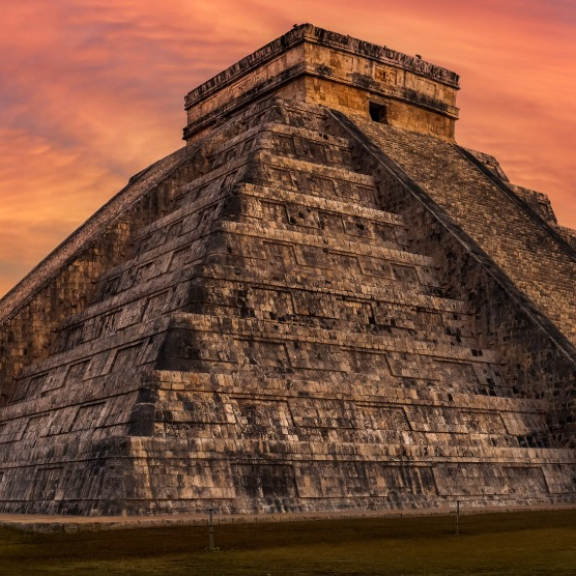
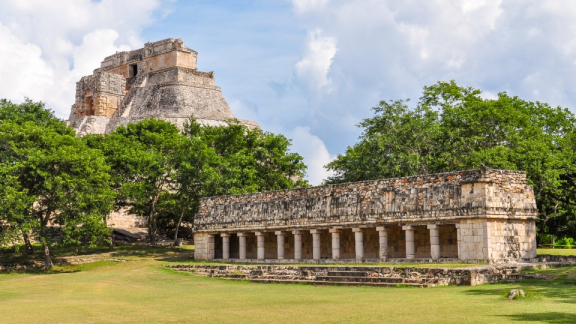
Mexico stands out especially for the density of its contrasts. The country brings together deserts in the north, mountain highlands, Pacific and Caribbean coastlines, tropical zones, active volcanoes, and world-famous pre-Columbian heritage. Chichén Itzá is one of the most important Maya sites on the Yucatán Peninsula and is a UNESCO World Heritage Site. This combination of scale, cultural depth, and natural diversity makes Mexico an exceptional emigration destination.
In detail:
- Deserts, highlands, and tropical regions in one country.
- Pacific and Caribbean coastlines at the same time.
- Pre-Columbian heritage with global significance.
- Volcanoes and seismically active zones shape the geography.
- Great cultural diversity between major cities and regions.
- A very strong sense of distinct identity within Latin America.
Tip for expats: Mexico does not stand out only because of its climate and cost of living. The country is especially attractive for people looking for diversity, cultural depth, and multiple possible ways of life within one destination.
What should you bear in mind when moving to Mexico with animals?
A move with pets is a formal process and should be prepared early. SENASICA is the responsible authority. For dogs and cats, entry requires a veterinary health certificate, rabies vaccination details, and proof of internal and external deworming. The health certificate must have been issued within 15 days before export. The travel crate must be clean, and an inspection takes place upon arrival.
What you should keep in mind:
- Check your pet’s vaccination status early and provide proof of rabies vaccination
- Document deworming and freedom from parasites
- Prepare all veterinary documents completely in advance, including the health certificate
- Use a clean travel crate without unnecessary accessories and train your pet to use it before the flight
- Coordinate entry requirements and airline regulations
- Minimize stress for your pet on moving day
- Actively support your pet’s adjustment to the new home
- Plan for the entry inspection by SENASICA
Tip for expats: When relocating with pets to Mexico, speed is not the priority – document quality is. Anyone who coordinates the health certificate, vaccination status, deworming, crate setup, and arrival logistics early can avoid unnecessary problems at the airport.

For whom is Mexico a suitable destination for emigration?
Mexico is especially well suited to people looking for a large, culturally rich, and regionally diverse market, who are comfortable with everyday life in a Spanish-speaking environment, and who are prepared to actively manage security, location, and healthcare. The country is a strong fit for entrepreneurs, self-employed professionals, remote workers with stable income, expatriate professionals, and people with a high degree of adaptability.
Checklist before emigrating to Mexico:
✓ Check entry requirements and residence regulations for Mexico
✓ Secure health insurance and medical care coverage in Mexico
✓ Choose the right place to live in Mexico and arrange your initial accommodation
✓ Plan your emigration budget for Mexico, including a financial buffer
✓ Prepare your move to Mexico carefully, including household goods and documents
✓ Use Spanish intentionally to make everyday life on the ground significantly easier
Conclusion: Emigrating to Mexico can be highly attractive, especially because of its economic scale, cultural depth, and enormous regional diversity. At the same time, the country requires a clear-eyed view of security, residence status, healthcare, and location choice.


FAQs for emigrating to Mexico
What do I need to consider when emigrating to Mexico?
Anyone planning to emigrate to Mexico should clarify entry requirements, residence status, health insurance, place of residence, security considerations, and budget early on. Because of the country’s strong regional differences, thorough preparation is especially important to ensure a realistic and structured start to everyday life.
What visa and entry requirements apply to Mexico?
For German citizens, entry into Mexico for tourist, business, or transit stays of up to 180 days is generally visa-free. However, anyone planning to live, work, study, or emigrate to Mexico permanently will need to arrange the appropriate visa or residence solution in advance.
Is Mexico a safe country to emigrate to?
Mexico should be assessed with nuance from a security perspective. There are several states and regions with significantly elevated risk, and in many cities, crime, residential location, transportation, and a safety-conscious approach to everyday life all play an important role.
What is the healthcare system like in Mexico?
Mexico’s healthcare system varies by region. In larger cities and in the private sector, medical care is generally much better than in rural areas. At the same time, private clinics often require payment in advance. For expats, strong health insurance with reliable access to clinics is therefore especially important.
What language is spoken in Mexico?
The main language spoken in Mexico is Spanish. For everyday life, dealing with authorities, finding housing, and integration, Spanish is clearly the most important language, even though numerous Indigenous languages are also spoken.
What is the climate like in Mexico?
Mexico’s climate depends heavily on location. Coastal regions are often tropical and warmer, higher-altitude areas are significantly milder, and the north is drier. From June to November, hurricane season also plays an important role along the coasts.
Who is Mexico a suitable emigration destination for?
Mexico is especially well suited to people looking for a large, culturally diverse, and regionally varied living environment and who are comfortable with everyday life in a Spanish-speaking setting. The country is particularly attractive for flexible expats, entrepreneurs, self-employed professionals, and people who are willing to plan their location, security, and daily life consciously.
Are you interested in moving to Mexico or another destination country?
Then do not hesitate and contact us today.
Sabrina Klier
Customer Service & Sales - AIR & SEA