Emigrating to Pakistan Visa, safety, costs, and climate in Pakistan: a reality check
Emigrating to Pakistan: The most important answers first
✓ Visa required: Entry is only possible with a Pakistani visa; the appropriate status is required for longer stays.
✓ An economy with opportunity: A large domestic market, with industry and services playing the most important roles.
✓ A sensitive security situation: Caution is advised in certain areas, and a partial travel warning applies to several regions.
✓ Healthcare varies by region: Private medical care is available in larger cities, but significantly weaker outside them.
✓ A hot and dry climate, but also monsoon rains, high mountains, and recurring risks of flooding and landslides.
✓ Language skills: Urdu is the national language; regional languages shape everyday life in many parts of the country.
✓ What makes it stand out: Megacities, the Indus plain, desert regions, and high mountain ranges are all located close together.
✓ Moving with pets: Complete documentation is required, and coordinating with the local authorities is advisable.
Relocating made easy with DACHSER & KOLB. Use our moving cost calculator. Get a quote and consultation. Book a tour. Move.
Facts about Pakistan

Capital City
Islamabad

Population
255 million

Surface Area
340,509 mi² or 881,913 km²
Continent
Asia

Official Language
Urdu & Englisch

Currency
Pakistani rupee (PKR)
What are the customs, visa, and entry requirements for Pakistan?
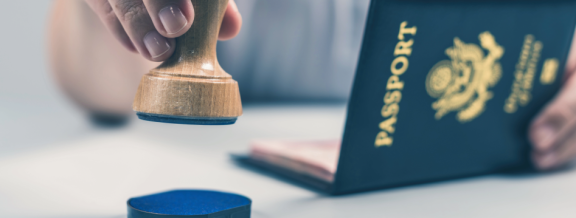
For German citizens, an entry visa is generally mandatory. For tourist stays of up to 30 days, online visas have been introduced. Although visas on arrival are officially provided for, they are currently not always reliable in practice. Without a valid visa, travelers risk being turned away at airports or border crossings. Travel documents must still be valid for at least six months upon entry.
Documents required for entry:
- Passport: Yes
- Temporary passport: Yes
- National ID card: No
- Temporary national ID card: No
- Child passport: Yes
Tip for expats: Pakistan tends to feel more formal at the border than many people expect. First align your visa pathway, purpose of stay, documents, and moving date properly, then plan your relocation. For employment-based setups, the official work visa route is the standard path.
Economy in Pakistan: What opportunities are there for expats?
Pakistan is not an easy-win market economically, but it is a market with scale and real leverage. After a slight slowdown in economic growth, stronger growth is expected again in the coming years. The recovery is being driven mainly by industry and services, but it remains vulnerable to natural disasters, reform pressure, and fiscal constraints.
Key facts at a glance:
- Strong growth, with average GDP growth of 3–4% per year (2016–2025).
- Income distribution: Gini coefficient = 29.6 (0 = perfect equality; 100 = maximum inequality)
- Large domestic market
- Industry and services are driving the recovery
- Natural disasters and climate shocks remain a real economic risk
Tip for expats: From an economic standpoint, Pakistan is especially suitable for people with a clear role, a local network, and a solid budget. Anyone focusing only on market size can quickly underestimate the processes, pace, and security-related costs.
Safety in Pakistan: What do expats need to know?
Pakistan needs to be assessed clearly and soberly from a security perspective. A partial travel warning is in place for some areas. In addition, overland entry to and exit from Iran and Afghanistan is strongly discouraged. The number of terrorist attacks causing fatalities is continuing to rise nationwide from an already high level, increasingly also in major cities such as Islamabad, Lahore, Karachi, Multan, and Rawalpindi. General crime is also increasing, especially in Karachi.
What expats should know:
- Partial travel warning for Khyber Pakhtunkhwa and Balochistan
- Warning for border areas with India and against overland travel to Iran and Afghanistan
- Terrorism risk nationwide
- Crime is becoming increasingly relevant in major cities
- Robbery, kidnappings, and street crime do occur
- Traveling at night and ATM situations are considered especially sensitive.
Tip for expats: In Pakistan, what matters is not just the country itself, but very much the specific region and your daily routine. Anyone who plans their residential area, commute, security arrangements, and movement patterns professionally can reduce risks significantly.
What is the healthcare system like in Pakistan?
The healthcare system varies greatly by region. Medical care is organized through a mix of public and private providers. In practice, private options in larger cities are the most relevant for expats. Medically, it is not only general access to care that matters, but also vaccination and infection risks, full polio protection, and mosquito protection.
At a glance:
- No mandatory vaccinations for direct entry from Germany, hepatitis A recommended
- Polio vaccination is especially important, and for long-term stays over four weeks it may also be relevant for exit requirements
- Additional vaccinations depending on the region: dengue, hepatitis B, typhoid, rabies, meningococcal disease, and in some cases Japanese encephalitis
- Dengue is especially relevant from July to November
- Malaria risk exists year-round and varies by region
- Proof of yellow fever vaccination is required when entering from yellow fever risk areas
- Outside major cities, access to care can become significantly more difficult.
Tip for expats: In Pakistan, healthcare is not a side issue. Strong international health insurance, reliable access to private clinics, an up-to-date vaccination status, and consistent mosquito protection should all be in place before the move.

Are you planning to move to Pakistan?
With structured preparation, you can avoid financial surprises. Our moving cost calculator provides clarity — it's simple, convenient, and takes just a few steps.
Weather, Temperatures, and Seasons – What is the climate like in Pakistan?
Pakistan does not have one uniform climate. Large parts of the country are hot and dry, but it is also heavily influenced by the monsoon. Rainfall is highly irregular overall and can range from drought to severe flooding. In the north, high mountains, snow, and the risks of landslides and avalanches shape everyday life much more strongly than in the south. During the monsoon season, weather warnings should be followed strictly.
What the climate means for your daily life:
- In many places, hot and dry
- The monsoon shapes the summer rainy season, with the main rainy period roughly running from early July to mid-September
- Rainfall varies greatly
- Flooding and landslides are real risks
- Northern regions with snow, avalanches, and high-mountain conditions
- Natural hazards have a major impact on mobility and infrastructure.
Tip for expats: Climate is a real location factor in Pakistan. Anyone who treats Karachi, Islamabad, Lahore, and the north as if they had the same climate can quickly choose the wrong place to live.
Diversity in Pakistan? – Language, culture, and everyday life
Pakistan is linguistically more complex than many people initially expect. Urdu and English are the national languages. At the same time, many regional languages such as Punjabi, Pashto, Sindhi, and Balochi also play a major role in everyday life across large parts of the country. Culturally, Pakistan is strongly relationship-driven, shaped by religion, and highly regionalized. Anyone relying only on English-speaking business contexts will often read everyday life too superficially.
What really helps in everyday life:
- Urdu and English are the national languages
- Regional languages strongly shape many parts of the country
- Religious and social norms play a major role in daily life
- Regional differences are pronounced
- Relationship-building makes everyday life easier
- Linguistic flexibility reduces friction.
Tip for expats: Anyone who approaches Pakistan with respect for cultural codes and genuine curiosity about everyday life will get much further than someone relying only on a functional expat mindset.
What makes Pakistan special?
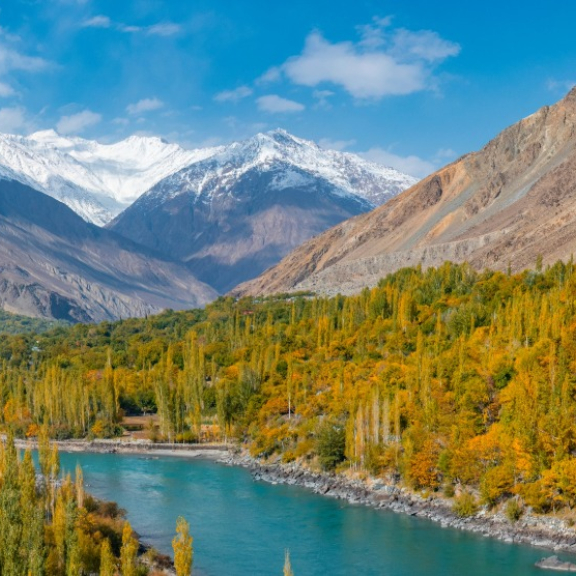
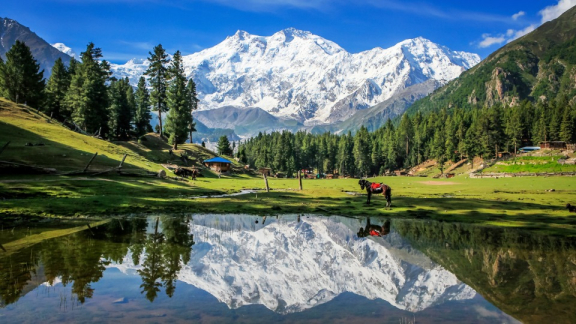
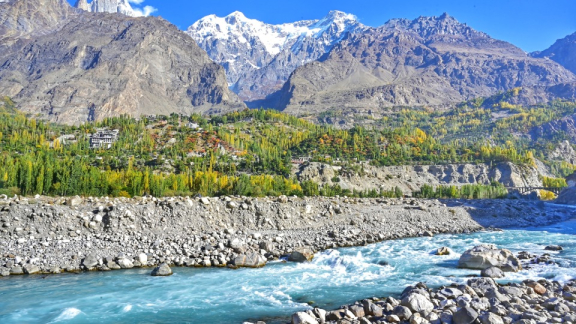
Pakistan stands out above all because of its strong contrasts: megacities, the Indus plain, desert landscapes, and the high mountains in the north all lie close together in one country. Added to that is a very distinctive cultural and historical identity at the intersection of South Asia, Central Asia, and the Iranian world. It is exactly this combination of scale, cultural specificity, and geographic range that sets Pakistan apart from many other destination countries.
In detail:
- High mountains in the north
- The Indus plain as a defining living environment
- Desert and arid regions
- A strong sense of cultural distinctiveness
- A historic crossroads of multiple regions
- Very strong geographic contrasts.
Tip for expats: Pakistan is especially interesting for people looking not just for a new country, but for a completely different regional logic and way of life. That is both its strength and its challenge.
What should you bear in mind when moving to Pakistan with animals?
When it comes to a move with pets to Pakistan, clean documentation matters. For pets, Pakistan requires at minimum a veterinary health certificate and valid proof of vaccination. The documents must accompany the animal during travel. In addition, coordinating early with the relevant authorities and the airline is advisable, because formal requirements and practical handling can vary significantly from case to case.
What you should keep in mind:
- Check your pet’s vaccination status early and document it in the vaccination record
- Prepare all veterinary documents completely in advance, including the health certificate
- Train your pet to use the travel crate before the flight
- Clarify entry requirements and airline rules, and coordinate early with the embassy or consulate
- Minimize stress for your pet on moving day
- Actively support your pet’s adjustment to the new home
- The documents must travel with the animal
Tip for expats: When relocating with pets to Pakistan, it is better to plan conservatively. Anyone who fails to properly align the health certificate, vaccination records, and travel date will almost always create avoidable last-minute pressure.

For whom is Pakistan a suitable destination for emigration?
Pakistan is above all suitable for people with a clear professional or project-based reason for moving, a well-planned security strategy, and realistic expectations about daily life and infrastructure. The country is a good fit for posted specialists, international projects, specialized corporate functions, and people with a high degree of adaptability.
Checklist before emigrating to Pakistan:
✓ Check entry requirements and residence regulations for Pakistan
✓ Secure health insurance and medical care coverage in Pakistan
✓ Choose the right place to live in Pakistan and arrange your initial accommodation
✓ Plan your emigration budget for Pakistan, including a financial buffer
✓ Prepare your move to Pakistan carefully, including household goods and documents
✓ Use English confidently and stay open to Urdu as well as regional diversity
Conclusion: Emigrating to Pakistan can make sense in clearly defined professional or project-based contexts. At the same time, the country requires a very realistic view of security, visas, healthcare, climate, and day-to-day organization.

FAQs for emigrating to Pakistan
What do I need to consider when emigrating to Pakistan?
Anyone planning to emigrate to Pakistan should clarify visa requirements, residence status, the security situation, health insurance, place of residence, and budget early on. Because security, infrastructure, and healthcare vary greatly by region, good preparation is even more important here than in many other destination countries.
What visa and entry requirements apply to Pakistan?
For German citizens, a visa is generally required to enter Pakistan. It is recommended to apply for the visa before departure whenever possible. eVisas are available, but visas on arrival are currently not considered reliable.
Is Pakistan a safe country to emigrate to?
Pakistan should be assessed with a high degree of nuance from a security perspective. A partial travel warning applies to several regions, and there is an elevated risk of terrorist attacks nationwide. In addition, crime and security-related incidents are increasing in some major cities.
What is the healthcare system like in Pakistan?
Pakistan’s healthcare system varies greatly by region. In larger cities, private care is much more usable, while medical care outside urban centers can quickly become far weaker. For expats, strong international health insurance and reliable access to private clinics are therefore especially important.
What language is spoken in Pakistan?
Urdu and English are the official languages of Pakistan, while numerous regional languages such as Punjabi, Pashto, Sindhi, and Balochi also shape everyday life in many parts of the country. Pakistan is therefore linguistically much more diverse than many people initially expect.
What is the climate like in Pakistan?
Pakistan’s climate varies greatly by region. Large parts of the country are hot and dry, while the monsoon shapes many of the summer months. In the north, high mountains, snow, landslides, and avalanches play a much greater role than in the south.
Who is emigrating to Pakistan a good fit for?
Pakistan is above all suitable for people with a clear professional or project-based reason for moving, a high degree of adaptability, and a realistic strategy for security and healthcare. It is less suitable for people expecting maximum predictability, very high safety standards, and an easy fresh start without strong local integration.
Are you interested in moving to Pakistan or another destination country?
Then do not hesitate and contact us today.
Sabrina Klier
Customer Service & Sales - AIR & SEA