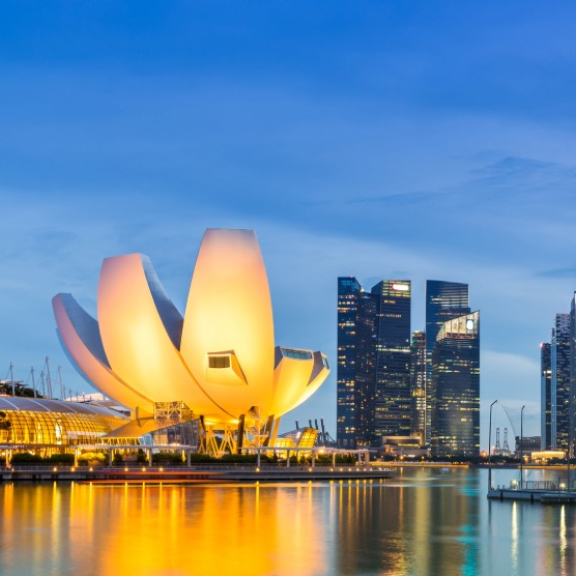
Emigrating to Singapore Visa, safety, costs, and climate in Singapore: a reality check
Emigrating to Singapore: The most important answers first
✓ Visa-free entry: Entry is possible without a visa for up to 90 days; a residence permit is required for work and longer stays.
✓ An economy with strong momentum: Singapore is one of Asia’s most important business hubs, with strong growth.
✓ A very stable security situation: Violent crime is rare; more relevant are petty theft, strict laws, and weather-related risks.
✓ A high-quality healthcare system: Medical care is strong, but public subsidies do not apply to many foreign nationals.
✓ A tropical and humid climate: Warm year-round, with high humidity and monsoon-like rainy periods shaping everyday life.
✓ Language skills: Singapore has four official languages, but English clearly dominates in everyday life and business.
✓ Special feature: Singapore combines global business, a high degree of order, top infrastructure, and a strong everyday culture.
✓ Moving with pets: Good preparation is required.
Relocating made easy with DACHSER & KOLB. Use our moving cost calculator. Get a quote and consultation. Book a tour. Move.
Facts about Singapore

Capital City
Singapore

Population
6.11 million

Surface Area
456.27 mi² or 734.3 km²

Continent
Asia

Official Language
English, Malay, Mandarin, Tamil

Currency
Indonesian Rupiah (IDR)
What are the customs, visa, and entry requirements for Singapore?
For German citizens, short trips of up to 90 days are straightforward and visa-free. For an actual long-term move to the country, however, the appropriate long-term visa is required. In addition, all travelers must submit the SG Arrival Card within three days before arrival, and despite visa-free entry, admission always remains at the discretion of the authorities. Overstays are penalized strictly.
Documents required for entry:
- Passport: Yes
- Temporary passport: Yes
- National ID card: No
- Temporary national ID card: No
- Child passport: Yes
Tip for expats: Entry into Singapore may seem simple, but the real effort begins when it comes to long-term status. First get your purpose of stay, employer, pass category, and documents properly aligned, then schedule the move. For many skilled professionals, the Employment Pass is the key pathway; for entrepreneurs, it is more likely the EntrePass.
Is Singapore economically attractive?
Singapore is one of Asia’s strongest business hubs and remains especially attractive for skilled professionals, companies, and international roles. The city-state benefits heavily from trade, services, and technological dynamism. That is exactly what makes Singapore economically highly relevant, but not automatically easy to access.
Key facts at a glance:
- Very strong growth, with average GDP growth of 6–7% per year (1976–2025).
- Income distribution: Gini coefficient = 36.4 (0 = perfect equality; 100 = maximum inequality)
- A strong hub for trade, finance, and services
- Very attractive for technology and corporate functions
- High purchasing power, but also high ongoing costs
- Small in size, but extremely internationally connected
Tip for expats: Singapore is not a market for vague new beginnings. Anyone who wants to establish themselves there economically needs a clear profile, sustainable income, and a clean residence pathway. The country rewards precision, not improvisation. This assessment reflects its labor market, pass system, and economic structure.
Safety in Singapore: What do expats need to know?
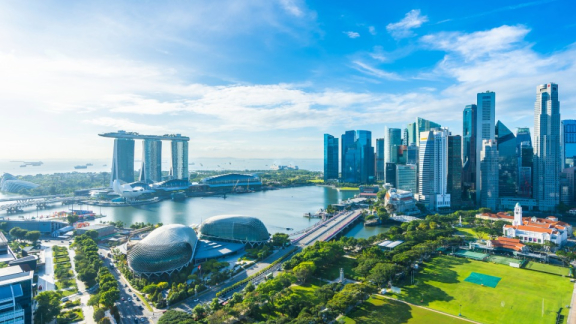
Singapore is considered very stable. The domestic political situation is calm, violent crime is extremely rare, and even petty crime is low. For expats, the real issue is less classic insecurity and more the combination of very consistent law enforcement, strict public-order rules, and the need for a practical level of caution in heavily frequented places.
What expats should know:
- The overall situation is stable
- Violent crime is extremely rare
- Petty theft is possible in tourist areas
- Demonstrations are best avoided
- Drug offenses and public-order violations are punished extremely harshly
- Many strict rules of conduct also apply in everyday life
Tip for expats: In Singapore, security is not a major crime issue, but a matter of compliance with the rules. Anyone who takes the legal boundaries, public conduct standards, and local norms seriously will live very securely here.
What is the healthcare system like in Cyprus?
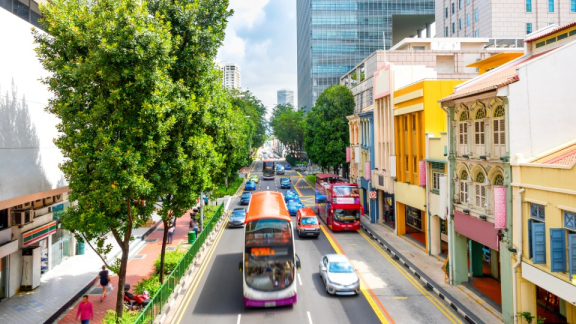
Singapore’s healthcare system is high-quality, efficient, and internationally respected. For expats, however, one point is crucial: foreign nationals generally do not receive the same subsidies in public institutions as citizens or Permanent Residents, which means medical costs can quickly become high. For a new start in the country, strong health insurance is therefore essential.
At a glance:
- High-quality medical care
- Strong public and private sector
- Foreign nationals generally receive no regular public subsidies
- Public healthcare is more heavily subsidized for citizens and PRs
- Private coverage is especially important for expats
- Healthcare costs can become very high quickly without strong insurance
Tip for expats: In Singapore, healthcare is not a quality issue, but a cost issue. Anyone arriving without strong insurance is underestimating one of the location’s biggest financial levers.

Are you planning to move to Singapore?
With structured preparation, you can avoid financial surprises. Our moving cost calculator provides clarity — it's simple, convenient, and takes just a few steps.
Climate in Singapore: How do the weather and temperatures differ?
Singapore has a tropical climate with high humidity and warm temperatures year-round. In everyday life, monsoon-like rainfall and the fringes of typhoons are especially relevant, as they can cause flooding, landslides, and traffic disruptions. The weather is therefore not extremely changeable, but much more present in daily life than many people initially expect.
What the climate means for your daily life:
- Tropical warmth year-round
- High humidity
- Monsoon-like rainfall especially from December to March and from June to September
- Flooding and traffic disruption are possible
- The fringes of typhoons can affect Singapore
- Tremors from distant earthquakes may occasionally be felt
Tip for expats: In Singapore, climate is not a side issue. Anyone focusing only on the warmth while ignoring humidity, rainfall intensity, and everyday on-the-ground conditions is planning too narrowly.

What shapes language, culture, and daily life in Singapore?
Singapore is officially quadrilingual, but English clearly dominates in everyday life and business. That is exactly what makes the location accessible for many international professionals. At the same time, Singapore is strongly shaped by a multicultural identity, with clearly visible Chinese, Malay, and Indian influences, along with a highly practical, orderly, and performance-oriented environment.
What really helps in everyday life:
- Four official languages
- English is the main language of everyday life and business
- Malay is the national language
- Mandarin and Tamil are firmly embedded
- A multicultural everyday life with clear rules
- High levels of order and pragmatism shape daily life
Tip for expats: English will get you very far in Singapore. Even more important, however, is not to view the location merely as an international business bubble, but as a clearly regulated, culturally diverse, and performance-oriented everyday environment.

What makes Singapore special?
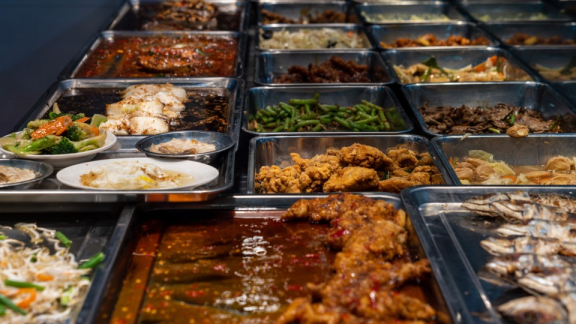
What especially defines Singapore is the density of infrastructure, order, global connectivity, and culturally rich everyday life within a very small space. The city-state is not just a business hub, but also a social living environment with very strong public organization. Particularly striking is hawker culture, which has been added to UNESCO’s list of intangible cultural heritage and makes Singapore’s multicultural everyday life especially visible.
In detail:
- A global financial and trade hub
- Very strong infrastructure within a compact area
- A multicultural daily life with clear organization
- Hawker culture as UNESCO cultural heritage
- High international connectivity
- A city-state with a very distinctive profile in Asia
Tip for expats: Singapore does not stand out only because of its skyline and efficiency. Its real appeal lies in the rare combination of order, internationalism, and everyday culture. That is exactly what makes the location so distinctive.
What should you bear in mind when moving to Singapore with animals?
A move with pets to Singapore is a formal process and should be prepared early. In addition to transportation, veterinary documentation, deadlines, vaccinations, and animal welfare all need to be coordinated properly. For dogs and cats, a microchip, import license, veterinary documents, and depending on the country of origin, additional vaccination or quarantine requirements are mandatory.
What you should keep in mind:
- Check your pet’s vaccination status early; import conditions depend on the rabies risk category of the country of origin
- Prepare all veterinary documents and the import license completely in advance
- Train your pet to use the travel crate before the flight, and coordinate entry requirements and airline regulations
- Quarantine may be required depending on the place of origin
- Minimize stress for your pet on moving day and actively support adjustment afterward
- An ISO-standard microchip is required
- The dog or cat must be at least 12 weeks old
Tip for expats: When relocating with pets to Singapore, speed is not the priority — document quality is. Anyone who checks the license, microchip, vaccination status, and origin category too late will almost certainly create delays.

For whom is Singapore a suitable destination for emigration?
Singapore is especially well suited to people with a clear professional profile, solid income, and a high willingness to adapt to structure, rules, and cost transparency. It is an especially strong fit for professionals in management, finance, technology, consulting, and international corporate functions. Singapore is less suitable for people seeking a cheap, relaxed, or loosely structured fresh start.
Checklist before emigrating to Singapore:
✓ Check entry requirements and residence regulations for Singapore
✓ Secure health insurance and medical care coverage in Singapore
✓ Choose the right place to live in Singapore and arrange your initial accommodation
✓ Plan your emigration budget for Singapore, including a financial buffer
✓ Prepare your move to Singapore carefully, including household goods and documents
✓ Use English confidently and take everyday rules of conduct into account
Conclusion: Emigrating to Singapore can be highly attractive, especially because of its safety, infrastructure, international economic density, and high quality of everyday life. At the same time, the location requires a realistic view of long-term residence, healthcare costs, climate, and rules.


FAQs for emigrating to Singapore
What do I need to consider when emigrating to Singapore?
Anyone planning to emigrate to Singapore should clarify the right residence pathway, health insurance, place of residence, budget, and legal framework early on. Visa-free entry for short stays is not the same as a genuine emigration pathway, because work or a longer stay requires the appropriate pass or residence permit.
What are the entry requirements for Singapore?
For German citizens, entry into Singapore is generally visa-free for up to 90 days. In addition, the SG Arrival Card must be submitted before arrival. It is not a visa, but it is a mandatory part of the entry formalities. For longer stays, the appropriate pass or residence permit is required.
How can you emigrate to Singapore permanently?
Visa-free entry is not sufficient for a long-term stay. Anyone who wants to work in Singapore needs a valid pass before starting work, such as an Employment Pass for qualified professionals or other suitable work passes depending on profile and role.
Is Singapore a safe country to emigrate to?
Singapore is generally considered a very safe and stable emigration destination. More relevant than classic violent crime are the strict laws, consistent law enforcement, and the need to follow rules in public spaces very closely.
What is the healthcare system like in Singapore?
Healthcare in Singapore is often expensive for foreign nationals. Public subsidies do not apply to foreigners to the same extent as they do to citizens or Permanent Residents, and certain employment categories also come with clear requirements regarding medical insurance.
What language is spoken in Singapore?
Singapore has four official languages: Malay, Mandarin, Tamil, and English. Malay is the national language. For many international professionals, English is especially important in everyday life because it is strongly present in formal and cross-border contexts.
What is the climate like in Singapore?
Singapore has a typical tropical climate with high temperatures, high humidity, and plenty of rainfall year-round. In addition, there are monsoon periods during which longer rainy phases and local flooding can noticeably affect everyday life.
Are you interested in moving to Singapore or another destination country?
Then do not hesitate and contact us today.
Sabrina Klier
Customer Service & Sales - AIR & SEA