Emigrating to Taiwan Visa, safety, costs, and climate in Taiwan: a reality check
Emigrating to Taiwan: The most important answers first
✓ Visa-free entry: Entry is possible without a visa for up to 90 days; a visa is required for longer stays.
✓ An economy with a technology focus: Dynamic growth, driven primarily by semiconductors, AI demand, and exports.
✓ An overall strong security situation: Stable domestic conditions, low crime rates, but caution is advised because of natural hazards.
✓ A strong healthcare system: The NHI is efficient and robust, but it does not always apply to expats immediately.
✓ A humid climate that depends on location: The north is subtropical, the south is tropical, also tropical storms and heavy rainfall.
✓ Language skills: Mandarin is the main official language, while Hakka and Indigenous languages are also officially recognized.
✓ Special feature: One of the world’s most important semiconductor hubs, combining high-tech, safety, and a high quality of life.
✓ Moving with pets: Good preparation and complete documentation are required.
Relocating made easy with DACHSER & KOLB. Use our moving cost calculator. Get a quote and consultation. Book a survey appointment. Move with confidence.
Facts about Taiwan

Capital City
Taipei

Population
23.28 million

Surface Area
13,976.74 mi² or 36,197 km²
Continent
Asia

Official Language
Mandarin-Chinese

Currency
New Taiwan dollar (TWD)
What are the customs, visa, and entry requirements for Taiwan?
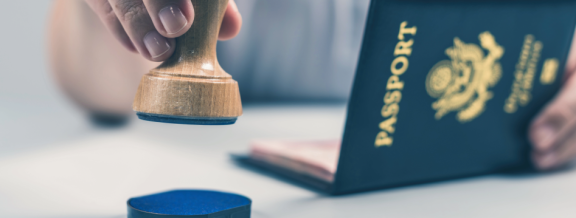
For German citizens, entry for visits of up to 90 days is possible without a visa. In addition, anyone without residence status must complete the digital Taiwan Arrival Card before arrival. For longer stays, the appropriate visa must be obtained before entry. For qualified professionals, the Employment Gold Card can be especially attractive because it combines visa, residence rights, work authorization, and re-entry in one system.
Documents required for entry:
- Passport: Yes
- Temporary passport: Yes, but only with a visa
- National ID card: No
- Temporary national ID card: No
- Child passport: Yes
Tip for expats: Entry into Taiwan may seem straightforward, but the real effort begins when it comes to long-term status. First get your visa pathway, purpose of stay, health insurance, and shipment properly aligned, then schedule the move.
Is Taiwan economically attractive?
Taiwan is economically highly attractive and currently far more dynamic than many people expect. After very strong growth in recent years, further growth is also forecast for the years ahead. This strength is closely tied to the country’s technology and export profile. Taiwan is a global key location for semiconductors and advanced chip manufacturing.
Key facts at a glance:
- Outstanding growth, with average GDP growth of 7% per year (1962–2025).
- Income distribution: Gini coefficient = 34.1 (0 = perfect equality; 100 = maximum inequality)
- Taiwan generates more than 60% of global foundry revenue.
- In advanced chip manufacturing, its share is over 90%.
- The semiconductor industry generated more than USD 165 billion in 2024.
Tip for expats: From an economic perspective, Taiwan is especially attractive for people with a background in technology, industry, research, or engineering. Anyone arriving with a clear role, a solid employer connection, or an entrepreneurial niche will have much better prospects here than someone starting with a vague relocation plan.
Safety in Cyprus: What do expats need to know?
Taiwan is overall a stable country from a security perspective. According to current travel advisories, the domestic political situation is stable. Demonstrations can occur in major cities and may affect traffic, but the crime rate is low. In everyday life, petty theft, purse snatching, and credit card fraud in larger cities are more relevant than serious violent crime.
What expats should know:
- Domestic political situation: stable.
- Demonstrations in major cities: possible.
- Crime rate: low.
- Petty crime in cities: occasionally relevant.
- Large crowds, train stations, and airports: stay especially alert.
- Natural disasters: earthquakes and tropical storms
Tip for expats: Taiwan is not a classic high-security-risk country. The more realistic risk profile lies in natural events, mobility, and everyday caution rather than in serious crime. Anyone who plans their place of residence, commute, and emergency routine consciously will be starting from a very stable position.
What is the healthcare system like in Taiwan?
Taiwan’s healthcare system is a clear location advantage. For foreign residents with a residence card, National Health Insurance (NHI) generally applies after six months of residence. Anyone who is legally employed can be enrolled in NHI from the start of employment. That makes Taiwan especially attractive, but for the initial phase it still requires solid private transitional coverage.
At a glance:
- NHI for many foreign nationals: after 6 months of residence.
- With legal employment: enrollment is possible from the start of employment.
- The Resident Certificate is the key requirement.
- Family members with a Resident Certificate: immediate enrollment is possible.
- Without valid residence status, there is no entitlement to NHI.
Tip for expats: Healthcare is one of Taiwan’s major strengths, but it is not automatically taken care of from day one. Anyone who coordinates transitional insurance, the Resident Certificate, and NHI enrollment properly can avoid exactly the gap that many newcomers underestimate.

Are you planning to move to Taiwan?
With structured preparation, you can avoid financial surprises. Our moving cost calculator provides clarity — it's simple, convenient, and takes just a few steps.
Climate in Taiwan: How do the weather, temperatures, and seasons differ?
Mandarin Chinese is the main official language and the most important key to everyday life. At the same time, Taiwan is linguistically broader than many people expect: Hakka, Indigenous languages, and other local languages are recognized as national languages. Culturally, Taiwan combines Chinese roots with its own democratic development, a strong emphasis on education, and a very dense urban everyday life. Family, education, and social order carry significant weight in daily life.
What really helps in everyday life:
- Mandarin Chinese: the main official language.
- Hakka and Indigenous languages are recognized as national languages.
- Culture and everyday life: strongly oriented toward education and family.
- Social behavior: generally more orderly and practical in everyday life.
- Language skills significantly speed up integration
Tip for expats: English will get you far in international contexts, but in real everyday life Mandarin is the clear advantage. Anyone who actively learns the language will immediately reduce friction when dealing with authorities, finding housing, and settling in socially.
What shapes the language, culture, and daily life in Taiwan?
Mandarin Chinese is the main official language and the most important key to everyday life. At the same time, Taiwan is linguistically broader than many people expect: Hakka, Indigenous languages, and other local languages are recognized as national languages. Culturally, Taiwan combines Chinese roots with its own democratic development, a strong emphasis on education, and a very dense urban everyday life. Family, education, and social order carry significant weight in daily life.
What really helps in everyday life:
- Mandarin Chinese: the main official language.
- Hakka and Indigenous languages are recognized as national languages.
- Culture and everyday life: strongly oriented toward education and family.
- Social behavior: generally more orderly and practical in everyday life.
- Language skills significantly speed up integration
Tip for expats: English will get you far in international contexts, but in real everyday life Mandarin is the clear advantage. Anyone who actively learns the language will immediately reduce friction when dealing with authorities, finding housing, and settling in socially.

What makes Taiwan special?
Taiwan stands out through a unique combination of high-tech industry, safety, functional infrastructure, and global relevance within a compact space. The country is a key hub of the global semiconductor industry. At the same time, despite its relatively small size, Taiwan offers an extraordinary density of mountains, coastline, cities, and practical everyday infrastructure. It is exactly this mix that makes Taiwan such a distinctive emigration destination.
In detail:
- A key hub of the global semiconductor industry
- More than 60% of global foundry revenue (revenue generated by contract semiconductor manufacturers) comes from Taiwan.
- More than 90% of the world’s most advanced chip manufacturing is located in Taiwan.
- Taiwan combines high technology and compact everyday living in a particularly strong way.
- An exceptional density of mountains, coastline, cities, and practical everyday infrastructure
Tip for expats: Taiwan is especially appealing to people who are not looking for a purely low-cost or sunshine destination, but for an efficient, safe, and technologically relevant living environment. That combination is rarely found in Asia in such a concentrated form.

What should you bear in mind when moving to Taiwan with animals?
A move with pets is a formal process and should be prepared early. For entry, an import permit, vaccination records, proof of the importer’s identity, and in some cases a rabies antibody test are required. Upon arrival, the original documents must be presented at the quarantine counter. Missing documents can lead to the animal being denied entry.
What you should keep in mind:
- Check your pet’s vaccination status early; rabies vaccination is mandatory
- Prepare all veterinary documents completely in advance
- Train your pet to use the travel crate before the flight
- Coordinate entry requirements and airline regulations
- Import permit: apply at least 20 days before shipment.
- Minimize stress for your pet on moving day
- Actively support your pet’s adjustment to the new home
- Present the original health certificate upon arrival.
- Without the permit or original certificate, the animal may be denied entry or destroyed.
Tip for expats: When relocating with pets to Taiwan, speed is not the key success factor – lead time is. The permit, lab test, health certificate, and quarantine process all need to be started early enough, otherwise the entire process can fall apart shortly before departure.

For whom is Taiwan a suitable destination for emigration?
Taiwan is especially well suited to people looking for a safe, infrastructure-strong, and technologically relevant environment. The country is a particularly good fit for professionals in technology, research, industry, education, and international business, as well as for people who can adapt well to dense urban structures, a humid climate, and learning the language.
Checklist before emigrating to Taiwan:
✓ Check entry requirements and residence regulations for Taiwan
✓ Secure health insurance and medical care coverage in Taiwan
✓ Choose the right place to live in Taiwan and arrange your initial accommodation
✓ Plan your emigration budget for Taiwan, including a financial buffer
✓ Prepare your move to Taiwan carefully, including household goods and documents
✓ Build a foundation in Mandarin to make everyday life on the ground significantly easier
Conclusion: Emigrating to Taiwan can be highly attractive, especially because of its safety, healthcare system, infrastructure, and global technological relevance. At the same time, the country requires a realistic view of the visa pathway, climate, natural hazards, and language.


FAQs for emigrating to Taiwan
What do I need to consider when emigrating to Taiwan?
Anyone planning to emigrate to Taiwan should clarify the right residence status, health insurance, place of residence, budget, and language situation early on. Visa-free entry for short stays is not the same as a genuine emigration pathway, because longer stays require the appropriate visa or residence solution.
What are the entry requirements for Taiwan?
For German citizens, entry into Taiwan is generally visa-free for visits of up to 90 days. For stays longer than 90 days, the appropriate visa must be obtained before entry; in addition, visitors without residence status must complete the digital Taiwan Arrival Card before arrival.
How can you emigrate to Taiwan permanently?
For a long-term stay in Taiwan, different pathways may apply depending on your profile, such as employment-based residence or, for highly qualified international professionals, the Taiwan Employment Gold Card. This combines visa, residence rights, work authorization, and re-entry into one system.
Is Taiwan a safe country to emigrate to?
Taiwan is generally considered a safe and politically stable country with a low crime rate. In everyday life, petty theft, heavy rainfall, earthquakes, and tropical storms are more relevant risk factors than serious violent crime.
What is the healthcare system like in Taiwan?
Taiwan’s healthcare system is a clear location advantage. Foreign nationals with a Resident Certificate generally join the National Health Insurance program after six months of residence; those who are legally employed may be enrolled from the start of their employment.
What language is spoken in Taiwan?
The main official language in Taiwan is Mandarin Chinese. In addition, Hakka and Indigenous languages are recognized as national languages, but in everyday life Mandarin remains the most important key for dealing with authorities, housing, and integration.
Who is Taiwan a suitable emigration destination for?
Taiwan is especially well suited to people looking for safety, strong infrastructure, a good healthcare system, and a technology-driven environment. The country is particularly attractive for professionals in technology, research, industry, and international business fields who have a clear residence pathway.
Are you interested in moving to Taiwan or another destination country?
Then do not hesitate and contact us today.
Sabrina Klier
Customer Service & Sales - AIR & SEA