
Emigrating to the USA Visa, safety, costs, and climate in the USA: a reality check
Emigrating to the USA: The most important answers first
✓ ESTA instead of a visa for short stays of up to 90 days; for longer stays, the appropriate immigration status is required.
✓ A strong economy: One of the strongest economic hubs in the world.
✓ Security varies by region: In everyday life, the city, state, and neighborhood make a real difference.
✓ A high-performing healthcare system: Medical care is often good, but without strong health insurance it can become a cost risk.
✓ An extremely diverse climate: From Alaska to Florida, the range extends from polar to subtropical.
✓ Language skills: English is clearly dominant in everyday life, while Spanish is also relevant in many regions.
✓ Special feature: The USA is a country with enormous range and therefore very different opportunities depending on where you are.
✓ Moving with pets: Good preparation and early planning are required.
Relocating made easy with DACHSER & KOLB. Use our moving cost calculator. Get a quote and consultation. Book a tour. Move.
Facts about the United States

Capital City
Washington D.C.

Population
340.11 million

Surface Area
3,796,928.627 mi² or 9.834.000 km²

Continent
North America

Official Language
(American) English

Currency
US Dollar (USD)
What are the customs, visa, and entry requirements for the USA?
For German citizens, an ESTA authorization is generally sufficient for short stays under the Visa Waiver Program, but neither ESTA nor a visa creates an automatic right of entry. The final decision on admission is always made by the U.S. border officer. For work, study, or permanent settlement, the appropriate visa or immigration solution is required.
Documents required for entry:
- Passport: Yes, with ESTA or a visa
- Temporary passport: Yes, but only with a visa (ESTA is not possible)
- National ID card: No
- Temporary national ID card: No
- Child passport: Yes, but only with a visa (ESTA is not possible)
Tip for expats: Entry into the U.S. often looks simpler than it actually is for a real emigration plan. First get your purpose of stay, category, documents, and timeline properly set up, then schedule the move.

What are the economic conditions and standard of living like in the U.S. for immigrants?
The United States remains an economic heavyweight, with enormous market size, high purchasing power, and strong clusters in technology, finance, healthcare, industry, and services. At the same time, there are major differences from state to state in terms of economic performance, industry focus, and living standards. The South in particular tends to show lower economic output and higher poverty rates.
Key facts at a glance:
- Robust growth, with average GDP growth of 3–4% per year (1948–2025).
- Income distribution: Gini coefficient = 41.8 (0 = perfect equality; 100 = maximum inequality)
- One of the largest and most important markets in the world
- Very strong technology, finance, and service hubs
- High purchasing power and strong regional demand
- Market size does not replace a sound strategy
Tip for expats: The U.S. is economically strong, but it is not an easy win. Anyone who wants to succeed there needs more than just a good idea — they need a solid setup built around visa strategy, location, budget, and network.
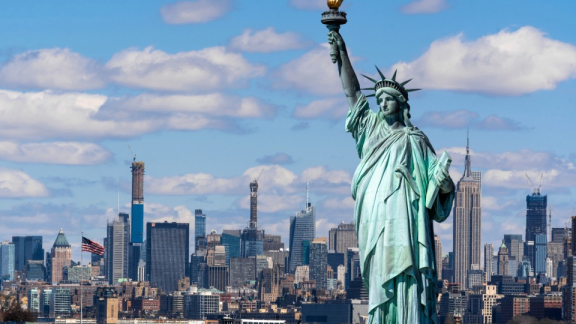
Safety in the USA: What do expats need to know?
Security in the United States depends heavily on location. In many metropolitan areas, pickpocketing, robbery, and vehicle break-ins are common. In addition, easy access to firearms means there are more frequent incidents involving gun violence and, in isolated cases, mass shootings. Demonstrations can also escalate locally.
What expats should know:
- The security situation depends heavily on the state, city, and neighborhood
- In many major cities, robberies and vehicle break-ins are a real concern
- After dark, risks increase significantly in more problematic neighborhoods
- Gun violence is a relevant factor in everyday life
- Demonstrations can turn violent at the local level
Tip for expats: In the U.S., what often matters most is not the country as a whole, but the specific place where you live. Anyone who chooses their neighborhood, commute, school environment, and daily routes strategically can significantly reduce future risk.

What is the healthcare system like in the USA?
The healthcare system in the United States is often medically high-performing, but financially demanding. Treatment is expensive and frequently requires upfront payment or direct payment. Without strong health insurance, costs can quickly reach existential levels. At the same time, especially outside major urban centers, the distance to the nearest hospital can be considerable.
At a glance:
- No mandatory vaccinations for direct entry from Germany
- Hepatitis A is recommended
- Depending on the state, additional vaccinations may be advisable
- In many regions, medical care is good, but not automatically affordable
- Treatments and hospital stays are often very expensive
- Medical evacuation insurance may be advisable.
Tip for expats: In the U.S., healthcare is not a side issue – it is a central budget issue. Without strong health insurance, a clear emergency strategy, and realistic financial reserves, a fresh start can quickly become risky.

Are you planning to move to the USA?
With structured preparation, you can avoid financial surprises. Our moving cost calculator provides clarity — it's simple, convenient, and takes just a few steps.
What is the climate like in the USA?
The United States is one of the most climatically diverse countries in the world. The range extends from polar conditions in Alaska to temperate zones in the North and West, and subtropical conditions in South Florida. On top of that, there are brush and forest fires in the West, hurricanes in the South and in Hawaii, tornadoes in the Midwest, and severe winter storms in the North and along the East Coast.
What the climate means for your daily life:
- Each state comes with different climate conditions
- Alaska is significantly colder than the rest of the country
- The West Coast and the Northeast have very different climates from the South
- Florida is subtropical
- The West faces recurring wildfire risks
- From May to November, it is hurricane season in southern regions
- Tornadoes, snowstorms, and natural hazards are a regional reality
Tip for expats: In the U.S., climate is a real location factor. Anyone who lumps California, Texas, Florida, New York, and Colorado together simply as “the U.S.” can quickly make the wrong housing decision.

Diversity in the U. S.? – Language, culture, and everyday life
For a long time, the United States did not have an official language at the federal level. In everyday life and in government functions, English has always clearly dominated and is now also officially established. At the same time, the U.S. is linguistically and culturally very diverse. Spanish is strongly present in many regions, and everyday life, consumer habits, mobility, and housing patterns differ noticeably from state to state.
What really helps in everyday life:
- English is the main language of everyday life
- Spanish plays a major role in many regions
- States and metropolitan areas function very differently culturally
- Everyday life is often more car- and suburb-oriented than in Germany
- Contracts, rules, and liability issues carry significant weight
- Without English, integration becomes unnecessarily difficult
Tip for expats: Strong English skills are not a bonus in the U.S. – they are a basic requirement. Even more important, however, is taking regional differences seriously and not viewing the U.S. as one uniform everyday reality.

What makes the USA special?
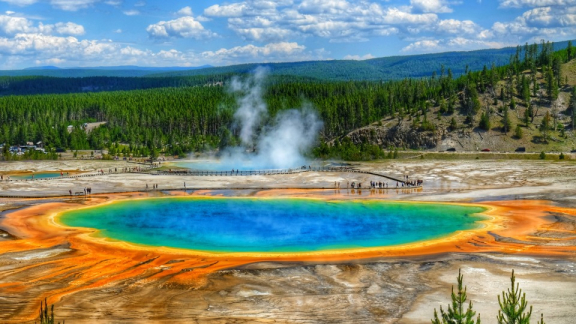
The real distinguishing feature of the United States is its enormous range. Very few countries combine global business hubs, top universities and innovation centers, national parks, deserts, coastlines, mountain ranges, and major cities in such density. That broad spectrum is exactly what makes the country both attractive and demanding for expats.
In detail:
- Enormous regional diversity
- Strong metropolitan areas with global significance
- Major centers of innovation and science
- Very different ways of life within one country
- Natural landscapes ranging from desert to rainforest
- Strong international appeal for work, research, and entrepreneurship.
Tip for expats: The U.S. is not just “the land of opportunity,” but above all a country of very different kinds of opportunity. That is exactly why choosing the right region is often more important than choosing the country itself.
What should you bear in mind when moving to the USA with animals?
A move with pets to the United States should be planned early and with great precision. In addition to transportation, veterinary documentation, deadlines, vaccinations, and animal welfare all need to be carefully coordinated.
What you should keep in mind:
- Check your pet’s vaccination status early; in some cases, proof of rabies vaccination is required
- Prepare all veterinary documents completely in advance
- Train your pet to use the travel crate before the flight
- Coordinate entry requirements and airline regulations
- Minimize stress for your pet on moving day and actively support its adjustment to the new home
- A separate CDC Dog Import Form is required for each dog
- Cats and dogs are inspected upon entry and must appear healthy
- Individual states and airlines may require additional rules
Tip for expats: When relocating with pets to the U.S., speed is not the priority – clean documentation is. Anyone who does not coordinate the CDC form, microchip, health status, and destination state early on is likely to create unnecessary problems at the port of entry.

For whom are the USA a suitable destination for emigration?
The United States is especially well suited to people with a clear professional profile, a solid budget, and a realistic understanding of visa requirements, health insurance, and location choice. The country is a particularly strong fit for skilled professionals, intra-company transfers, entrepreneurs, researchers, and families. It is less suitable for people expecting easy immigration, low healthcare costs, and a uniform everyday environment.
Checklist before emigrating to the United States:
✓ Check entry requirements and residence regulations for the United States
✓ Secure health insurance and medical care coverage in the United States
✓ Choose the right place to live in the U. S. and arrange your initial accommodation
✓ Plan your emigration budget for the United States, including a financial buffer
✓ Prepare your move to the U. S. carefully, including household goods and documents
✓ Use English confidently and take regional differences into account
Conclusion: Emigrating to the United States can be highly attractive, especially because of its market size, career opportunities, and regional diversity. At the same time, the country requires a clear-eyed view of immigration pathways, healthcare costs, security, and location choice.


FAQs for emigrating to the USA
What do I need to consider when emigrating to the United States?
Anyone planning to emigrate to the United States should clarify the right immigration path, health insurance, place of residence, budget, and the regional security situation early on. The U.S. does not function as one uniform market: the state, city, and even neighborhood make a real difference in everyday life.
What visa and entry requirements apply to the United States?
For short tourist or business stays of up to 90 days, an ESTA authorization is often sufficient for German citizens. However, anyone who wants to emigrate to the U.S., work there, live there permanently, or immigrate needs the appropriate visa or immigration category. Official immigration pathways exist especially through family, employment, investment, special categories, and the Diversity Visa program.
Can you emigrate to the United States with ESTA?
No. ESTA is only intended for short-term travel under the Visa Waiver Program and does not replace a work, student, or immigrant visa. For a real move to the United States, the purpose of stay must match the correct visa or immigration category from the outset.
What is the healthcare system like in the United States?
The healthcare system in the United States is often medically high-performing, but without strong coverage it can become very expensive very quickly. Treatments and hospital stays can result in high costs, which is why strong health insurance is essential.
Is the United States a safe country to emigrate to?
The security situation in the United States varies greatly by region. In many major cities, robberies, vehicle break-ins, and problematic neighborhoods are a real issue. In addition, there is broad access to firearms and a risk of local escalation during demonstrations. For expats, place of residence, commute, and daily routine are therefore especially important.
What language is spoken in the United States?
For a long time, the United States did not have an official language at the federal level, but English has now been formally established. English also clearly dominates in everyday life. At the same time, Spanish is the most important additional language nationwide.
What is the climate like in the United States?
The climate in the United States is extremely diverse. It ranges from Arctic conditions in Alaska to temperate and continental zones and subtropical climate in South Florida. On top of that, there are regional natural hazards such as hurricanes, wildfires, tornadoes, and winter storms. For expats, choosing a location is therefore always also a climate decision.
Are you interested in moving to the USA or another destination country?
Then do not hesitate and contact us today.
Sabrina Klier
Customer Service & Sales - AIR & SEA